Showing posts with label research. Show all posts

Tuesday, December 16, 2008

New wiki for experimental hydrology

Calling all experimental hydropedologists. A vast room of poster presentations greeted thousands of scientists at the American Geophysical Union’s annual autumn meeting on Dec. 15 in San Francisco – including one announcing an “experimental hydrology Wiki” website. The wiki was created last year by Llja Tromp-van Meerveld of Simon Fraser University in Burnaby, British Columbia and Theresa Blume of the University of Potsdam in Germany. Originally designed to meet the needs of doctoral students, the wiki is now open to assist a range of environmental researchers, from hydrology to related fields in science and engineering. And hydropedology. The website is: www.experimental-hydrology.net. Soil moisture is used as a prominent, and encouraging, example.

(recycled from nscss.org)

Friday, May 02, 2008

Trends in Soil Science Education: Looking Beyond the Number of Students

From swcs.org:

Decreasing student numbers-along with related causes and concerns- is a common topic of discussion in the international soil science community. Such discussion is seldom quantitative. Here we present long-term student numbers (in undergraduate courses as well as MS and PhD graduates) of soil science departments in North America, Europe, and Oceania. A previous study by P. Baveye and co-workers had shown that in the United States and Canada student numbers fell by 40% in more than 80% of the universities between 1992 and 2004. The United States and Canada experienced an increase in female students in soil science between 1992 and 2004. Meanwhile, the number of foreign students has decreased. Student numbers have also decreased in New Zealand. Numbers at Dutch universities decreased in the early 1990s but have since stabilized. Two of three Australian universities had increasing numbers of students for undergraduate courses as well as MS and PhD graduates. Currently in the Netherlands almost half of all MS soil science graduates are female, while in the 1970s and up to the mid-1980s 80% or more of soil science graduates were male. It seems that teaching is becoming more general (more introductory courses to a range of other disciplines), while soil science research is experiencing an opposite trend: specialization. INTERNATIONAL SURVEY

A questionnaire was sent to 43 colleagues at universities in Europe, North America, South America, Africa, and Oceania. We requested long-term data (>25 years) on student numbers between 1980 and 2005. Twelve responses were received.

One of the aims of this research was to quantify trends in student numbers, and it is therefore unfortunate that we were not able to get data from several countries in which soil science is highly important or had made major contributions. For example, no response was obtained from the United Kingdom, where only a few soil science departments have remained; others have closed, have been relabelled, or have been merged with other departments.

It is a tedious job to extract the type of information requested; this may have contributed to the low response rate. In addition, some of those who received the survey might have felt uncomfortable with the results and were not to keen to have them published even though we tried to make it as anonymous as possible. Baveye et al. (2006), who surveyed 61 universities in the United States and Canada, found that some universities could not respond because their legal counsel found it unethical and inappropriate to release information about graduate students.That could be another reason for the limited response in our study.

As only 12 universities responded, the results presented here may not be representative of the whole globe. Here we discuss the main trends and speculate on their possible causes, followed by some discussion on the future of soil science education and student numbers.

STUDENTS IN SOIL SCIENCE

North America

Baveye et al. (2006) surveyed 61 soil science departments in the United States and Canada in 1992 and in again in 2004. The total number of soil science graduates (MS and PhD) in 1992 and 2004 is depicted in figure 1. The number of PhD students decreased (-63%). Of the 36 institutions that responded, 5 universities had increased enrollment, 1 university had constant enrollment, and 30 had decreased enrollment.

A major trend was the increase in the number of female students for both MS and PhD graduates (figure 2).The number of foreigners decreased (figure 3). In 1992, it was found that female students were almost exclusively interested in environmental applications, while male students and students from rural areas were more interested in agricultural issues.

We also received 25 years of student data from a university in the Midwestern United States. Figure 4 presents the number of students in three different courses. The "Soils" course is made of about 10% majors in agronomy, so 90% of the students are outside agronomy and soils. The "Soil Fertility" course is made of majors in agronomy or turf science, and the agronomy major includes those with specific interest in soil science.The "Environmental Quality" course is a general education course; it is within the list of courses that students select to broaden their perspective and to get exposed to environmental issues related to soil. Undergraduate students come from production, business, consulting, plant breeding, and soil and environmental sciences. Some of the production, consulting, and business students may be soil science oriented.

Europe

In the Netherlands, serious soil investigations were started by W.C.H. Staring in the mid-180Os, followed by J. Van Baren in Wageningen, and DJ. Hissink in Groningen in the early 190Os. Soil science rapidly expanded in the mid-1900s with university courses in Amsterdam, Groningen, Utrecht, and Wageningen and the establishment of research institutes (Bouma and Hartemink 2002). After World War II, the number of soil scientists was very large and the knowledge base of Dutch soil science grew enormously. In 1998, there were 23 soil scientists per 100,000 ha (247,000 ac) agricultural land in the Nedierlands compared with 3 in France and Denmark and 6 in the United Kingdom (van Baren et al. 2000).

Currently, soil science is taught at five Dutch universities, although not all have majors in the subject. Enrollment of first year earth science students is depicted in figure 5; these first year students include those who will study geology or petrology. The general trend is that numbers declined from the early 1990s but more or less stabilized since the late 1990s,The number of master's level graduates with a soil science major at Wageningen University is given in figure 6. The number of Dutch master's level students (Ingenieurs [Ir] is the Dutch equivalent of MS) peaked in the mid1990s, decreased, but then had another peak in 2004. The number of foreign MS soil science graduates was around 10 for most of the 1990s.

The most remarkable shift has been in the ratio between male and female soil science graduates (figure 7). Up to the mid-1980s, 80% or more of soil science graduates were men; from then on, the women- to-men ratio increased and has been around 50% to 55% in the past six years (with the exception of 2002). A similar trend, although starting later, happened with the foreign MS students; 70% of soil science graduates in 2005 were female (figure 8).The MS program used to be a two-year program, so there were no graduates every other year from the start of the foreign MS program at Wageningen University in 1972 until it changed to an 18-month program in the 1980s (hence, the gaps in the graph).

The ratio of foreign versus national MS/Ir soil science students is plotted in figure 9. In the 1970s and 1980s, about 40% to 50% of all soil science graduates were foreigners; thereafter, the share of foreigners decreased (except for the year 2000). In the past five years, foreign MS students were less than 40% of all soil science graduates at Wageningen University.

Oceania

Survey responses were received from three universities in Australia and one in New Zealand.

Soil science is taught in 16 universities in Australia. For our study, information on soil science courses and undergraduate, MS, and PhD theses was received from of three universities (in Adelaide, Brisbane, and Sydney).

The University of Adelaide has trained soil scientists since the Waite Agricultural Institute opened in 1924. Since World War II, the university has produced on average at least one graduate in soil science per year at BS honors, MS, and PhD levels. The number of BS honors and PhD graduates has increased since 1995 to about 4 to 5 per year. The number of soil science theses for BS honors, MS, and PhD levels is presented in figure 10.

The number of students attending the "Introductory Soils" and "Soil-Plant Relationships" courses more than halved between 2000 and 2006 at the University of Queensland, Brisbane (figure 11). The trend is comparable to the data from the United States (figure 4), but these are short-term data; longer term data have shown that interannual fluctuation is considerable.

At the University of Sydney, the second year course is an introductory one on soil properties and processes. The third year course is an applied course focusing on soil mapping, soil geography, and environmental issues. The fourth year consists of a large research project and three separate more advanced courses on soil chemistry, soil physics, and pedology. The number of BS students in second and third year soil science courses increased between the early 1990s and 2005. Student numbers in the fourth year is steady. The number of MS and PhD 'graduates has fluctuated considerably in the past two decades, but the number of PhD students is larger now than in the late 1980s and early 1990s (figure 12).

In New Zealand, soil science is taught at six universities. Figure 13 presents data from one university on student enrollment in soil science courses at the second, third, and fourth year. There is a general increase from the early 1980s to a peak in the mid-1990s, after which the numbers in the second and third years decreased to the level of the early 1980s. The large numbers in mid-1990s probably reflect baby boom echo-that is, an overall surge in young people heading to university. The soil science enrollment decline from early 2000s mirrors a decline in enrollment at the whole university. SOIL SCIENCE TRENDS

The main trends include decreasing numbers of soil science students in several parts of the world, a shift in MS/PhD, male/ female, and foreigner/national student ratios, and increased teaching to other disciplines.

Numbers of Soil Science Students

The number of soil science students declined in some but not in all universities, and some differences exist between countries. In the United States and Canada, the number of students decreased by 40% in about 80% of the universities, while in Australia two out of three showed a steady increase in student numbers attending soil science courses and the number of graduates. In a university in New Zealand, the number of soil science students has decreased recently, while in the Netherlands that decrease happened 10 years earlier and student numbers are steady now. Kenya and Tanzania have experienced decreasing numbers as well, despite the importance of agriculture for 80% of the population (Ngugi et al. 2002). Considerable variation was found in the annual number of students attending courses or graduating. The fluctuation in student numbers is partly due to overall university enrollment and number of high school graduates.

In the United States and Canada, the number of soil science PhDs is decreasing relative to the number of MS graduates. In other parts of the world (e.g., the Netherlands and Australia), it is more or less the other way around: fewer students are graduating at the BS honors or MS levels, and the number of PhD graduates in soil science is increasing. In part this has to do with lower increased undergraduate education in the developing world, while students are more likely to go on for doctoral education in Europe and Australia.

If we assume that total number of students has not decreased, then the decline in soil science students is absolute. However, at some universities the decline in soil science student numbers may mirror the decline in overall enrollments. All in all, students seem to prefer other studies (business, law, and medicine), and these are generally viewed as moneymaking degrees.The decline is not unique to soil science but has also occurred in geology, geography, weed science, chemistry (Baveye et al. 2006), and several other disciplines such as physics. In 2003, less than 500 US citizens earned physics PhDs, die lowest number since the early 1960s (Nature, December 1, 2005). Overall, there is a strong growth in information science, medicine, and computer science and little student growth in engineering, mathematics, and physical sciences.

External factors include high school education systems, societal and university changes, and more internal factors such as links to agriculture, the relabelling of the discipline, and "the failure to excite" factor. In many countries, soil science has maintained strong links with agriculture, while the interest in agriculture in the developed world has diminished. That has several causes, including there being enough food but also because there are far fewer farmers and many of them have higher degrees themselves (in the Netherlands, 20% of the farmers have a university or polytechnic degree). In other words, fewer academics are needed in agriculture- so they think.

Other problems start at high school. In the Netherlands, for example, the high school curriculum was rearranged 10 years ago into different profiles.These profiles (e.g., nature and technology, culture and society) contain six to eight fixed subjects and replaced the classic model in which high school students chose their own set of subjects. Now it appears that with certain profiles it is not possible to study soil science. High school students with an interest in physical geography cannot take the profile that contains geography as that profile lacks the subjects necessary to be admitted to a soil science course at a university. A combination of essential science subjects with geography is not possible. So there is a mismatch between what high schools deliver and what universities require, at least for some university soil science courses. Another problem is that many geography teachers at high school are social geographers with little interest or encouragement in physical geography.

National/Foreigner Student Ratios

The share of foreign students is decreasing in the United States and Canada, which is related to the increased difficulties for foreigners to enter the United States (Baveye et al. 2006). In 2001, 200,000 visas were authorized for highly skilled workers, but that had shrunk to 65,000 by 2004. At the American consulate in Chennai, India, the wait to just get a visa interview is more than five months. The United States has always attracted a large number of foreign students and greatly benefited from the import of highly skilled people. According to The Economist (May 6, 2006), 3,000 of the technology firms created in Silicon Valley since the 1980s (that is more than 30% of the total) were founded by entrepreneurs with Indian or Chinese roots. We are not for certain how much the visa restriction and the perceived antagonisms aflfect student mobility and choices, but the Australians, Canadians, and Swiss-countries that are not known to have the same level of obstacles as the United States-have been successful in attracting foreign talent.

Male/Female Student Ratios

Soil science courses and graduations have become increasingly dominated by female students. Clearly, our science is emancipating, and it appears that the encouragement for females to take the science subjects (maths, physics, chemistry) at high schools is starting to pay off. There may also be deeper rooted problems with males at high schools. Several people in the Netherlands suspect that enrollment of males into university is decreasing as they are more likely to fail either at high school or first year at university; females may be better organized, harder working, and stronger in language and nontechnical skills. Another cause could be that soil science is now much more attractive to young women than it was 10 or 20 years ago. In any case, the next generation of soil scientists will be more dominated by women, but that is currently not reflected in leading positions. For example, less than 10% of all International Union of Soil Sciences officers (65 people) in 2006 were women. Articles have been recently published on the achievements of women in soil science in the United States (Levin 2005) and Russia (Prikhod'ko 2006), but little attention has been given to the emerging trends in female students. That will likely change.

Is the current male dominance in soil science (for as long as it takes) an exception? Overall, science is male dominated. In the United Kingdom, for example, less than 4% of tenured physics professors are women (Institute of Physics 2006). Most science department heads are male.

Soils Research Specialization

Highly active university departments routinely attract students as there is an exciting field of research, sufficient funds, and a good research infrastructure for nurturing and educating students and the next generation of scientists. Funding research is a political issue that differs widely between countries (Brumfiel 2006). Globally, three regions take the lead when it comes to funding: United States, Japan, and Western Europe. The United States dominates research funding in the sciences globally, spending almost $145 billion (euro100 billion) on research and development in 2006, more than any other country or region. About 60% of that is defense related. The 25 countries of the European Union spend more than $85 billion (euro59 billion) per year on research. Yet science budgets in the United States, Germany, France, and Japan have been stagnant in recent years. In contrast, scientific research budgets in China have increased by 16% in 2004, in South Korea by 10% in 2005, and in India by 25% recently. The collective research budgets of China, South Korea, and India are less than one-quarter that of the United States, but that will change (Brumfiel 2006). Funding patterns affect scientific disciplines and education; changes in funding amounts and priorities have an impact on everything from the content of university courses offered to the types of employment opportunities that are available for graduates.

In many countries, government funding for soil research has decreased since the 1980s (Hartemink 2002; Mermut and Eswaran 1997; Tinker 1985). In part, this was due to the economic policies of the Thatcher government in the United Kingdom, resulting in privatization and the rule-of-market forces affecting many facets of society including the sciences (Tinker 1985). In part, it was due to the strong link between soil science and agriculture (Baveye et al. 2006).As the interest in agriculture was reduced in much of the developed world (there was ample food, agriculture was perceived to be harmful for the environment), so fell the interest in soil science. The decline in soil science was also due to its inability to cope with the new challenges. Some in the soil science community were split internally about the definition of the kandic or ferralic horizon, and there was a lack of answers for real-word problems or hard data useful for other disciplines. These trends have been observed in many countries, though with some exceptions (Bouma and Hartemink 2002).

Different departments have coped differently with rapid changes in society, and many have relabelled their activities to break away from agriculture or have merged ' with other departments into schools of natural resources or food production. Just like departments of agronomy have been renamed departments of plant or crop and soil sciences (Raun et al. 1998), so have many departments of soil science been renamed in the past century. Table 1 attempts to list some common names of soil science departments in the English- speaking world and how they changed over time. This timeline reflects relabelling but also expansion of the discipline. It is hard to say what is fashionable, but the "Department of Soil and Crop Sciences" is certainly not a popular name at the moment. All in all, it seems that soil is not a too favorable word in the naming of departments; in many cases, it has been replaced by land, earth, or environment. Despite the fact that there are far fewer active soil scientists than two decades ago and that there are fewer soil scientists trained in several parts of the world, the number of soil science publications still increases (Hartemink 2001). Between 1994 and 2006, the number of soil science publications in peer-reviewed journals doubled. No doubt there is some recycling of ideas and dilution of research results over several papers, but the quantity of soil-related publications is an indication that much soil research goes on and there are many global and local issues, now and in the future, to which soil science can contribute (Minasny et al. 2007).

The Aging of Soil Science

Not only are soil science departmental names retiring, so are its people. The aging of the workforce is a common problem in much of the developed world (Lutz and Qiang 2002). The aging of the workforce is noticeable in many departments and soil research centers. Asked what he thought of the 18th World Congress of Soil Science, an Elsevier salesman responded, "Lots of old people, perhaps not a sign of vigorousness" (Philadelphia, July 2006).

We have data on age distribution in the soil science community from the United States, the Netherlands, and Denmark.

In the United States, 44% of the members of the Soil Science Society of America are over 50 years of age and male (figure 14). The older generation is male dominated, while most of the younger members are female.

In 2002, a questionnaire was sent to the 466 members of the Dutch Society of Soil Science. In total 152 people responded (32%). The average age was 52 years and more than 16% of the respondents were above 65 years of age. Only 2% of respondents were younger than 25 years, and 9% reported being between 26 and 35 years old. Student members equalled only 1% (Boshoven and Hartemink 2003).

In Denmark, 50% of Danish Soil Science Society members (70 in total) are over 50 years old, and about one-fifth is between 25 and 40 years of age (O. Borggaard, personal communication, 2007).

The increasing age of soil science society members may be due to (1) the lack of influx from a younger generation, which would indicate a lack of soil science graduates, and/or (2) younger soil scientists not joining learned societies in the same proportions as the previous generation. In any case, the decline in soil science graduates has been a matter of concern and is discussed at soil science meetings and conferences.

CONCLUSIONS

Funding, politics, and the vigorousness of a scientific discipline all affect student numbers. Choices differ greatly between individuals, universities, and nations, but some general principles apply: students are attracted by the vigorousness and chirpiness of a subject (some may call it sexiness) and the possibility of getting a position (perhaps even well paid) after a university degree has been obtained.

The number of publications with hard data on student numbers is limited (it is not good publicity), but there has been some attention to soil science education, particularly in the United States (Baveye et al. 1994), but also in Australia (Smiles et al. 2000), India (Rao et al. 2000), and Africa (Ngugi et al. 2002;Temu et al. 2004).As far as we know, the first paper showing trends in the number soil science students was by Taskey ( 1994), who showed a severe decline in student enrollment from about 170 students in the late 1970s to around 45 in the late 1980s at a university in California.The faculty responded by establishing three new concentrations under the soil science degree program: land resources, environmental management, and environmental science and technology. As a result, soil science enrollment nearly tripled within two years (Taskey 1994).

While our research is specializing with advances in several subdisciplines, our teaching is generalizing: more and more soil science is being taught as part of other science curricula (e.g., ecology). We also see that soil science is being taught by other departments and that soil research is conducted by other disciplines (e.g., geology).

The soil science community should be worried by the declining numbers of soil science students (McBratney 2006).

It is our impression that current soil science graduates have no problems finding employment, and there is a shift from the public to the private sector in job opportunities. But will these trends. continue? What expertise is needed in the near and further future and does our soil science teaching yield capable graduates?

The most difficult task ahead is not to convince policy makers and land users on the need for adequate and up-to-date soil information but to make sure that there are enough young soil scientists equipped with the latest techniques and insights to address future issues. Convincing students that soil science is a valuable study is an important part of that.

ACKNOWLEDGEMENTS

Some of the results in this article were presented at the "Innovation, Speculation and Disneyfication in Soil Science Education" symposium during the 18th World Congress of Soil Science. We are most grateful to David Lowe, Eric Brevik, Oliver Chadwick, Philippe Baveye, Chuck Rice, Neil Menzies, Cameron Grant, Martin Gerzabek, Bern Andeweg, and Marian Bos Boers for digging through university files and providing us with the number soil science students and graduates. Ole Borggaard of the Danish Society of Soil Science and Susan Chapman of the Soil Science Society of America are thanked for the information on the age distribution of their members.

AUTHORS

Alfred E. Hartemink, Alex. McBratney, and Budiman Minasny

REFERENCES

Baveye, P., W.J. Farmer, and T.J. Logan, eds. 1994. Soil Science Education: Philosophy and Perspectives. Madison WI: Soil Science Society of America.

Baveye, P., A.R. Jacobson, S.E. Allaire, J.P. Tandarich, and R.B. Bryant. 2006.Whither goes soil science in the United States and Canada? Soil Science 171:501-518.

Boshoven, E., and A.E. Hartemink. 2003. De NBV enquete. NBV Nieuwsbrief 9:6-10.

Bouma, J., and A.E. Hartemink. 2002. Soil science and society in the Dutch context. Netherlands Journal of Agricultural Science 50:133-140.

Brumfiel, G. 2006. The scientific balance of power-Show us the money. Nature 439:646-647.

Hartemink, A.E. 2001. Look at it this way-Publishing science: past, present and the future. Oudook on Agriculture 30:231-237.

Hartemink, A.E. 2002, Soil science in tropical and temperate regions-Some differences and similarities. Advances in Agronomy 77:269-292.

Institute of physics. 2006. Women in University Physics Departments-A Site Visit Scheme 2003-2005. London: Institute of Physics,

Levin, M.J. 2005. Women in Soil Science (USA). In Encyclopedia of Soils in the Environment, vol. 4, ed. D. Hillel et al., 345-352. Amsterdam: Elsevier.

Lutz, W., and R. Qiang. 2002. Determinants of human population growth. Philosophical Transactions of the Royal Society of London B 357:1197-1210.

McBratney, A.B. 2006. Musings on the future of soil science (in 1k words). In The Future of Soil Science, ed. A.E. Hartemink, 86- 88.Wageningen: International Union of Soil Science.

Mermut, A.R., and H. Eswaran. 1997. Opportunities for soil science in a milieu of reduced funds, Canadian Journal of Soil Science 77:1-7.

Minasny, B., A.E. Hartemink, and A. McBratney. 2007. Soil science and the h index. Scientometrics 73:257-264.

Ngugi, D., A. Isinika, A. Temu, and A. Kitalyi. 2002. Agricultural Education in Kenya and Tanzania (1968-1998). Nairobi: RELMA (Sida).

Prikhod'ko, VE. 2006. Role of women in Russian soil science, Eurasian Soil Science 39:342-343.

Rao, D.R., R.V. Kumari, and E. Haribabu. 2000. Agricultural education in India: A sociological perspective. Oudook on Agriculture 29:177-184.

Raun, WR., N.T. Basta, J.A. Hattey, H. Zhang, and G-V. Johnson. 1998. Changing departmental names from agronomy to plant, crop, and soil sciences. Journal of Natural Resources and Life Sciences Education 27:113-116.

Smiles, D.E., I. White, and CJ. Smith. 2000. Soil science education and society. Soil Science 165:87-97.

Taskey, R.D. 1994. Revision and rescue of an undergraduate soil science program. In Soil Science Education: Philosophy and Perspectives, ed. P. Baveye et al., 21-27. Madison, WI: Soil Science Society of America.

Temu, A.B., S. Chakeredza, K. Mogotsi, D. Munthali, and R. Mulinge, eds. 2004. Rebuilding Africa's Capacity for Agricultural Development: The Role of Tertiary Education. Nairobi: ICRAF.

Tinker, PB. 1985. Soil science in a changing world. Journal of Soil Science 36:1-8.

van Baren, H., A.E. Hartemink, and P.B. Tinker. 2000. 75 years the International Society of Soil Science. Geoderma 96:1-18.

Alfred E. Hartemink is head of the World Soil Museum, ISRIC- World Soil Information, Wageningen, the Netherlands. Alex McBratney and Budiman Minasny are on the faculty of Agriculture, Food and Natural Resources, University of Sydney, Sydney, Australia.

Copyright Soil and Water Conservation Society May/Jun 2008

(c) 2008 Journal of Soil and Water Conservation. Provided by ProQuest Information and Learning. All rights Reserved.

Source: Journal of Soil and Water Conservation

Friday, November 02, 2007

Why is HIV so prevalent in Africa?


... asks Melinda Wenner. Geographer Harold Foster is convinced that it is due to low soil selenium levels. Selenium is mobile, prone to leaching as well as accumulation. Health-wise, it is one of the more interesting elements. Reputed to be an immune system stimulant, yet it is notorious for accumulating in plants and soil to a toxic degree.

Sub-Saharan Africa, with 96 percent of all AIDS cases, has a wide variety of soil types (see soil map provided) but which generally have low soil selenium.

Senegal has a significantly lower level of AIDS infection than the rest of sub-Saharan Africa. It also has uncommonly high soil selenium.

Foster's most recent article is pay walled by Elsevier, but the
abstract is certainly intriguing:

The global diffusion pattern of HIV/AIDS is strongly suggestive of a protective role for the trace element selenium. It is hypothesized here that the body's antioxidant defense system, especially the selenoenzyme glutathione peroxidase, acts as an initial defense against viral infection, preceding the formation of antibodies. [emphasis added] For this reason, HIV is having its greatest difficulty in infecting those with diets elevated in amino acids and the trace element selenium which, when eaten together, stimulate the body's production of glutathione peroxidase.
One selenium link to AIDS is well established: A low selenium blood level of selenium among HIV/AIDS infected patients is associated with high AIDS-related mortality. Foster has been writing about this for some time in terms of treatment.
Since this virus encodes for glutathione peroxidase, as it replicates it deprives its host of selenium, cysteine, glutamine and tryptophan, eventually causing severe deficiencies of each in HIV-1 seropositive individuals. AIDS is the end product of these declines and the majority of its symptoms are caused by these deficiencies. Selenium and cysteine inadequacies, for example, undermine the immune system in a process that is accelerated by other infectious pathogens. A deficiency of glutamine promotes muscle wasting and digestive malfunction, while a lack of tryptophan and the compounds it biosynthesizes (such as niacin and serotonin) causes dermatitis, diarrhea and various neurologic and psychiatric symptoms including dementia. It is also clear from the literature that supplementation relieves these symptoms and would, therefore, appear to be the most logical treatment for AIDS. The major aim of this treatment would be to return body levels of selenium, cysteine, glutamine and tryptophan to normal. The evidence suggests that this would greatly reduce HIV-1's ability to replicate. Doses, therefore, would vary with the disease stage. It also is probable that niacin and serotonin would prove beneficial.
One double-blind, randomized, placebo-controlled trial has solidly confirmed the ability of 200 micrograms (μg) a day of bioavailable selenium to significantly affect viral load among AIDS patients. That is certainly good news and confirms selenium as a viable treatment.

Foster has now advanced beyond treatment into an area likely to be far more controversial: He is saying that, in low selenium soil regions, dietary selenium can reduce the risk of infection and rate of spread of the AIDS virus between individuals. The world hopes that he is correct.

Wednesday, June 13, 2007

Agrichar trials in NSW

News and commentary on agrichar is flowing steadily this spring, first with the reporting on the 1st annual Agrichar Conference, and now with the reporting on initial agrichar trials by the New South Wales Department of Primary Industries (NSW DPI). Particularly encouraging is that the sophistication of the comments continues on the increase.

Snippets
from ABC' Discovery channel ...

Recent greenhouse trials found soils mixed with the charred waste, called agrichar or biochar, were more attractive to worms and helpful microbes.

Agrichars trialled by NSW DPI include those from poultry litter, cattle feedlot waste as well as municipal green waste and paper mill sludge. Each agrichar has its own characteristics and interacts differently with different soil types.

Some agrichars raise soil pH at about one-third the rate of lime, raise calcium and reduce aluminium toxicity.

Kimber said more research needs to be done on working out which agrichars are best for which soils and on the impact of any contamination in biomass.

... reinforce the need for local pyrolysis pilot projects. The pyrolysis pilot hurdle is necessary where widespread agrichar use is the goal. Clean air concerns combines with the limited supply of local expertise and experience needed to achieve the low-temperature pyrolysis ideal for producing agrichar.

I have
submitted comments emphasizing the need for pilot agrichar projects to our State's climate change folks.

(AP image source)

Tuesday, May 08, 2007

Carbon Sequestration for Farm, Forest Income

The New York Times has an article about selling carbon credit through the Chicago Climate Exchange (CCX).:

An acre of pine forest captures and holds one to two metric tons of carbon dioxide per year, which it uses for photosynthesis. Untilled cropland holds a third of a ton of carbon per acre, and rangeland holds up to a fifth of a ton. The sequestered carbon dioxide is measured by soil tests before and after the planting.

Carbon dioxide credits now sell for about $4 a metric ton. Mandatory restrictions, experts say, could increase the price to $12 or higher. In Europe, the cost of a credit sold for sequestering carbon dioxide has reached $20, and even $30, a ton.
The market for carbon credits seems to hover between $3 and $4. A review of past CCX newsletters reveals sporadic volume, with common fluctuations of $0.50 to $0.75 per metric ton per month. The New York Times article suggests that biological sequestration will ultimately be replaced with geological sequestration. Expectations of sustaining $20 or $30 a ton seem unrealistic.

$3-$4 is far better than the $0.25 that the Confederated Tribes of the Colville Reservation in Washington received for forested land in the 1990s.

The Tri-Societies' science policy blog has a post about Farming Carbon:
Currently, farmers who wish to profit from the sequestration potential of their soils can sell carbon credits on the (CCX).
Science is needed to better quantify the carbon flux and carbon sinks.
At present, aggregators don't attempt to gauge the carbon impact of individual farms nor do they quantify counterbalancing emissions of traces gases. Hopefully, ASA/CSSA/SSSA members can play a constructive role in the CCX, providing the scientific basis on which aggregators will improve their climate accounting.
I would like to see more discussion on the nuts and bolts of accounting and verification.


Flickr Source: George sampling 3/2/07 ESA Common

Friday, February 23, 2007

My Interesting Experience With Biosolids

It's May 5, 2005 on a biosolids research plot somewhere between Kennewick WA and Umatilla OR . If you can use either a link to Google Maps or a Google Earth kmz file, the plots start 250' S, 150' E of the fence line and extend to 650' S, 425' E. The aerial photos Google has up as I post this were evidently taken before our field visit, probably in late winter (January?) 2005. The dark E/W swaths Google shows would be annual ryegrass (Lolium multifloruminvasive winter rye (Secale cereale) growing better than normal in areas which received aggressive application of municipal biosolids. Application was in April, 20042003.

The fellow in the distance is Tom Duebendorfer (Elmira, ID), botanist extraordinaire. Tom is carrying the quadrat to the west end of the application swath south of the one I am in. I am following about 20 minutes behind him. The wire flags (pink) are randomized sample points down the middle of the application swath. That's my soil sampler in the foreground, a Viehmeyer probe. It's a lot easier to get in than it is to get back out. The astute observers among you will have already noticed that the grass in the plot isn't looking so good: it is thick, brown and stubby whereas Tom is walking in a taller but thinner stand of green grass.

The biosolids killed the grass, but how? My thinking is that it is not a simple toxic effect. Impaired growth or necrosis would have expressed itself soon after the April 20042003 application, or prevented stand establishment at the beginning of the 2004 and 2005 season. Instead we had brief lush growth, almost like a growth hormone effect. 2,4-D works that way, but not on grasses.

My conclusion is that the effect is due to abundant nutrient availability and complex weather patterns unique to 2005. The application rate was designed to promote biomass gains. It worked, and as a result, the grass grew lush and depleted the soil moisture. With abnormally low rainfall in March, by April it had run out of moisture and had to close up shop for the year. April rains came too late for this brown grass, but helped relieve drought stress in the normal areas.

Soil nitrate levels were elevated in the brown areas but not to an alarming degree. Tom didn't see any application affect on the plant species composition, but then we have not formally analyzed the data. Composition effects are probably going to occur after 2005, beyond the scope of the study. I expect we would see an increase in annual ryegrassinvasive winter rye at the expense of other species.

Look close and you will see the ryegrass was still able to produce a fair amount of seed. L. multiflorumS. cereale is an invasive species, and was the only component in the system that really seemed to benefit from the aggressive biosolids rates to a degree that increased it's longterm competitive potential. I can think of any number of invasive species that would respond similarly.

As an aside, it is unlikely that Tom and I will be preparing a formal report based on the data. The sludge hauling client went bankrupt shortly after that May 2005 sampling. The study was a condition of satisfying a permit violation. Outside of that original context, it falls off both our urgency/importance project matrices.

Corrections: Application was in 2003, not 2004. Ryegrasss is winter rye, secale cereale, not annual ryegrass lolium multiflorum.

Technorati Tags:

Wednesday, February 14, 2007

Soils and its role in a changing climate

Roger Pielke Sr., over at his research group's climate science blog, has been holding forth on land use change and its impacts on long-term near surface temperature. His position is that the role of land use must be further emphasized within the climate change framework. Search for "soil" and "land" for a long list of supporting posts.

This goes beyond deforestation and urban heat islands. Dust and alterations in atmospheric water content play unknown roles and interact with albedo in sometimes counterintuitive ways. For example, irrigation warms rather than cools the land. Evaporative cooling is insufficient to drive net cooling of irrigated regions. Soils darkened by moisture absorb more heat than dry soils and re-radiate more heat during the night. This results in warmer nights and warmer average temperatures.

Current climate models are not sensitive to changes in land use. Neither are they sensitive to the soil's role in affecting atmospheric carbon levels.

Soil organic matter, at roughly 1500 GtC, is the single largest compartment of carbon in the active biogeochemical cycle. At 60 GtC annual flux (in either direction), it is 10 times larger than the 5.5 GtC flux due to burning fossil fuel. Yet soil is the component of the carbon cycle that we know the least about.

Most soil scientists agree with the unvalidated concept that soil carbon levels will likely decline in step with temperature increases. Higher biological activity will result in more decomposition of organic matter. One certainly sees a similar relationship between soil carbon and temperature when comparing the effect of elevation, aspect and latitude. That we have yet to validate it is telling.
Current climate models mostly ignore the specific role that soil microbes play in the release of carbon dioxide into the atmosphere. The information they do include is often based on assumptions that have never been tested in the field, and may be wrong or overly simplistic.
Our climate models are telling us we need to become far more efficient and more conservative in managing our planet's carbon, soil-wise and fuel-wise. But our scientific understanding will never be adequate for crafting our full response to climate change.
The fact is that our climate is infinitely complex. The models climatologists use to predict the future are incredibly sophisticated, yet blunt instruments. Scientists can never account for all the variables involved - indeed, no one has successfully come up with a mathematical equation to describe the formation of a single cloud. And scientists are often woefully out of their depth in the real world. History is littered with lives and regimes that were wrecked when science was allowed to drive policy with no thought to humanity. Tearing down the global carbon-based economy to - in theory - replace it at a later date with unproven and undeveloped technologies would be a similar folly. It is only by tempering science with economics and the market, which is the most efficient arbiter of humanity's wants and needs, that smart climate policy can be made.
Science and the market are partners of longstanding. Economic necessity, as the mother of invention, has been driving the advance of science for as long as science has been an identifiable pursuit.

Distorted Vision
Originally uploaded by uaezlulu.

Sunday, January 14, 2007

Gold, Green Roads to OA Soil Science Research

Green Road, Point Reyes, CA

You invest your limited time in reading this and similar science themed blogs to inform yourself. You pursue links that promises to ground you in a new understanding. All too often your admirable efforts are frustrated by links to restricted fee-for-access login pages.

What purpose does it serve to so restrict knowledge that was funded in the public interest? A growing number of open access vehicles for publication and peer review indicate that restricted access is a waning model for funding and disseminating scientific knowledge. OA models are working for chemistry, physics and internal medicine. They will work well for the other sciences.

A recurring theme of advocacy on this blog is open access (OA) to soil science research articles. While I believe strongly that all soil scientists should support their professional soils organizations financially, I believe as strongly that all published soil science research should be freely accessible on the web. Those that can best capitalize on soil science are least able to afford fee-based access. The readers of this blog need OA soil science sources. I am committed to delivering these up to you in the several forms available: gold road and green road.

Advocates of OA differentiate between a "gold road" and a "green road" to success. The gold road is when journals move from restricted access to open access. Without fanfare, the SSSAJ has stepped out onto the gold road. SSSAJ articles now convert to unrestricted access after an 18 month embargo. As a member of SSSA, with a paid subscription to SSSAJ since 1976, my regard for and commitment to SSSAJ has risen to new heights on this quiet action.

SSSAJ's most recent un-embargoed articles are in Vol. 69, Iss. 4.

The green road to OA is where authors self-publish research in open access venues. Especially significant to this is self-archiving. Because it is a seamless extension of accepted pre-web-era practice, OA self-archiving does not interfere with copyright and publication by scientific journals. Because of this acceptance and the unassailable viability of OA self-archiving, resistance is futile:


Open Access (OA) means free access for all would-be users webwide to all articles published in all peer-reviewed research journals across all scholarly and scientific disciplines. 100% OA is optimal for research, researchers, their institutions, and their funders because it maximizes research access and usage. It is also 100% feasible: authors just need to deposit ("self-archive") their articles on their own institutional websites. Hence 100% OA is inevitable. Yet the few keystrokes needed to reach it have been paralyzed for a decade by a seemingly endless series of phobias (about everything from piracy and plagiarism to posterity and priorities), each easily shown to be groundless, yet persistent and recurring. The cure for this "Zeno's Paralysis" is for researchers' institutions and funders to mandate the keystrokes, just as they already mandate publishing, and for the very same reason: to maximize research usage, impact and progress. 95% of researchers have said they would comply with a self-archiving mandate; 93% of journals have already given self-archiving their blessing.

I have linked to self-archived sources in several posts. Philippe Baveye passed along his Whither Goes Soil Science..., which I archived with PB's permission on the nscss.org site. It's a revealing article, and gets linked frequently. Bestenergies.com's copy of the Nature article on Terra Preta (pdf) appears to be based on a similar self-archiving arrangement. Links to self-archived articles were provided in the post on invasive earthworms. In this last case the counter-intuitive conclusion of the research, that the need to prevent the spread of invasive earthworm calls for state legislative action, likely gave the authors critical incentive to make their work more widely accessible to lawmakers and the affected public.

My position is that if a source I here use is restricted access, I won't frustrate you by linking to it. And if I can't link to it, I won't rely on it to explain the positions I take.

I am curious if anybody else reading this blog has thoughts on OA, and especially as it relates to soil science. Your comments are strongly encouraged.


Special thanks to Peter Suber, for his Open Acess News Blog, the best place to monitor the ever strengthening pulse of OA, and the source of my exposure to Zeno's Paralysis.

Photo source: Road through the green
Originally uploaded by chartno3.


Thursday, January 04, 2007

Sombroek's Challenge - Terra Preta Nova

The Godfather of Terra Preta, soil scientist Wim Sombroek (1934 - 2003) enjoyed a lifelong fascination with enhanced soil. The importance of plaggen soil in his native Netherlands impressed him at an early age, and early in the 1960's, he recognized in the Amazonian Dark Earths something familiar and precious. Before his passing, he assembled specific soil scientists, challenging them to discover the process for making and sustaining a modern equivalent of the bio-char enhanced terra preta, what he termed terra preta nova.

A great opportunity in answering Sombroek's challenge lies is surmounting the opacity of mutualistic rhizospheric species to traditional analytical approaches: only 1% of rhizospheric species are cultureable ala petri dish. We don't have a robust body of culture-independent studies against which to compare Terra Preta, so we are doubly challenged to reverse-engineer the phenomenon.

Considering Wim Somboek's many noteworthy accomplishments, the perspective of his international leadership, and the late-in-life timing of his challenge, one senses he is pointing us to a mystery fundamental to understanding soil in new and exciting ways. This happens at a time when the soil science profession is in dynamic transition and sorely in need of a unifying vision. Wim Sombroek has given soil scientists a most welcome and worthy quest.


Saturday, December 16, 2006

My picks from Vadose Zone Journal


My picks from Vadose Zone Journal May 2005; Vol. 4 (2): 225 - 451

VZJ articles are released to open access 18 months after online publication. These articles became available on November 13, 2006.

Buckingham, 1907: An Appreciation.

Buckingham's methodical development of an unsaturated flow theory from first principles facilitates a grasp that one seldom gets from textbooks. As a physicist in the company of agricultural scientists, Buckingham articulated his findings mostly in written prose, without much reliance on mathematics. His foundational ideas are as valid today as when he proposed them.

Simplified Method to Estimate the Green–Ampt Wetting Front Suction and Soil Sorptivity with the Philip–Dunne Falling-Head Permeameter

A simple, innovative method is presented to estimate saturated hydraulic conductivity in soil. The only paired data points necessary for this proposed new method are the times when the permeameter is half full and when it reaches empty.

Thursday, December 14, 2006

Invasive Earthworms

Its in the news. Research shows that invasive earthworms are damaging forest soils and are a menace to species diversity. Brought to light in November, 2002, gardening experts have confirmed the concern and the news keeps spreading. Fortunate for inquiring minds, self-archived copies of published journal articles are available. The problem is most often associated with formerly glaciated regions, where native populations of earthworms are not present. One work has a general map of affected locations (can compare to map here).

Another work addresses damage to soil. Comparing soil in front of the invaders to post invasion conditions demonstrates that these worms cause soil compaction, reduce soil fertility, increase erosion. Alterations in the soil profile include thickening of A horizons and obliteration of E horizons. I am still processing this information, but it appears that these invaders are capable of alterations deep enough into the soil profile to result in a change in soil taxonomic classification at the order level.

What looks to be one of the more prominent invasive species, Lumbricus rubellus showed up in my maple leaf compost (now vermicompost). I can confirm that L. rubellus is voracious. I remember a shovel slice of some nearby soil that went in a week or so before L. rubellus showed so my guess is they came with the place. L. rubellus operates on the surface litter and organic material found where that layer rests on the mineral soil. There are strong indications that L. rubellus supplements its leafy diet by feeding on the fungi and bacteria in the rhizosphere of plant roots. Seeing first hand how these critters operate, I find this last aspect quite disturbing. With its carbon sequestration function and the highly mutualistic species that it supports, this planet needs all the rhizospheric biological capacity it can muster.

Wednesday, February 15, 2006

Deadly soil-borne hookworm may have met its match

This UPI article is inspiring. Appreciate the dedication of the subject and the Bill and Melinda Gates Foundation for supporting this work.

Peter Hotez has spearheaded a 25-year fight to eradicate hookworm, and 12 other neglected diseases, illnesses of the poor and powerless. These ailments bear frightening names such as leishmaniasis, human African trypanosomiasis and schistosomiasis. Some are vector-borne diseases, spread through animals or mosquitoes, others are bacterial, and many more are caused by worm infections.
"When you work on a neglected disease, you're neglected by your scientific colleagues. It's hard to be taken seriously sometimes," Hotez says.
"He's the ideal scientist -- someone who is honest, works hard, and is passionate about what he is doing," says H.R. Shepherd, the chairman of the Sabin Institute who has known Peter for almost 10 years.
Hotez is developing the world's first hookworm vaccine, now in Phase 1 trials, and he'll know for sure if it works by 2011.
The above excerpts were rearranged a tad.

Monday, February 06, 2006

Hans Jenny's Birthday

Tomorrow, February 7th, is the birthday of Hans Jenny. An amazing man, his simple observations often inspired deep insights in his friends. I recently came across an 1984 interview with Hans Jenny and highly recommend it to you. Here is an excerpt:

Soil appeals to my senses. I like to dig in it and work it with my hands. I enjoy doing the soil texture feel test with my fingers or kneading a clay soil, which is a short step from ceramics or sculpture. Soil has a pleasant smell. I like to sit on the bare, sun-drenched ground and take in the fragrance of the soil. ...Soil profile art...resembles abstract art. ...Soil speaks to us through the colors and sculptures of its profile, thereby revealing its personality; we acknowledge it by giving the soil a name.
From: Jenny, Hans and Kevin Stuart, "My Friend, the Soil", Journal of Soil and Water Conservation, May-June, 1984, pp. 158-161.

Tech Tags:

Wednesday, February 01, 2006

Precise common sense II

Elton Robinson expands nicely on the previous post by email:

The variable-rate application of inputs is actually well developed and prospering in Mid-South cotton fields. It works for two reasons. One, we have highly variable soils along the Mississippi River Delta, which in turn creates variable yields. Second, the cotton crop demands intense in-season management for plant growth, insects, weed management, disease and harvest preparation.

Infrared aerial photography and electrical conductivity mapping carts can pick up the variation in soil type when the ground is bare and pick up plant biomass when the crop is growing. Geo-referenced maps generated from the imagery allow the farmer to vary applications of plant growth regulator, defoliants and other inputs during the season based on variability in biomass. For example, the poor-yielding parts of the field will receive less plant growth regulator to allow plants to catch up with the better-yielding parts of the field, which in turn will receiver more plant growth regulator, to prevent vegetative growth. The result is higher yield and lower cost.

The cost to the farmer for the imagery, and variable-rate prescription is $7 per acre. Sprayers can be adapted for variable rate applications for $6,000. The cost of producing cotton is about $500 an acre. A conservative savings in input costs of 10 percent plus a 5 percent increase in yield would put $65 an acre in the farmer’s pocket. If he farms 1,000 acres of cotton, that $65,000, more than enough to pay off the cost of the technology in year one.

The technology is not affordable if there is little variability in the soil, or if a crop (corn, soybeans) does not respond as well to in-season management. I did read your previous blog on VR nitrogen, and agree that it's been very difficult for researchers to show a benefit.

Tuesday, January 31, 2006

Precise common sense

Precision ag implies computer mapped lab data and GPS controlled field equipment. Higher yields, less flying blind and easier farming. The reality is that the expense of data collection, analysis and interpretation can quickly wipeout any added value. Reading this article about variable rate management of cotton, it struck me that common sense and curiosity are the missing ingredients. Elton Robinson with Delta Press reports on cotton producer Kenneth Hood, Mississippi, who attributes his success with variable rate agriculture to, among other things, reliance on aerial photo interpretation, an approach not typical of precision agriculture. Hood says that the “... advantage to imagery is that very little data collection is required, according to Hood, “which is unlike most precision agriculture practices.” Put this experience together with the recent cryptic news on the lukewarm record of precision agriculture in Germany, which I touched on earlier, and what do you get? My sense is that Kenneth Hood is going to have lots of company.

Saturday, January 28, 2006

Glomalin, science, CO2 and climate change

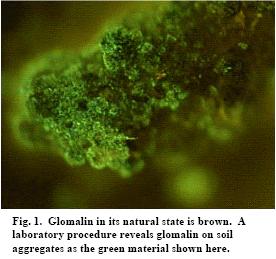
Atmospheric CO2 concentration is expected to increase by 50% near the middle of this century. Indications are strong that rising CO2 effects higher soil organic carbon content in some cases. Glomalin, which accounts for 1/3 of soil carbon, is of particular interest because of its important role in binding soil aggregates and increasing nitrogen use efficiency. The Center for the Study of Carbon Dioxide and Global Change has updated their excellent summary about the CO2 - glomalin relationship. There is a great reference list to dive into.

Image source: USDA-ARS: Glomalin: A Manageable Soil Glue (pdf brochure)


Thursday, January 26, 2006

Product review - new vadose zone research tool moves to farm

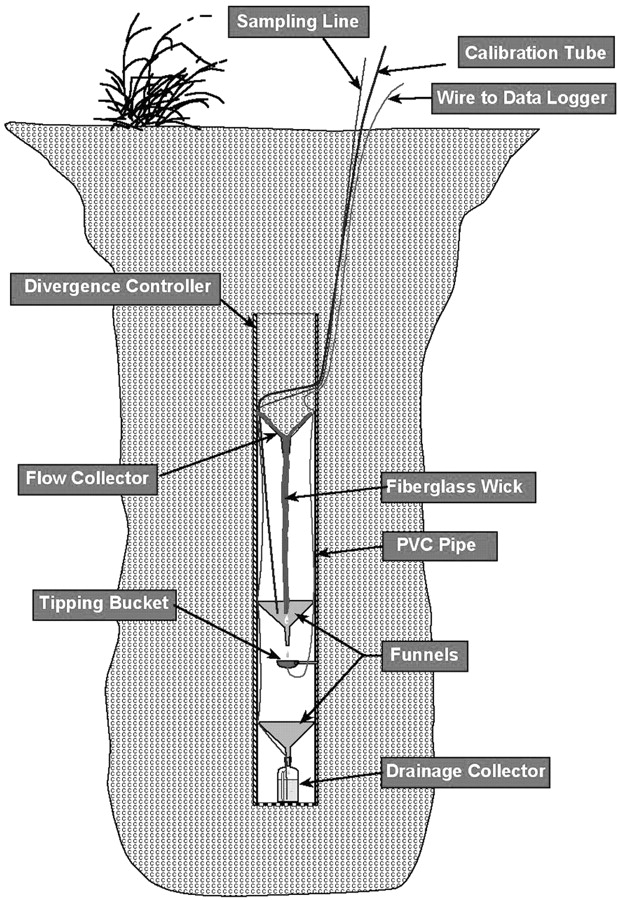
Irrigated farm fields lose water to deep percolation. This groundwater recharge, and what it contains, is difficult to research. This is because sampling tools designed to intercept saturated flow tend to miss unsaturated flow. And visa versa. New technology extracts deep soil moisture using a wick rather than the active suction or gravity.

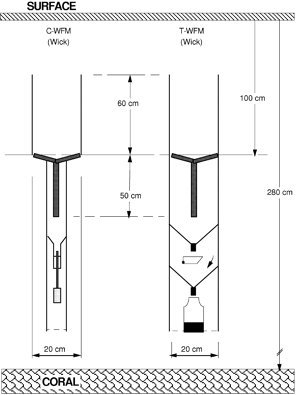
The first wick samplers were passive capillary samplers (PCS). This approach has now evolved into the current water flux meter (WFM) designed recently by Batelle soil scientist Glendon Gee. Two offspring WFM designs are commercially available: the Gee passive capillary sampler drain gauge (Decagon Devices, Pullman WA) and the vadose zone water flux meter (Sledge Sales Consulting, Dayton OR). In a recent journal article, the Decagon device is referred to as a capacitance water flux meter (C-WFM) and the Sledge device is referred to as a tipping-bucket water flux meter (T-WFM). The T-WFM is close to Glendon Gee's designs published in journal articles. The C-WFM was developed by Decagon soil scientist Gaylon Campbell in collaboration with Glendon Gee.

The original PCS devices needed a pit, best dug with a backhoe. Fiberglass wick length and strand size were calibrated to site specific conditions to prevent oversampling of unsaturated conditions. Today's WFMs can be placed in an auger hole or hand-dug pit. WFM configurations use a standard size and length wick which works for most situations. A recent journal article has an example of an oversampling problem.

There are strong similarities and distinct differences between the two firms. Like Decagon, Sledge maintains strong ties with Glendon Gee. Like Decagon, many of the 200 devices Sledge has produced have been for agricultural research. Compared to Decagon, Sledge is more a hands on, farm service and farm chemical oriented consulting business. With Wayne Sledge, the T-WFM is his flagship product. With Decagon, the C-WFM is a sensible addition, part of an extensive and well supported line of soil and agricultural measurement instrumentation. It appears that Decagon and Sledge have produced a similar number of devices and they are clearly on parallel tracks of success in refining their individual product.

Both firms have supplied most of their instruments to agricultural researchers, farms and clients concerned with water use efficiency and nitrogen use eficiency such as golf courses. There has also been environmental project placements, most often associated with landfill and mine-tailing closure

Decagon has put considerable effort into refining unit capacity to record water flux, less into water sample handling. The larger base of the Sledge unit enhances water sample handling options. Decagon has a stepped design which accommodates hand auguring the deepest portion, shortening installation time. Decagon has an extensive list of complementary devices and highly capable technical support staff. The Sledge unit is substantially lower in price. Choice is good.

Of particular interest in Washington State is wastewater spray field management. As mentioned in a government report: "The Department of Ecology has identified 20 spray field situations where wastewater was [improperly] applied [and conditions] ... led to contamination of groundwater...". This report was discussed here previously.

I spoke with Don Nichols, with Washington Department of Ecology's Water Quality Program, Eastern Regional Office, Spokane, WA. Don has encouraged the installation of WFMs for gathering vadose zone water quality information. Don referred me to Cascade Earth Sciences and Soil Test Farm Consultants for more information.

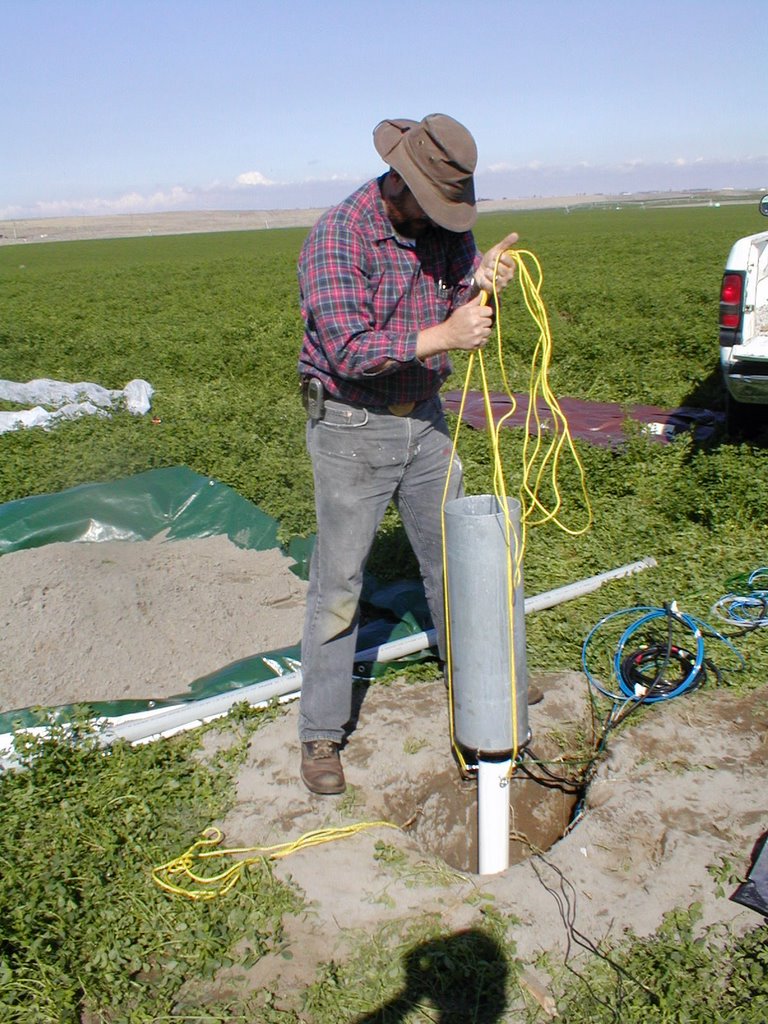
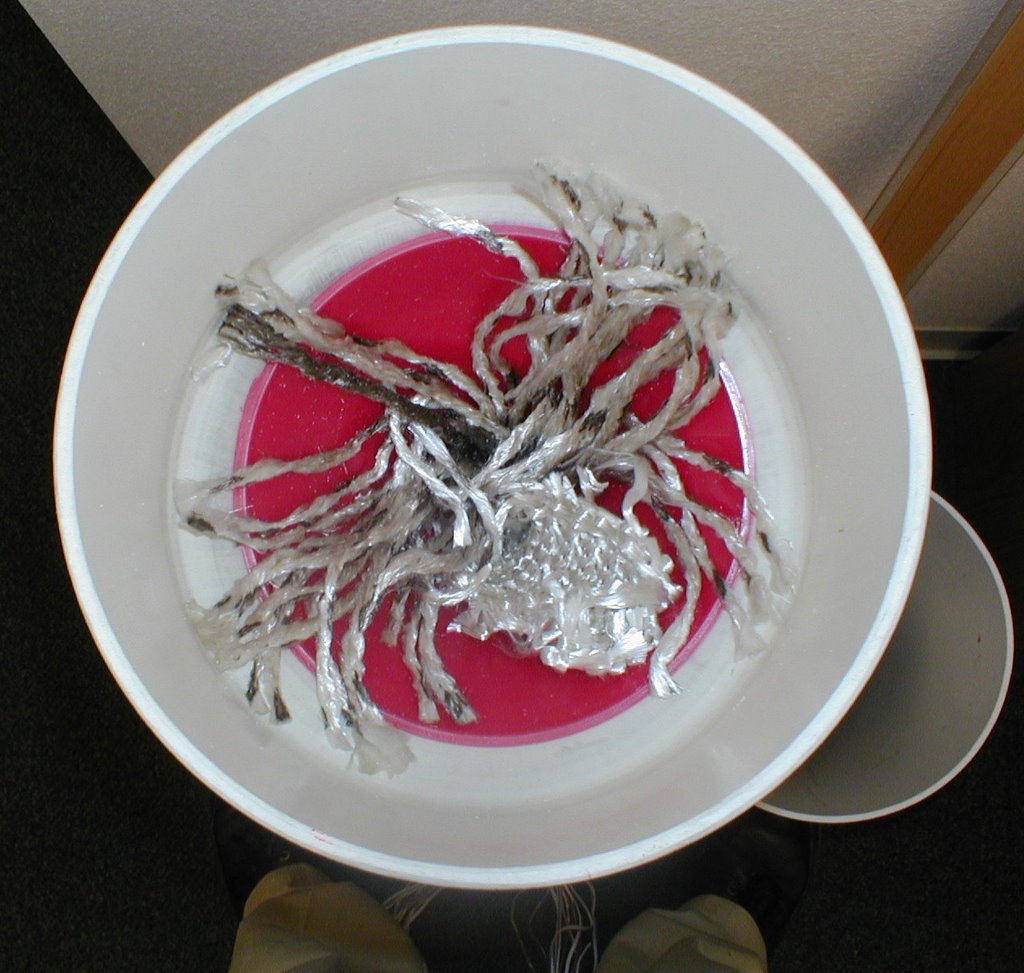
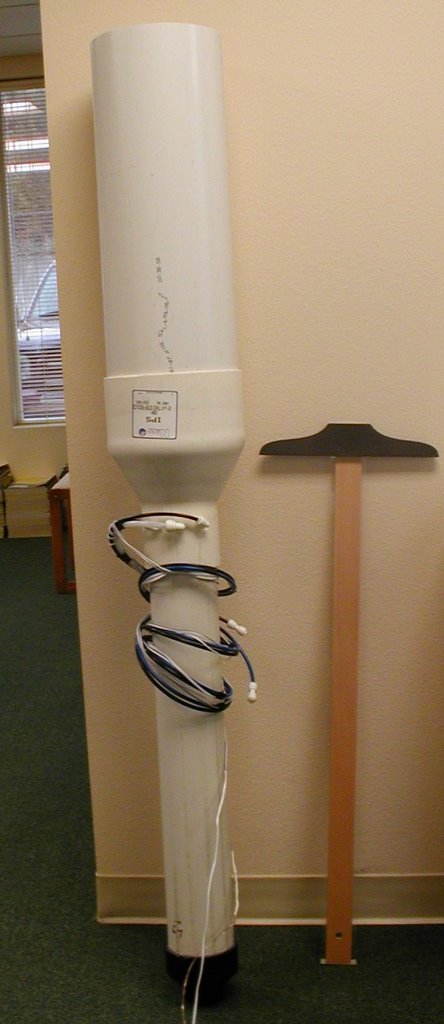
Dan Burgard, soil scientist with Cascade Earth Sciences (CES) in Spokane, WA has installed 7 Decagon C-WFMs in the Pasco, WA area, and 11 Sledge T-WFMs in southern California. CES modified the equipment to enhance sample collection capabilities. (See his photos below)

Dan Nelson, soil scientist with Soiltest Farm Consultants, Inc. in Moses Lake, WA has four Decagon C-WFMs installed in the Moses Lake, WA area. Both had nothing but good things to say about the potential uses of this type of data. Mass balance calculations will demonstrate if target water use efficiency and target nitrogen use efficiency is being achieved. Detailed daily data logs show exactly when percolation occurs. Percolation events observed to date are closely correlated with irrigation and precipitation events and even soil thawing events. As expected with the difference in weight between soil and the field capacity water portion, percolate nitrate and dissolved solids (salts) are several times higher than soil levels above the sample point. The devices are performing as intended.

One question I have is how many devices are needed to achieve statistical confidence in a mass balance calculation? Users independently tend toward sets of 3 units, with singles for spot comparison data. That is a sensible starting point but determining coefficient of variability on selected data would put the results into perspective.


None of the installations have been entirely glitch-free, mostly due to various data logger challenges or site specific soil related factors, such as coarse sands or depth limits. Users of the units are looking forward to continued refinements in data logger compatibility and would like to see costs come down and but give high marks for ease of installation and setup. This and available tech support make sampler units from Sledge and Decagon an attractive alternative to the do-it-yourself installations that predate this equipment.


References:
Brown, K.W., J.C. Thomas, and M.W. Holder. 1986. Development of a capillary wick unsaturated zone water sampler. Coop. Agreement CR812316-01-0. USEPA Environ. Monit. Syst. Lab., Las Vegas, NV.
Cary, J.W. 1968. An instrument for in situ measurements of soil moisture flow and suction. Soil Sci. Soc. Am. Proc. 32:3–5.
Gee, Glendon W., Zhang, Z. Fred, Ward, Andy L. 2003. A Modified Vadose Zone Fluxmeter with Solution Collection Capability Vadose Zone J 2003 2: 627-632 (highwire link) http://highwire.stanford.edu/
Knutson, J.H., and J.S. Selker. 1994. Unsaturated hydraulic conductivities of fiberglass wicks and designing capillary wick pore-water samplers. Soil Sci. Soc. Am. J. 58:721–729.
Selker
, J.S., C.K. Keller, J.T. McCord. 1999. Vadose Zone Processes, Lewis Publishers, ISBN 0-87371-953-0, GB1197.7.S46 1999 [1] [2]
van der Velde, M., Green, S. R., Gee, G. W., Vanclooster, M., Clothier, B. E. Evaluation of Drainage from Passive Suction and Nonsuction Flux Meters in a Volcanic Clay Soil under Tropical Conditions Vadose Zone J 2005 4: 1201-1209 (DOI: 10.2136/vzj2005.0011) (highwire link)