Showing posts with label edaphology. Show all posts

Sunday, February 04, 2007

Soil Science has Changed

For Carol, over at the Garden Bloggers Book Club, who comments on a previous post:
...be interesting in knowing how soil science has changed in the last 25+ years. I took an introductory class in soil science in 1978 or 79. And I don't recall much discussion about what was living in the soil. Has that become more of an emphasis?
The short answer to that is, yes.

Let's take a bit of a look back to those times. I took my soils classes mostly in 1974 through 1976 at UC Davis. One was a soil microbiology class, and it covered many of the soil-food-web fundamentals that Jeff Lowenfels expands on in "Teaming with Microbes", but it touched only briefly on species interdependence. Ecology was a fairly new field at the time, and much that we know now as soil ecology was just a glimmer in our eyes.

I took an introductory level ecology class in 1973. My recollection was this was only the second year an ecology class was available at UC Davis.

The emphasis in soil microbiology, at the time, was on the metabolic processes the soil biology contributes to nutrient cycling: respiration, immobilization, symbiotic nitrogen fixation, nitrification, ammonification. Carbon:nitrogen ratios of disked in residue were a big deal due to microbial immobilization. There was a strong emphasis on bacteria, and I don't recall anything said about mycorrhizal fungi.

I remember a deep respect for the living component of soil among my pedologic-oriented instructors: "Dirt is soil without life" was drilled into us countless times whenever we slipped up and used the term "dirt" when we should have used "soil".

My edaphic-oriented instructors were not as soil biology oriented. But this was before "soil health" and "soil quality" movements in agricultural soil science became established. It was also before the interest in wetland soil process, bioremediation, protecting groundwater, and understanding why septic systems fail, combined to drive dramatic changes in edaphology.


Edaphology is the study of soil (edaphic) effects. Until about 25 years ago, it mostly synonymous with agricultural soil science as distinguished from pedology, the study of soil in its natural setting. Edaphology now encompasses the new field of environmental soil science, with its more formal emphasis on interdependent living processes in soil.

Soil science has gone through dramatic changes in the last 25+ years.

Picture Source: The Divine Soil
Originally uploaded by Room With A View.

Technorati Tags:

Generated by: Technorati Tag Generator

Saturday, December 16, 2006

My picks from Vadose Zone Journal


My picks from Vadose Zone Journal May 2005; Vol. 4 (2): 225 - 451

VZJ articles are released to open access 18 months after online publication. These articles became available on November 13, 2006.

Buckingham, 1907: An Appreciation.

Buckingham's methodical development of an unsaturated flow theory from first principles facilitates a grasp that one seldom gets from textbooks. As a physicist in the company of agricultural scientists, Buckingham articulated his findings mostly in written prose, without much reliance on mathematics. His foundational ideas are as valid today as when he proposed them.

Simplified Method to Estimate the Green–Ampt Wetting Front Suction and Soil Sorptivity with the Philip–Dunne Falling-Head Permeameter

A simple, innovative method is presented to estimate saturated hydraulic conductivity in soil. The only paired data points necessary for this proposed new method are the times when the permeameter is half full and when it reaches empty.

Thursday, December 14, 2006

Invasive Earthworms

Its in the news. Research shows that invasive earthworms are damaging forest soils and are a menace to species diversity. Brought to light in November, 2002, gardening experts have confirmed the concern and the news keeps spreading. Fortunate for inquiring minds, self-archived copies of published journal articles are available. The problem is most often associated with formerly glaciated regions, where native populations of earthworms are not present. One work has a general map of affected locations (can compare to map here).

Another work addresses damage to soil. Comparing soil in front of the invaders to post invasion conditions demonstrates that these worms cause soil compaction, reduce soil fertility, increase erosion. Alterations in the soil profile include thickening of A horizons and obliteration of E horizons. I am still processing this information, but it appears that these invaders are capable of alterations deep enough into the soil profile to result in a change in soil taxonomic classification at the order level.

What looks to be one of the more prominent invasive species, Lumbricus rubellus showed up in my maple leaf compost (now vermicompost). I can confirm that L. rubellus is voracious. I remember a shovel slice of some nearby soil that went in a week or so before L. rubellus showed so my guess is they came with the place. L. rubellus operates on the surface litter and organic material found where that layer rests on the mineral soil. There are strong indications that L. rubellus supplements its leafy diet by feeding on the fungi and bacteria in the rhizosphere of plant roots. Seeing first hand how these critters operate, I find this last aspect quite disturbing. With its carbon sequestration function and the highly mutualistic species that it supports, this planet needs all the rhizospheric biological capacity it can muster.

Saturday, December 09, 2006

Soil and Bioavailability of P in Food


Researchers find that soil phosphorus levels may affect plant phytate levels as much as plant breeding. Phytate is the principal storage form of phosphorus in many plant tissues, especially bran and seeds.

Phytate is generally not bioavailable to humans and non-ruminant animals. Accordingly, there has been a push to develop low-phytate crop varieties. Not only is the phosphorus in low-phytate grain crops more digestible by people, low-phytate grains free up minerals essential to human nutrition: zinc, manganese and iron. This new research shows that grain raised with higher levels of soil phosphorus can have higher levels of phytate. I have not read ($) the journal article, but my thoughts are that the discovery of this soil connection was not anticipated: normally nutritional availability does not decrease with increased soil nutrient levels. If this relationship can be validated, it is an important breakthrough that affects human nutrition, efficient use of phosphorus (a non-renewable resource), farm costs, and environmental quality.

Swine and poultry operations benefit. Low-phytate feed results in lower manure phosphorus for these non-ruminants, a welcome prospect for waste management and addressing water quality concerns. Swine rations often need phosphorus added to ensure bone and muscle development for rapid growth, driving the market development for new, low-phytate crop varieties. The alternative to low-phytate feed is to use a feed additive, phytase. Currently, neither approach is particularly cheap.

Appreciation and attribution:
Sugar Creek Farm for a great photo.
GMO Pundit aka David Tribe for posting on this.

($) According to my read of HighWire Publishers Free Online Full-text Articles list, the journal article will be made available at no cost April 2, 2008 (18 months after publication).

Tuesday, November 28, 2006

Soil WikiProject


This year I have been participating with the Soil WikiProject. Working with a small group of Wikipedians interested in the earth sciences has been a fulfilling learning experience. The first order of business was to organize a comfortable directory structure on which to hang soil-related articles. I especially like the common sense way agricultural soil science and environmental soil science are treated as branches of edaphology, separating edaphic subjects from the pedology articles. It works particularly well in Wikipedia, where various aspects of soil science are informally laid claim to by other subject categories. For example, pedology has a prominent place in the physical geography directory structure : before the project the whole of soil science was treated as a derivative science of geography (and agronomy and geology and so forth).

From the above, you may think the articles are being rewritten strictly from a soil science point of view. They are not - the directory structure is intended to group similar subjects, not to narrow the perspective. The importance of an open perspective in Wikipedia is among the more difficult aspects for scientists to process when they begin editing. In my opinion, this is why most scientists seem drawn to contributing narrow subject matter. That's a fine place to start, but the more general subject matter is where the traffic is, where the effort is most appreciated, and where the collaborative wiki process works most efficiently. I'll expand on why this is important to soil scientists in future posts.

The project has about 400 soil-related articles to work on. Another 50-plus article subjects have been identified as needed, mostly involving pedology. The effort could use another pedologist or two. A good place for U.S. soil scientists to start is to check out the list of state soils. If your state is like most, that article remains to be written

With so many articles, part of the effort has been to concentrate on a short list of articles most important to the project. Along these lines, the soil article recently came through an extensive article improvement campaign. The article had the benefit of editorial review after it was proposed as a featured article. While it did not achieve this status, it certainly accorded itself well. This bodes well for future improvements in soil-related articles at Wikipedia.

Tech Tags:

Saturday, September 23, 2006

Come a Cropper

Gary Jones' posts over at Muck and Mystery never fail to get me thinking how the land works. Like this post where he promotes pasture over cropland. Which made me think back to an article at wikipedia about the paleopedological record that had wow-ed me recently:

Mollisols, the major agricultural soils of the present, are unique in their geological youth, being known from the Eocene but common only from the Miocene, as grasslands evolved.


"As grasslands evolved". Think about it. Can you see the Miocene era fire pushing back the forest and grass/soil biotic community evolving to extend their advantage? The evolution of grazing and grazers that followed? The soils darkening and levels of soil biologial activity ramping up?

Soils look so different in the forests versus in the grassland. Mollisols are awesome soils, and grazing is a natural component in their formation.

Wednesday, February 15, 2006

Dilution is the solution to pollution

Land treatment of industrial waste water can save energy. Mechanical aeration for treatment demands large quantities of electrical power. In land treatment, this is replaced by passive aeration. The energy cost reduction can be well in excess of the payments needed to purchase the land. A disadvantage of land application of waste waste is that it can contribute to ground water salinity.
Crops and soil treatment do little to remove mineral salinity from applied waters. How much salinity in ground water is too much? Salinity doesn't threaten health as much as it taints taste. This creates a dilemma. Environmental regulators are challenged to defend enforcement limits based on aesthetics with the same vigor as criteria based on human health. They are particularly challenged when the industries contributing to groundwater salinity are valued employers contributing to rural economies. But defend water quality standards they must.
Salt load in land applied waste water is considered by many to be the single most important challenge facing the industries which use land application to treat waste water. Particularly sensitive to this issue are briners, cheese processors and some electronics manufacturers. Among waste water spray field management advisers the consensus is that saline waste water spray field operations should avoid sites where the discharge can't be diluted by substantial rainfall and/or groundwater flux. In short, dilution is the only practical solution when it comes to salts in waste water. If the operation is located in an area that does not enjoy the benefits of natural dilution, the brine portion of the waste water stream can be segregated and transported to an area that does. Not an easy task but not unprecedented. A municipal waste water treatment plant discharging to a substantial body of water is a logical choice for receiving the brine.
These comments are prompted by a news article today in the Sacramento Bee (free registration required): Hilmar faces more pollution rules. Cheese factory agrees to give water quality board more authority.
[follow-up comment from Chris Bowman, Sac-Bee: The brine collected from the reverse osmosis filters is hauled to an East Bay MUD treatment plant.]

Thursday, February 09, 2006

My field season begins...

...with soil sampling at a waste water irrigated hay field. The study site has high gravel content which is farly well sorted due to the action of glacial age Missoula floods. In the picture, the AMS tile probe helps locate high gravel content areas to avoid sampling. The AMS mud bucket auger has wide-set teeth that accommodates the smaller gravels. The 0.25 inch screen helps reduce the sample for shipping. The screen also aids in mixing the sample prior to reduction.

Sunday, February 05, 2006

Farm tile drainage progressing rapidly (II)

As mentioned here earlier, farm tile drainage is being linked to accelerated wetland loss in Minnesota. A meeting held Saturday, February 5, to discuss wetland loss drew a crowd of 300. One person testified that “99 - 100%” of the wetlands in his county were now gone. Details are reported in the St. Paul MN Pioneer Press article with the headline: “Get tough to protect wetlands, group says”. Reading the tone of the reporting, it confirms my earlier impresssion that the majority of the wetland loss is considered to be due to draining uplands adjacent to wetlands. My read (see pdf addressing MN wetland regs) is that this is normally a legal undertaking. Installing drain tile within a wetland would not be legal. This foreseeable cause of wetland loss, due to activities outside of wetlands, seems to have caught wetland advocates without a workable strategy.


Wednesday, February 01, 2006

Precise common sense II

Elton Robinson expands nicely on the previous post by email:

The variable-rate application of inputs is actually well developed and prospering in Mid-South cotton fields. It works for two reasons. One, we have highly variable soils along the Mississippi River Delta, which in turn creates variable yields. Second, the cotton crop demands intense in-season management for plant growth, insects, weed management, disease and harvest preparation.

Infrared aerial photography and electrical conductivity mapping carts can pick up the variation in soil type when the ground is bare and pick up plant biomass when the crop is growing. Geo-referenced maps generated from the imagery allow the farmer to vary applications of plant growth regulator, defoliants and other inputs during the season based on variability in biomass. For example, the poor-yielding parts of the field will receive less plant growth regulator to allow plants to catch up with the better-yielding parts of the field, which in turn will receiver more plant growth regulator, to prevent vegetative growth. The result is higher yield and lower cost.

The cost to the farmer for the imagery, and variable-rate prescription is $7 per acre. Sprayers can be adapted for variable rate applications for $6,000. The cost of producing cotton is about $500 an acre. A conservative savings in input costs of 10 percent plus a 5 percent increase in yield would put $65 an acre in the farmer’s pocket. If he farms 1,000 acres of cotton, that $65,000, more than enough to pay off the cost of the technology in year one.

The technology is not affordable if there is little variability in the soil, or if a crop (corn, soybeans) does not respond as well to in-season management. I did read your previous blog on VR nitrogen, and agree that it's been very difficult for researchers to show a benefit.

Tuesday, January 31, 2006

Precise common sense

Precision ag implies computer mapped lab data and GPS controlled field equipment. Higher yields, less flying blind and easier farming. The reality is that the expense of data collection, analysis and interpretation can quickly wipeout any added value. Reading this article about variable rate management of cotton, it struck me that common sense and curiosity are the missing ingredients. Elton Robinson with Delta Press reports on cotton producer Kenneth Hood, Mississippi, who attributes his success with variable rate agriculture to, among other things, reliance on aerial photo interpretation, an approach not typical of precision agriculture. Hood says that the “... advantage to imagery is that very little data collection is required, according to Hood, “which is unlike most precision agriculture practices.” Put this experience together with the recent cryptic news on the lukewarm record of precision agriculture in Germany, which I touched on earlier, and what do you get? My sense is that Kenneth Hood is going to have lots of company.

Sunday, January 29, 2006

Farm tile drainage progressing rapidly

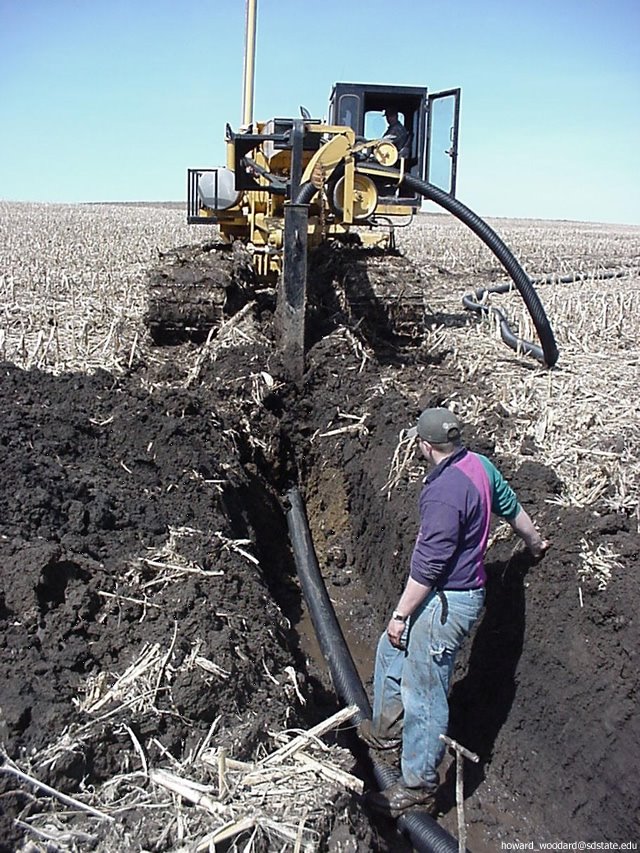
As told by Chris Niskanen over at the St. Paul MN Pioneer Press there is a tremendous amount of tile drainage going on in the north central USA: 100 million feet per year or about 19,000 miles by one estimate. Improved flexible drain tile is making this unprecedented rate of installation possible. The article mentions a number of areas of potential concern: loss of duck habitat and increased nitrate levels in surface water. Where no jurisdictional wetlands are being tiled, no permits are needed to perform this work. However the extent of the practice has caught the attention of folks and a community effort to address the impact of farm drainage on wetland habitat is being discussed.
Image source: South Dakota State University – Ag environmental issues page
Tech Tags:

Saturday, January 28, 2006

Glomalin, science, CO2 and climate change

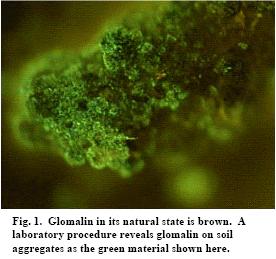
Atmospheric CO2 concentration is expected to increase by 50% near the middle of this century. Indications are strong that rising CO2 effects higher soil organic carbon content in some cases. Glomalin, which accounts for 1/3 of soil carbon, is of particular interest because of its important role in binding soil aggregates and increasing nitrogen use efficiency. The Center for the Study of Carbon Dioxide and Global Change has updated their excellent summary about the CO2 - glomalin relationship. There is a great reference list to dive into.

Image source: USDA-ARS: Glomalin: A Manageable Soil Glue (pdf brochure)


Thursday, January 26, 2006

Product review - new vadose zone research tool moves to farm

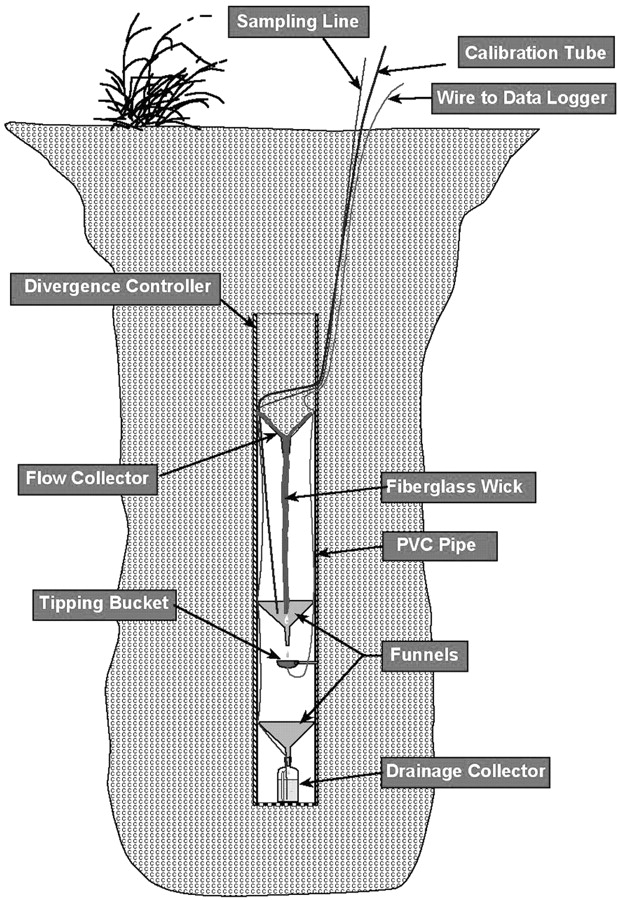
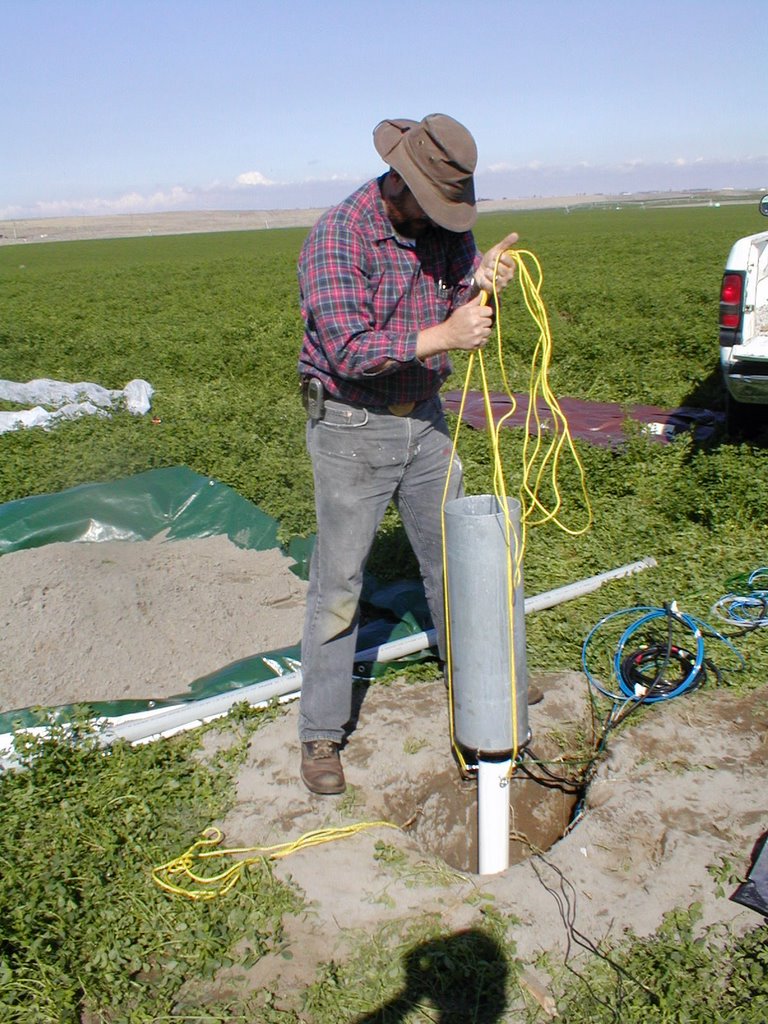
Irrigated farm fields lose water to deep percolation. This groundwater recharge, and what it contains, is difficult to research. This is because sampling tools designed to intercept saturated flow tend to miss unsaturated flow. And visa versa. New technology extracts deep soil moisture using a wick rather than the active suction or gravity.

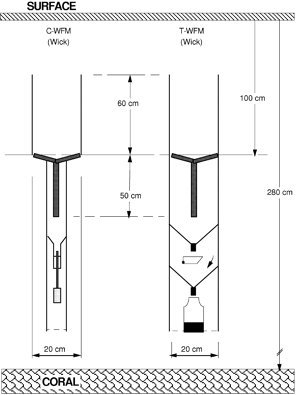
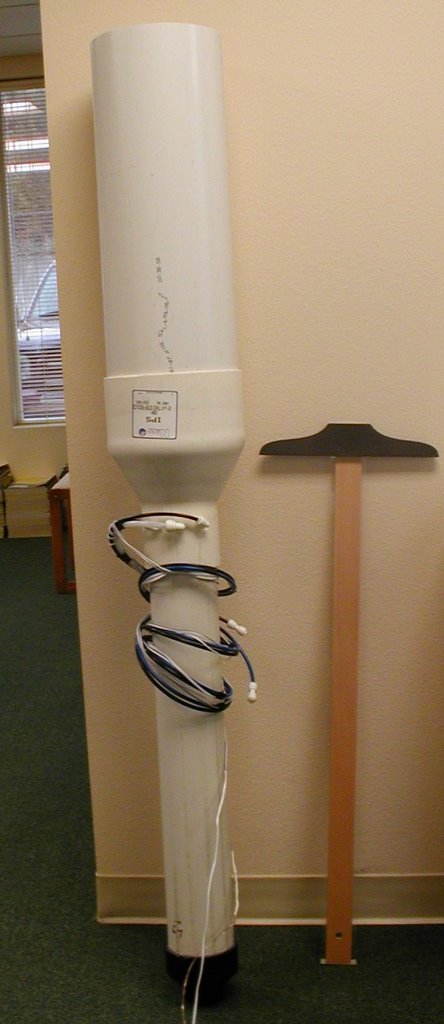
The first wick samplers were passive capillary samplers (PCS). This approach has now evolved into the current water flux meter (WFM) designed recently by Batelle soil scientist Glendon Gee. Two offspring WFM designs are commercially available: the Gee passive capillary sampler drain gauge (Decagon Devices, Pullman WA) and the vadose zone water flux meter (Sledge Sales Consulting, Dayton OR). In a recent journal article, the Decagon device is referred to as a capacitance water flux meter (C-WFM) and the Sledge device is referred to as a tipping-bucket water flux meter (T-WFM). The T-WFM is close to Glendon Gee's designs published in journal articles. The C-WFM was developed by Decagon soil scientist Gaylon Campbell in collaboration with Glendon Gee.

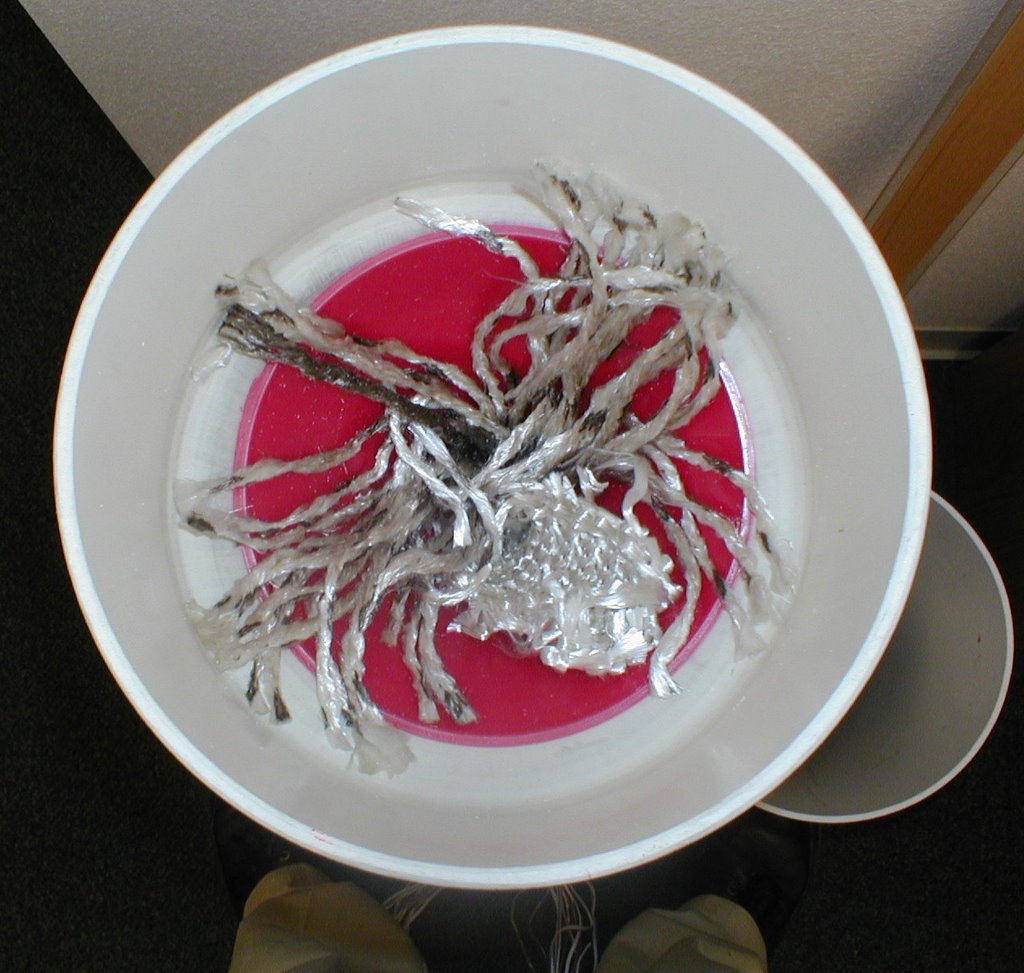
The original PCS devices needed a pit, best dug with a backhoe. Fiberglass wick length and strand size were calibrated to site specific conditions to prevent oversampling of unsaturated conditions. Today's WFMs can be placed in an auger hole or hand-dug pit. WFM configurations use a standard size and length wick which works for most situations. A recent journal article has an example of an oversampling problem.

There are strong similarities and distinct differences between the two firms. Like Decagon, Sledge maintains strong ties with Glendon Gee. Like Decagon, many of the 200 devices Sledge has produced have been for agricultural research. Compared to Decagon, Sledge is more a hands on, farm service and farm chemical oriented consulting business. With Wayne Sledge, the T-WFM is his flagship product. With Decagon, the C-WFM is a sensible addition, part of an extensive and well supported line of soil and agricultural measurement instrumentation. It appears that Decagon and Sledge have produced a similar number of devices and they are clearly on parallel tracks of success in refining their individual product.

Both firms have supplied most of their instruments to agricultural researchers, farms and clients concerned with water use efficiency and nitrogen use eficiency such as golf courses. There has also been environmental project placements, most often associated with landfill and mine-tailing closure

Decagon has put considerable effort into refining unit capacity to record water flux, less into water sample handling. The larger base of the Sledge unit enhances water sample handling options. Decagon has a stepped design which accommodates hand auguring the deepest portion, shortening installation time. Decagon has an extensive list of complementary devices and highly capable technical support staff. The Sledge unit is substantially lower in price. Choice is good.

Of particular interest in Washington State is wastewater spray field management. As mentioned in a government report: "The Department of Ecology has identified 20 spray field situations where wastewater was [improperly] applied [and conditions] ... led to contamination of groundwater...". This report was discussed here previously.

I spoke with Don Nichols, with Washington Department of Ecology's Water Quality Program, Eastern Regional Office, Spokane, WA. Don has encouraged the installation of WFMs for gathering vadose zone water quality information. Don referred me to Cascade Earth Sciences and Soil Test Farm Consultants for more information.

Dan Burgard, soil scientist with Cascade Earth Sciences (CES) in Spokane, WA has installed 7 Decagon C-WFMs in the Pasco, WA area, and 11 Sledge T-WFMs in southern California. CES modified the equipment to enhance sample collection capabilities. (See his photos below)

Dan Nelson, soil scientist with Soiltest Farm Consultants, Inc. in Moses Lake, WA has four Decagon C-WFMs installed in the Moses Lake, WA area. Both had nothing but good things to say about the potential uses of this type of data. Mass balance calculations will demonstrate if target water use efficiency and target nitrogen use efficiency is being achieved. Detailed daily data logs show exactly when percolation occurs. Percolation events observed to date are closely correlated with irrigation and precipitation events and even soil thawing events. As expected with the difference in weight between soil and the field capacity water portion, percolate nitrate and dissolved solids (salts) are several times higher than soil levels above the sample point. The devices are performing as intended.

One question I have is how many devices are needed to achieve statistical confidence in a mass balance calculation? Users independently tend toward sets of 3 units, with singles for spot comparison data. That is a sensible starting point but determining coefficient of variability on selected data would put the results into perspective.


None of the installations have been entirely glitch-free, mostly due to various data logger challenges or site specific soil related factors, such as coarse sands or depth limits. Users of the units are looking forward to continued refinements in data logger compatibility and would like to see costs come down and but give high marks for ease of installation and setup. This and available tech support make sampler units from Sledge and Decagon an attractive alternative to the do-it-yourself installations that predate this equipment.


References:
Brown, K.W., J.C. Thomas, and M.W. Holder. 1986. Development of a capillary wick unsaturated zone water sampler. Coop. Agreement CR812316-01-0. USEPA Environ. Monit. Syst. Lab., Las Vegas, NV.
Cary, J.W. 1968. An instrument for in situ measurements of soil moisture flow and suction. Soil Sci. Soc. Am. Proc. 32:3–5.
Gee, Glendon W., Zhang, Z. Fred, Ward, Andy L. 2003. A Modified Vadose Zone Fluxmeter with Solution Collection Capability Vadose Zone J 2003 2: 627-632 (highwire link) http://highwire.stanford.edu/
Knutson, J.H., and J.S. Selker. 1994. Unsaturated hydraulic conductivities of fiberglass wicks and designing capillary wick pore-water samplers. Soil Sci. Soc. Am. J. 58:721–729.
Selker
, J.S., C.K. Keller, J.T. McCord. 1999. Vadose Zone Processes, Lewis Publishers, ISBN 0-87371-953-0, GB1197.7.S46 1999 [1] [2]
van der Velde, M., Green, S. R., Gee, G. W., Vanclooster, M., Clothier, B. E. Evaluation of Drainage from Passive Suction and Nonsuction Flux Meters in a Volcanic Clay Soil under Tropical Conditions Vadose Zone J 2005 4: 1201-1209 (DOI: 10.2136/vzj2005.0011) (highwire link)


Friday, January 20, 2006

German science workshop news critical of precision agriculture performance

A German soil science research center reports that Precision Agriculture has not delivered on promised benefits, stating:
...worse are the actually reported effects of ..."Precision Agriculture" (PA) ...on N efficiency. Still after 15 years of implementation no results proving consistent increases in yields or decreased fertilizer application are available. Quite the contrary: some of the techniques developed in PA may even decrease fertilizer N efficiency...
The Federal Agricultural Research Center (FAL) - Institute of Plant Nutrition and Soil Science's workshop, Options for reducing the nitrogen surplus in plant production, has individual presentation pdf files available, including the one on PA.


Monday, January 16, 2006

Tetany animal health issue and soil, hay links

Tetany is a complex disease in that no specific condition triggers it in all cases. Gauge tetany risk using soil and tissue analysis when growing or feeding hay comprised solely of cool-season grasses. A grass-legume mix does not have this risk.

Tetany is a disease affecting ruminants and is associated with feeding or grazing bluegrass, bromegrass, fescue, orchardgrass, ryegrass, timothy and wheatgrass. It is caused by low blood levels of calcium and/or magnesium. Classic risk conditions occur when the forage grass is growing quickly in the spring and nitrogen levels are high. Less well known is that tetany can be a problem when hay is grown on soils with excessive soil potassium. Manure and potassium hydroxide cleansers are two potential sources. Lactating animals are more susceptible to tetany, thus dairies are particularly alert to the concern and tend to avoid growing or feeding grass hay exclusively. Forage guides may not mention it as a concern. A forage tissue ratio of K/(Ca+Mg) of more than 2.2 indicates a high risk of tetany and the need to supplement feed with magnesium (Mg) (see also). If an animal goes down and tetany is suspected, a veterinarian should be contacted for immediate treatment. Often an animal will recover if it can be given an injection of magnesium sulfate (Epsom salts) early on.

Preventative Mg feed supplement and the ready supply of alfalfa tends to keep the incidence of tetany to a minimum. My thought is that tetany is additionally controlled by the close knit nature of farm communities. Caring neighbors and long memories tend to interact sufficiently that tetany symptoms don't take more than an animal or two, usually the weakest anyway, before it is figured out. Perhaps this explains why analytical laboratories in my region are generally unaware of tetany or the role of soil and tissue nutrient levels. My opinion is that cooperative extension publications in the Pacific Northwest can do better in this area. Tips for preventing animal loss due to tetany should be included in the fertility guides published to help folk interpret forage test results.

See also:
Spring Mineral Considerations by Jeff Heldt (link added 03MAR06)
Controlling Grass Tetany in Livestock, by Cooperative Extension, New Mexico State University, available in pdf format

Tech Tags:

Tuesday, December 27, 2005

Phosphorus and TMDL

Today I am pulling together conceptual information related to phosphorus (P) and Total Maximum Daily Load (TMDL) in anticipation of meeting with Walt Edelen and Rick Noll, water quality folks with the Spokane County Conservation District (SCCD). The problem we will be putting our heads together on is the relationship between river and stream P levels (ug/l) relevant to TMDL and soil P levels (mg/kg) in adjacent, contributing areas. More specifically, we are going to lay out what methods and approaches are available for gathering soil P information that will produce data that can be used to measure P loading, measured in pounds of phosphorus, lost to the river. We want tools to quantify the effects of implementing various Best Management Practices (BMPs) for controlling streambank sluffing and farm field erosion.

The motivation for specifically defining pounds of phosphorus delivered has to do with the concept of phosphorus load allocation. It has to be conceptual, rather than actual, because, when it comes to soil contributions, we don't have the studies needed to characterize the complex causes and effects in these systems. Nor do we have the luxury of time of waiting for the studies to be designed, funded and conducted. The TMDL beast is at the door.

At first glance, it seems like a simple question of mass balance. How many tons of soil are discharged to the river, where and when, and how much phosphorus did it have in it. A mass balance approach certainly makes sense for wastewater dischargers, considered the most significant source of P in the Spokane river. But that approach doesn't fit as easily for soil. How much soil phosphorus converts to water phosphorus. It can't be 100% efficient, some will end up dissolved in the water, some will end up involved with the suspended sediment load but the rest will end up on the stream bottom where it will contribute P to water only over a long period of time. Complicating this is seasonal changes in capacity of a stream to carry suspended sediment. Clean water is hungry water and it picks up material fairly easily. Muddy water is different and it drops it's sediment load whenever it loses energy, the insides of curves for instance. You can bet that sediment delivered to a clean stream is going to affect total phosphorus levels more efficiently than sediment delivered to a muddy stream. Considerations of efficiency mean testing for available phosphorus may not be enough. The next most obvious analytes to add into the mix are total phosphorus, texture, pH and organic matter content. I'm looking forward to a lively discussion.


Technorati tags:

Friday, December 23, 2005

Dept of Licensing Surveys Soil Science Practice, Recommends Regulation

The Washington State Department of Licensing (DOL) has submitted a requested Sunrise Review of Soil Scientists to the State House Commerce & Labor Committee. The report recommends that the practice of soil science be regulated.

Members of the Washington Society of Professional Soil Scientists (WSPSS) can find much to be proud of as well as cause for renewed vigilance in DOL's report. Soil science has been in DOL's sights before but the current set of events that led to the sunrise report started in 2001. That was the year that soil scientists became concerned that under the Geologists Licensing Act, practicing soil science would require being a registered geologist. Timely action by WSPSS resulted in an exclusion for the practice of soil. It also reignited WSPSS' interest in licensing.

Renewed efforts followed shortly in 2002 when soil reports prepared by a soil scientist were rejected by the Pierce County Planning Department. The planning department required a licensed geologist, consistent with a draft model Critical Area's Ordinance (CAO) being prepared by the State Department of Community, Trade & Economic Development (CTED). Subsequent effort by WSPSS to revise CTED's Model CAO to include soil scientists as qualified to submit soil reports were initially successful but, for reasons that have not been determined, the soil science profession was not included in the final draft.

Without licensing, soil scientists are failing in their efforts to maintain their professional standing with county planning departments, health districts and permitting agencies in Washingtonm State. Draft legislation to license the practice of soil science was submitted to both State Senate and House committees during the 2004/2005 legislative session. Lobbying efforts resulted in the House Commerce & Labor Committee request to the Department of Licensing to prepare a “sunrise� report that would define the reasoning and metrics underlying the request to be regulated.

An excerpt from that report:
Considerable evidence compiled in this report, through out-of-court settlements and litigation, show harm to property, health, safety and welfare of the public. Public health endangered by improper soil analysis ... has led to contaminated wells and groundwater; septic system failures; and compromised wetlands. Harm to the public exists when [action] is approved without a comprehensive soil analysis conducted by a soil expert to support decision[s] taken. Public harm occurs when ordinances excludes a professional group that hold an expertise through education and experience. Exclusion of a qualified group to practice diminishes choice. A significant number of court settlements indicate that there are professionals [who] practice soil science beyond the scope of their expertise. In view of the findings regarding the practice of soil science, the following recommendations [are] made for consideration by the Legislature:
  1. That Soil Scientists be regulated; and
  2. expertise should be defined to minimize overlap of work to be performed.
The sunrise report goes on to indicate that defining what is soil science, and identifying who is a soil scientist is a challenge. Furthermore, without a commercial yellow pages heading for the profession, consumer access to soil scientists is limited to an informal referral system. Professional soil science societies are viewed in the report as ineffective in protecting the public from unprofessional acts by soil scientists or purported soil scientists. Specific examples of damage are provided in the report, including at least $3,000,000 in damage claims due to septic system problems in Cowlitz County in western Washington. Also cited were 20 cases in eastern Washington, provided to DOL by the Washington Department of Ecology, where earlier or more competent soil science consultation could have saved resources and protected human health.

Now that the sunrise report has been submitted, the legislature can move forward during the 2006/2007 legislative session to act on the previous draft. Prospects look good for passage, but regardless of the outcome, Washington soil scientists cannot help but be lifted up by the findings of the sunrise report: Practitioners of soil science are needed in Washington State to a degree that individual practitioners could not have been aware of. While it is extremely disturbing to learn of several instances of unprofessional work by purported soil scientists, it is good to read that quality work is highly valued and recognized as critical to protecting health and resources. Washington soil scientists already know that we are in some demand: once a soil scientist establishes a niche, it is rare to find that individual idle. DOL's survey offers us a unique glimpse into the bigger picture as to why that is.

1997 photo of sprayfield with soil problem.
Olympia Cheese. Lacey, WA.


Technorati Tag:

Tuesday, December 20, 2005

Mollisols, Agricultural Systems and the Dangers of Static Thinking

One of my favorite blogs is Muck and Mystery, by Gary Jones, a self described bio-geek. In a December 18th post Muck and Mystery includes a map of the global distribution of Mollisols. The map demonstrates that the best agricultural soils in the world are largely in North America and the European Union. We can expect high crop production from these areas and it is self-evident why nations with productive soils can be expected to demand more fertilizer per unit area. The point Muck and Mystery counters is that patterns of crop production and fertilizer use are largely accounted for by patterns of export subsidies.

Hear, hear. Eliminating farm supports in developed countries will not eliminate long term demand for agricultural exports from the US and EU. While there are compelling elements of truth to the notion that agriculture production is a political toy, it becomes a dangerously simplistic construct when extended to justify redistributing agricultural production on a global scale. The planet has limited areas where soils and climate are ideal for crop production. Ignoring the realities of what the land can, and cannot, support is always a terrible mistake. Doing it in the name of economic justice and environmental protection doesn't make it right.

Ignoring what the land compels in the name of other good causes abounds. Whether it is in the name of endangered species protection, wetland protection, smart growth or prime farmland protection, the supply of ironic disconnects far exceeds demand. Thank you Muck and Mystery for holding our collective do-gooder feet to the fire yet again.

Update:
Here's a link to a news article shedding some light on the complex subject of export subsidies.
Column: Where’s that 18 cents for African cotton producers?
Dec 29, 2005 2:56 PM
African farmers should ask their leaders why their prices are 18 cents below world cotton prices


Technorati Tag: