Showing posts with label government. Show all posts

Sunday, June 01, 2008

Hephzibah Sludge


Been following the sludge story from Hephzibah, Ga.? If you work in support of biosolids, like I do, you should be.

Andy McElmurray, a farmer in Hephzibah, Ga., fed his dairy cows silage that had been fertilized with sewage sludge laced with heavy metals. More than 300 of them died.

In February, a federal judge ordered the Department of Agriculture to compensate McElmurray for losses incurred when his land was poisoned between 1979 and 1990 by applications of Augusta, Ga., sewage sludge. That sludge contained levels of arsenic that were two times higher than EPA standards allow; of thallium (a heavy metal used as rat poison) that were 25 times higher; and of PCBs that were 2,500 times higher.

What's more, milk from his neighbor's dairy farm was sent to market with thallium levels 120 times higher than those allowed by the EPA in public drinking water.

In his ruling, U.S. District Judge Anthony Alaimo was particularly critical of the EPA and the University of Georgia for having endorsed "unreliable, incomplete and, in some cases, fudged" data about the Augusta sludge. That corrupt data was presented to the National Academy of Sciences, which then cited it in their July 2002 assertion that sewage sludge does not pose a risk to public health.

Alaimo wrote, "Senior EPA officials took extraordinary steps to quash scientific dissent, and any questioning of EPA's biosolids program."

Our biosolids have incredible fertilizer value in terms of phosphorus and nitrogen, which is what pulls me into the mix. But it is valuable only to the degree that it can be trusted. Some biosolids can be trusted, some cannot. Let's do this thing, people.

Thursday, September 13, 2007

La Paz Loses Yakima Case

Little La Paz County, AZ, has failed at great cost in putting biosolids drier Yakima Company out of business. Jim Willett, owner, told me years ago about the bizarre goings on that precipitated his 2004 claim for damages of $20M, the amount he would lose over a 25 year period as a result of the County terminating its contract. The contract was for providing space for the drying operation, and to secure additional space for future expansion in exchange for a $/ton fee. The contract encouraged volume and, in hopes of generating County revenues as quickly as possible, the County allowed Jim to start operations on condition of working up a closure plan and bonding for the closure costs. Then something went sour, and the county stalled beyond reason their acceptance of first the plan and then the bonding. When they did accept, they didn't inform Jim.

It was a pretty simple business model: truck the solids in from LA, lay it out thin and dry it in the wind and sun, windrow it to finesse stabilization, pick it up and truck the now Class A fertilizer-esque material a few miles back to California to needy farmers. With the right combo of clients, farmers, and truckers, it was clean, simple, satisfying, and profitable in what can be a complex, and low margin business.

Last week a La Paz County jury awarded Jim $9.2M plus legal expenses. Jim regrets the process and takes no joy in the results. It is not the life, and not the legacy, that he wanted.

The local rag has posted several articles on the trial (1, 2, 3). The newspaper, which gamely supports comments on articles, was unprepared for the outpouring of vigorous support for the jurors courageous decision, and the level of outrage directed towards the County Board of Supervisors for their mismanagement of political power. The paper clearly slants its writing in support of the BoS, adding to the intensity of the backlash. The editor, John Gutekunst, selectively deletes comments but even at that the longest set of comments now prints out to 33 pages even when ported to Word in 10font.

According to comments, the County's $1.5 million in legal fees are not covered by insurance, and the County determined this early on in the process. Comments characterize the legal effort as a personal vendetta against Jim by Supervisor Gene Fisher. This vendetta included asking the sheriff to arrest Jim's clients at the drier site for trespassing on County property, and coaching employees against their better judgment to the point that one County employee quit their job. Word gets out fast on that type of work place abuse. Tossing aside the potential of $1-200K/yr in much needed tax free revenue for personal reasons has added to local dissatisfaction.

Despite a lack of public support, or financial capacity, it is clear that the County will appeal. A reinvigorated recall effort is mounting to pull the plug on this monster.

Wednesday, June 13, 2007

Agrichar trials in NSW

News and commentary on agrichar is flowing steadily this spring, first with the reporting on the 1st annual Agrichar Conference, and now with the reporting on initial agrichar trials by the New South Wales Department of Primary Industries (NSW DPI). Particularly encouraging is that the sophistication of the comments continues on the increase.

Snippets
from ABC' Discovery channel ...

Recent greenhouse trials found soils mixed with the charred waste, called agrichar or biochar, were more attractive to worms and helpful microbes.

Agrichars trialled by NSW DPI include those from poultry litter, cattle feedlot waste as well as municipal green waste and paper mill sludge. Each agrichar has its own characteristics and interacts differently with different soil types.

Some agrichars raise soil pH at about one-third the rate of lime, raise calcium and reduce aluminium toxicity.

Kimber said more research needs to be done on working out which agrichars are best for which soils and on the impact of any contamination in biomass.

... reinforce the need for local pyrolysis pilot projects. The pyrolysis pilot hurdle is necessary where widespread agrichar use is the goal. Clean air concerns combines with the limited supply of local expertise and experience needed to achieve the low-temperature pyrolysis ideal for producing agrichar.

I have
submitted comments emphasizing the need for pilot agrichar projects to our State's climate change folks.

(AP image source)

Tuesday, May 08, 2007

Carbon Sequestration for Farm, Forest Income

The New York Times has an article about selling carbon credit through the Chicago Climate Exchange (CCX).:

An acre of pine forest captures and holds one to two metric tons of carbon dioxide per year, which it uses for photosynthesis. Untilled cropland holds a third of a ton of carbon per acre, and rangeland holds up to a fifth of a ton. The sequestered carbon dioxide is measured by soil tests before and after the planting.

Carbon dioxide credits now sell for about $4 a metric ton. Mandatory restrictions, experts say, could increase the price to $12 or higher. In Europe, the cost of a credit sold for sequestering carbon dioxide has reached $20, and even $30, a ton.
The market for carbon credits seems to hover between $3 and $4. A review of past CCX newsletters reveals sporadic volume, with common fluctuations of $0.50 to $0.75 per metric ton per month. The New York Times article suggests that biological sequestration will ultimately be replaced with geological sequestration. Expectations of sustaining $20 or $30 a ton seem unrealistic.

$3-$4 is far better than the $0.25 that the Confederated Tribes of the Colville Reservation in Washington received for forested land in the 1990s.

The Tri-Societies' science policy blog has a post about Farming Carbon:
Currently, farmers who wish to profit from the sequestration potential of their soils can sell carbon credits on the (CCX).
Science is needed to better quantify the carbon flux and carbon sinks.
At present, aggregators don't attempt to gauge the carbon impact of individual farms nor do they quantify counterbalancing emissions of traces gases. Hopefully, ASA/CSSA/SSSA members can play a constructive role in the CCX, providing the scientific basis on which aggregators will improve their climate accounting.
I would like to see more discussion on the nuts and bolts of accounting and verification.


Flickr Source: George sampling 3/2/07 ESA Common

Tuesday, January 23, 2007

NRCS Assessment of US Land Use, Erosion, Wetlands

The USDA Natural Resources Conservation Service has posted results of their Natural Resources Inventory (NRI). Depicted are land cover and use, soil erosion, and wetland gains or losses for the 48 contiguous United States.

From 1977 to 1997, NRCS conducted the assessment every five years, in 2000, they began the transition to an annual assessment. The most recent data is from 2003 and reflects only conditions at that point, NRCS Chief, Arlen Lancaster says, "This is a snapshot, this is the number in terms of cropland, this is where we're at in terms of erosion," he says later this year they will be able to provide numbers that reflect the change from year-to-year.

Some findings:

  1. The 48 contiguous states cover 1.9 billion acres and 71% of that, 1.4 billion is in non-Federal rural land uses. Of that 1.4 billion acres, 406 million is in forest land, 405 million is rangeland and 368 million is cropland.
  2. Cropland acreage decreased 12% from 1982 to 2003. The net decline between 1997 and 2003 was 8 million acres, or about 2 percent.
  3. Soil erosion on U.S. cropland decreased 43% from 1982 to 2003.
  4. In 1982, 40% of all cropland was eroding above soil loss tolerance rates, that number declined to 28% in 2003.
  5. Erosion rates on a per acre basis declined significantly between 1982 and 2003. Sheet and rill erosion on cropland dropped from 4.0 tons per acre per year in 1982 to 2.6 tons per acre per year in 2003; wind erosion rates dropped from 3.3 to 2.1 tons per acre per year.
  6. There was a net gain in wetland acres on non-Federal rural lands between 1997 and 2003. Annual net gains between 2001 and 2003 were 72,000 acres per year, of which 44,000 acres per year were on agricultural lands.

The 2003 results look fairly encouraging. Erosion continued down. There was a net gain in wetland acres coming substantially from agricultural lands and a moderated trend of farmland loss. It fits with what I was seeing on the ground in those years. 2004, 2005 and 2006 might not be as good as 2001 - 2003. Funding for soil conservation and especially wetland construction was tighter after 2003. This was also at a time when tiling was on the increase, as I reported earlier. The farmland loss rate probably regained some steam with development activity. Any comments?


Sunday, December 10, 2006

New Soil Science Licensing Website

Renewed soil science licensing efforts are underway in Washington State. Supporting them is a new website. Titled Soil Science Licensing, the site is available to become a clearinghouse for all soil science licensing efforts. It links to the best available information, including the list of soil science licensing boards maintained by the Soil WikiProject.

For now, the Soil Science Licensing site effort is strictly focussed on Washington state's efforts. The latest revision (pdf) (December 7, 2006) has been posted and I have one concern with the new wording:

The practice of soil science does not include design work, such as would be carried out by either engineers, as defined in RCW 18.43.020 or architects, as defined in RCW 18.08.320.
We need something along these lines, but the term "design work" is not specifically defined in the cited sections, but is referred to somewhat broadly. Is this going to be a problem? Perhaps someone with experience in one of the licensed states can comment.

Saturday, December 09, 2006

GeoCorp America Soil Science Internships


GeoCorps America has announced that 40 jobs will be available this summer, 2007, for work with the National Park Service, US Forest Service, and Bureau of Land Management. These are paid geoscience positions at many interesting locations. GeoCorps Positions pay a $2,500 stipend for 10-12 weeks of duty and free housing is provided. The positions are open to students, teachers, professionals and retirees. Of the 40 jobs, two are soil scientist positions and I would characterise both as college internships. One is in the BLM Butte Falls Resource Area (out of Medford, OR), assessing trail conditions on hiking trails and assessing impacts from off-highway vehicle use. The other is in the Sierra National Forest (out of Clovis, CA) and involves sampling and monitoring under the supervision of the Forest Soil Scientist. Expectations of the candidates for the second one are a tad more demanding. Classwork in pedology, edaphology, geology, ecology and botany is a plus. Application postmark deadline is Friday, 2 February, 2007.

Source post: Geology News.

Sunday, February 12, 2006

Grazing tool for managing riparian buffers

A Capital Press article (subscription) by Doug Warnock promotes grazing in riparian buffer areas, saying:

When grazed properly, forage plants in the riparian zone can be stimulated to re-grow and contribute greatly to the health of the ecosystem.
The grazing process helps break up capped soil...
Up until a few months ago I was enthusiastic about preserving soil crusts. Some reasoned criticism of this perspective has helped moderate my opinion.
... stimulates the incorporation of plant tissue into the soil resulting in increased organic matter and the animals add minerals to the soil. It also helps control the growth of woody plants, which can shade out desirable grasses and forbs that hold the soil on stream banks and filter out soil particles during high water periods. Grazing animals can also be effective in controlling undesirable plants, if grazed at the proper time.
By excluding this tool (grazing), other tools must be used in to manage the property and most of them are more costly. Herbicides to control weeds, and equipment to cut back brush and trees require out-of-pocket expenditures. Still, probably the most important benefit from grazing is the stimulation of the growth of the grasses and forbs by the removal of part of the plants’ stems and leaves.
The key, in all of this, is to not allow the grazing animals unlimited access to the riparian zone, so that they are kept from overgrazing the plants.
This all makes good sense and the article goes on to line out the tools available to make it happen. In comparison, the common regulatory default position of universally excluding the total sum of all excludable activity from all riparian buffer areas appears a convenient stop gap rather than a reasoned construct.

Saturday, January 28, 2006

Tallahassee waste water sprayfield nitrate concern for Wakulla springs

I have been following news on a 2600 acre sprayfield on the edge of Tallahassee, Florida. It is suspected of causing environmental problems 10 miles away in Wakulla Springs State Park and the Wakulla River. A recent 1000 Friends of Florida report (pdf) ties excessive hydrilla plant growth to nitrate from the sprayfield. The news this week is that the city, USGS and Florida DEP will be conducting dye tests to better understand how the groundwater beneath the sprayfield moves down gradient. I am reading the report. Striking is the relatively low (1.0 mg/l)nitrate-N needed to control the situation.

Image source: Tallahassee Democrat


Thursday, January 26, 2006

Product review - new vadose zone research tool moves to farm

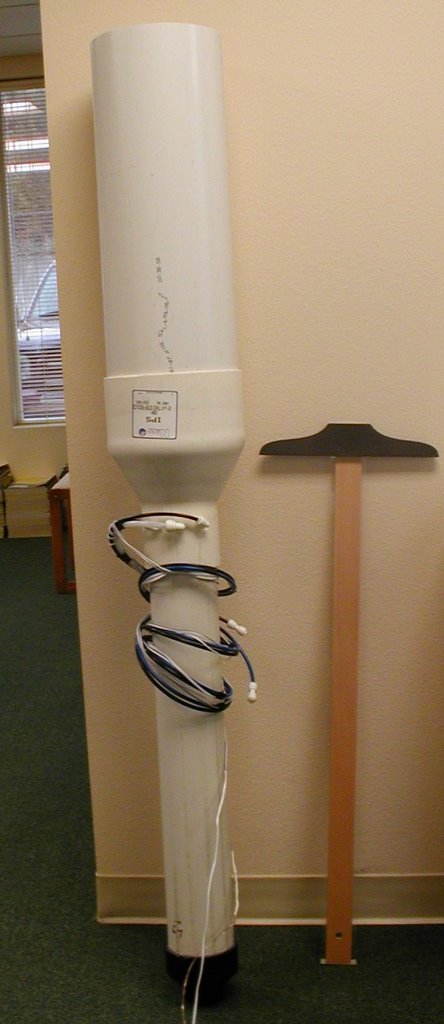
Irrigated farm fields lose water to deep percolation. This groundwater recharge, and what it contains, is difficult to research. This is because sampling tools designed to intercept saturated flow tend to miss unsaturated flow. And visa versa. New technology extracts deep soil moisture using a wick rather than the active suction or gravity.

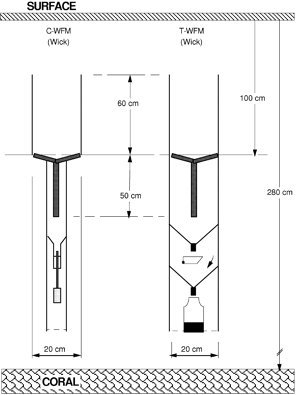
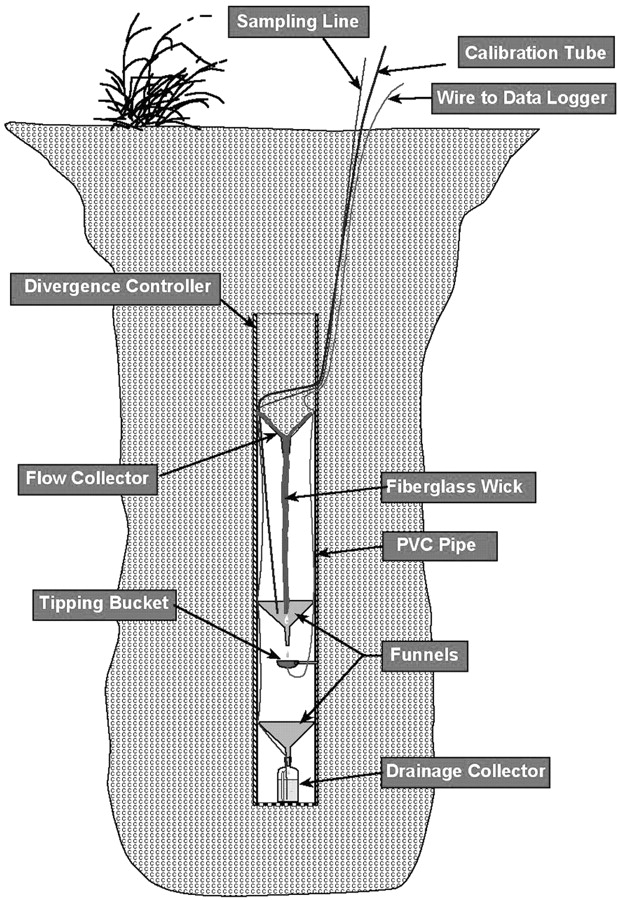
The first wick samplers were passive capillary samplers (PCS). This approach has now evolved into the current water flux meter (WFM) designed recently by Batelle soil scientist Glendon Gee. Two offspring WFM designs are commercially available: the Gee passive capillary sampler drain gauge (Decagon Devices, Pullman WA) and the vadose zone water flux meter (Sledge Sales Consulting, Dayton OR). In a recent journal article, the Decagon device is referred to as a capacitance water flux meter (C-WFM) and the Sledge device is referred to as a tipping-bucket water flux meter (T-WFM). The T-WFM is close to Glendon Gee's designs published in journal articles. The C-WFM was developed by Decagon soil scientist Gaylon Campbell in collaboration with Glendon Gee.

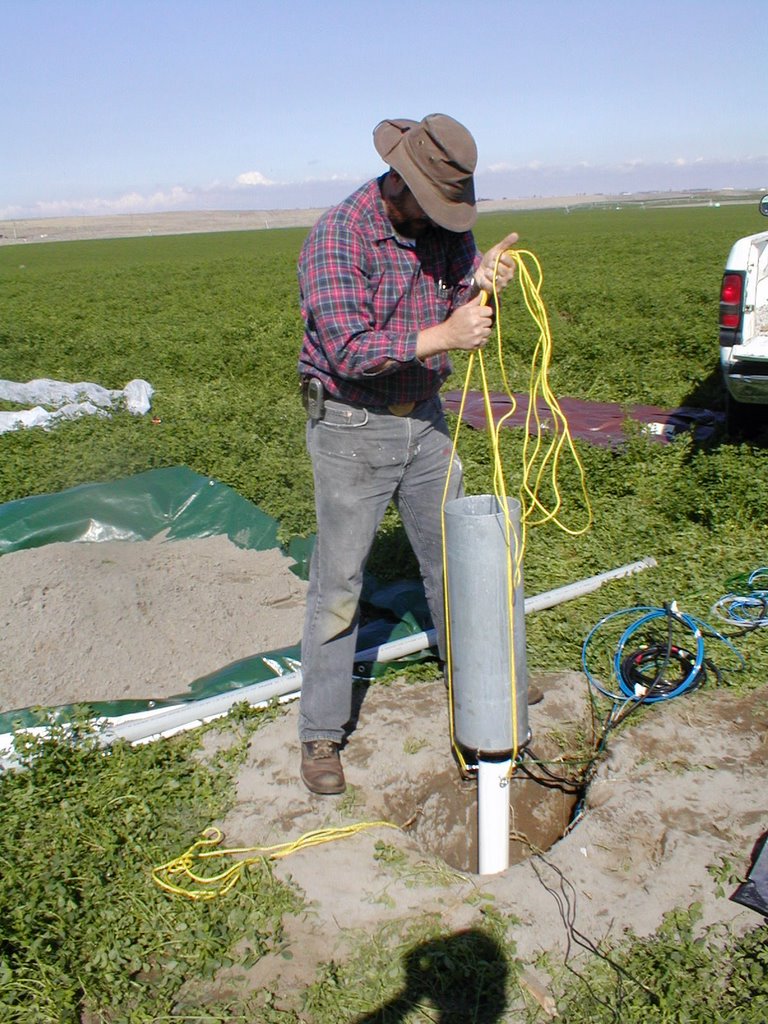
The original PCS devices needed a pit, best dug with a backhoe. Fiberglass wick length and strand size were calibrated to site specific conditions to prevent oversampling of unsaturated conditions. Today's WFMs can be placed in an auger hole or hand-dug pit. WFM configurations use a standard size and length wick which works for most situations. A recent journal article has an example of an oversampling problem.

There are strong similarities and distinct differences between the two firms. Like Decagon, Sledge maintains strong ties with Glendon Gee. Like Decagon, many of the 200 devices Sledge has produced have been for agricultural research. Compared to Decagon, Sledge is more a hands on, farm service and farm chemical oriented consulting business. With Wayne Sledge, the T-WFM is his flagship product. With Decagon, the C-WFM is a sensible addition, part of an extensive and well supported line of soil and agricultural measurement instrumentation. It appears that Decagon and Sledge have produced a similar number of devices and they are clearly on parallel tracks of success in refining their individual product.

Both firms have supplied most of their instruments to agricultural researchers, farms and clients concerned with water use efficiency and nitrogen use eficiency such as golf courses. There has also been environmental project placements, most often associated with landfill and mine-tailing closure

Decagon has put considerable effort into refining unit capacity to record water flux, less into water sample handling. The larger base of the Sledge unit enhances water sample handling options. Decagon has a stepped design which accommodates hand auguring the deepest portion, shortening installation time. Decagon has an extensive list of complementary devices and highly capable technical support staff. The Sledge unit is substantially lower in price. Choice is good.

Of particular interest in Washington State is wastewater spray field management. As mentioned in a government report: "The Department of Ecology has identified 20 spray field situations where wastewater was [improperly] applied [and conditions] ... led to contamination of groundwater...". This report was discussed here previously.

I spoke with Don Nichols, with Washington Department of Ecology's Water Quality Program, Eastern Regional Office, Spokane, WA. Don has encouraged the installation of WFMs for gathering vadose zone water quality information. Don referred me to Cascade Earth Sciences and Soil Test Farm Consultants for more information.

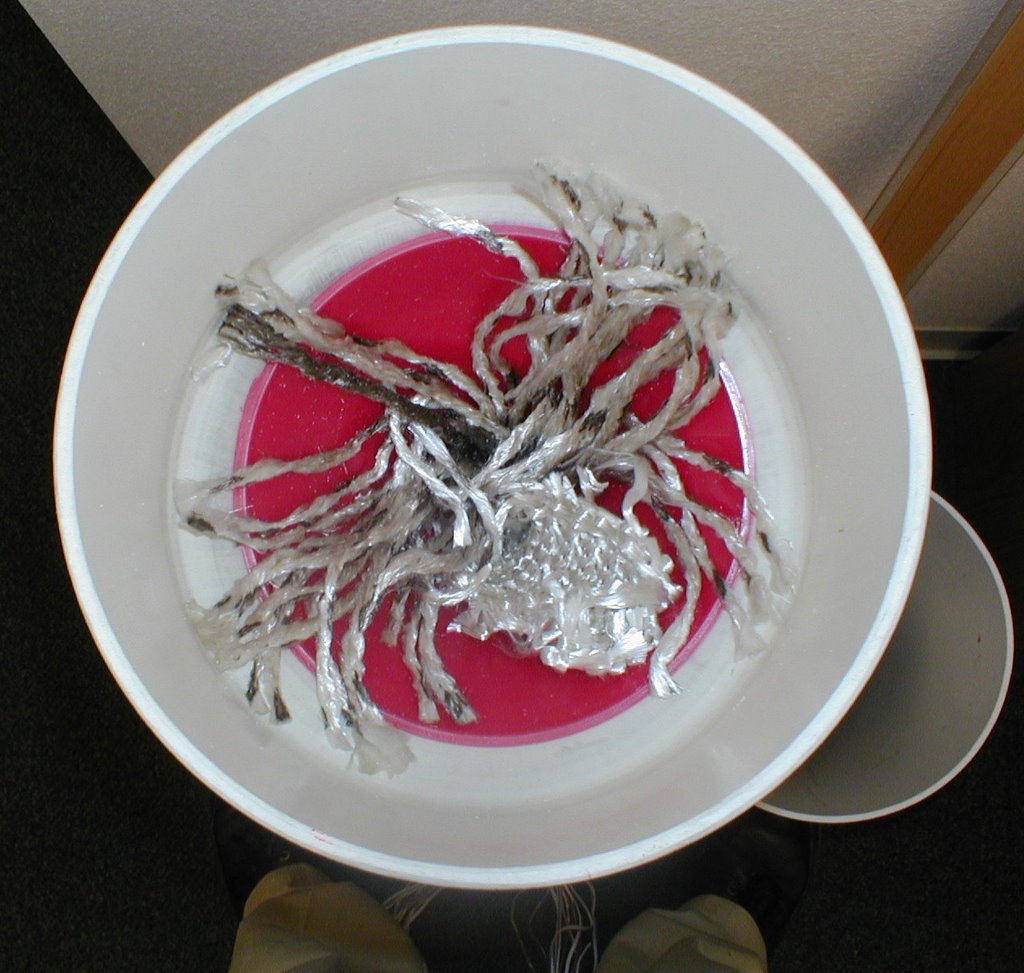
Dan Burgard, soil scientist with Cascade Earth Sciences (CES) in Spokane, WA has installed 7 Decagon C-WFMs in the Pasco, WA area, and 11 Sledge T-WFMs in southern California. CES modified the equipment to enhance sample collection capabilities. (See his photos below)

Dan Nelson, soil scientist with Soiltest Farm Consultants, Inc. in Moses Lake, WA has four Decagon C-WFMs installed in the Moses Lake, WA area. Both had nothing but good things to say about the potential uses of this type of data. Mass balance calculations will demonstrate if target water use efficiency and target nitrogen use efficiency is being achieved. Detailed daily data logs show exactly when percolation occurs. Percolation events observed to date are closely correlated with irrigation and precipitation events and even soil thawing events. As expected with the difference in weight between soil and the field capacity water portion, percolate nitrate and dissolved solids (salts) are several times higher than soil levels above the sample point. The devices are performing as intended.

One question I have is how many devices are needed to achieve statistical confidence in a mass balance calculation? Users independently tend toward sets of 3 units, with singles for spot comparison data. That is a sensible starting point but determining coefficient of variability on selected data would put the results into perspective.


None of the installations have been entirely glitch-free, mostly due to various data logger challenges or site specific soil related factors, such as coarse sands or depth limits. Users of the units are looking forward to continued refinements in data logger compatibility and would like to see costs come down and but give high marks for ease of installation and setup. This and available tech support make sampler units from Sledge and Decagon an attractive alternative to the do-it-yourself installations that predate this equipment.


References:
Brown, K.W., J.C. Thomas, and M.W. Holder. 1986. Development of a capillary wick unsaturated zone water sampler. Coop. Agreement CR812316-01-0. USEPA Environ. Monit. Syst. Lab., Las Vegas, NV.
Cary, J.W. 1968. An instrument for in situ measurements of soil moisture flow and suction. Soil Sci. Soc. Am. Proc. 32:3–5.
Gee, Glendon W., Zhang, Z. Fred, Ward, Andy L. 2003. A Modified Vadose Zone Fluxmeter with Solution Collection Capability Vadose Zone J 2003 2: 627-632 (highwire link) http://highwire.stanford.edu/
Knutson, J.H., and J.S. Selker. 1994. Unsaturated hydraulic conductivities of fiberglass wicks and designing capillary wick pore-water samplers. Soil Sci. Soc. Am. J. 58:721–729.
Selker
, J.S., C.K. Keller, J.T. McCord. 1999. Vadose Zone Processes, Lewis Publishers, ISBN 0-87371-953-0, GB1197.7.S46 1999 [1] [2]
van der Velde, M., Green, S. R., Gee, G. W., Vanclooster, M., Clothier, B. E. Evaluation of Drainage from Passive Suction and Nonsuction Flux Meters in a Volcanic Clay Soil under Tropical Conditions Vadose Zone J 2005 4: 1201-1209 (DOI: 10.2136/vzj2005.0011) (highwire link)


Thursday, January 19, 2006

Jane Jacobs Meme: on the Ethics of Politics and Business

A meme is an infectious idea, infectious because it is a construct within which new achievements become possible. Complementary yet incompatible ethical syndromes separating public servants from other professions, including scientists, is a Jane Jacobs meme. Understanding this enables us to distinguish universally bad behavior from acts that merely offend our own syndrome's sensibilities, acts that are otherwise in character. A guardianship syndrome is shared by those who serve a closed and corporate group, and protect that group from outside threat. A commercial syndrome is shared by those that trade goods or skills, an occupation that requires trusting and selflessness extended to even to those who fall outside the responsibilities and protection of the guardianship structure.

One example is not sufficient but it will have to serve: Assuming traders will become raiders given sufficient opportunity is a timeless guardianship syndrome perspective. Assuming such a worst case scenario without basis is abhorrent within the commercial syndrome.

The National Society of Consulting Soil Scientists' most recent newsletter has a review of Jane Jacobs' book, "Systems of Survival". A portion is reproduced below.

If there is anyone who deserves the label "critical thinker," then it is Jane Jacobs.
From: Jane Jacobs: Her Life and Work By Gert-Jan Hospers
A refreshing book for exploring ethical consistency is Jane Jacobs' “Systems of Survival: A Dialogue on the Moral Foundations of Commerce and Politics” (1994). 214 pp. ISBN 0-679-74816-4

In Systems, Jacobs describes the ethics of commerce as a moral syndrome equal, antagonistic and complementary to the ethics of politics, or guardianship. Neither commerce nor guardianship sectors do well in the absence of the other. Government protects commerce, provides stability, administers justice and enforces uniform standards. Commerce provides the economic engine and the ethical framework for trade, technological advance and individual rights that combine to make governments worth living under. Yet these two ethical systems are mutually exclusive and cannot be rashly integrated without the risk of moral confusion.

Jacobs is careful to limit Survival to the ethics of how we eke out a living. Greater questions of good and evil are wisely set aside.

Jacobs warns that when entities cross the functional boundary that separates the two systems, morally corrupt hybrids can emerge: organized crime and corporate raiders. Jacobs uses cold-war era Soviet Union as a particularly apt example. Jacobs opposes military models for managing business.

Jacobs' observations on the professions of art and science are entirely novel. Drawing on history, Systems demonstrates that artists are grounded in tradition and are necessarily supported by largess. Tradition and largess are characteristics of a guardianship system. In contrast, scientists make advances in an environment of innovation and trust but are frustrated when subordinated to tradition and ideology. Jacobs warns that academic institutions steeped in guardianship values are antagonistic to objective science.

Both moral syndromes are consistent with social mores, yet are incompatible with each other. This paradox was not anticipated when the author first conceived the book. Jane Jacobs mentions in her footnotes that she started the book expecting that she would show that the “trading” ethic was good and existed in opposition to an antagonistic “raiding” ethic.

Jacobs uses an inductive approach to critical thinking making her ideas difficult to test. No one doubts her abilities as a profound thinker but some question her methods, seeking to weaken the impact of her most uncomfortable conclusions. Yet her underlying observations ring true. Systems confirms that making a living is wonderfully challenging at many levels, regardless of whether we choose to survive through commerce or through serving the public.

This book is available from Amazon.com for $10.50 new, often less than $3.00 used. This reviewer highly recommends it.


Some supporting information from outside sources:
Jane Jacobs Interviewed by James Howard Kunstler (author, The Geography of Nowhere) For Metropolis Magazine, March 2001 September 6, 2000: Toronto Canada
Jane Jacobs, The Anti-Planner by Gene Callahan

Thursday, January 05, 2006

Retirement of Gary Muckel

Access to data. Access to standards. Access to continuing education. Soil consultants need all three to thrive professionally. The reciprocal is that the profession needs the participation of consultants to thrive. This is less of a disconnect than in 1992, when Gary Muckel began in his efforts to bring soil science consultants in closer with the efforts and products of the National Cooperative Soil Survey (NCSS). Gary retires today. He will be missed.

Just a quick note to pass along the attached notice of Gary Muckel's retirement. Gary has been a wonderful facilitator to us via his NRCS NCSS position in Lincoln -- he has always gone out of his way to forward us publications and other helpful resources and information.

Gary B. Muckel, soil scientist at the National Soil Survey Center in Lincoln, Nebraska, is retiring January 3, 2006, following a 35-year career with the Soil Conservation Service/ Natural Resources Conservation Service (SCS/NRCS).

Gary is a native of California but grew up in Reno, Nevada. He received his bachelor of science degree in plant science and his master of science degree in soil science at the University of Nevada, Reno. Gary began his SCS career in Burley, Idaho, in November 1970 as a field soil scientist. In 1974, he became the soil survey party leader in Twin Falls, Idaho.

In 1977, Gary moved on to Bismarck, North Dakota, as the soil correlator. He later became the assistant state soil scientist in North Dakota. His next stop was in 1980 at Albuquerque, New Mexico, where he served as the state soil scientist. In 1988, Gary joined the West National Technical Center in Portland, Oregon, as the head of the soils staff. It was during this time that Gary initiated activities for the National Soil Survey Centennial.

In 1992, Gary joined the National Soil Survey Center with primary responsibility for the National Soil Survey Handbook. He chaired the Soil Survey Centennial in 1999, during which time more than 1,000 projects were completed nationwide. Gary initiated the Soil Quality Information Sheets and has published more than 50 articles on soil survey. He recently released the publication “Using Soil Survey to Identify Risks and Hazards to Human Life and Property.� Gary has managed the national soils website at http://soils.usda.gov for many years, as both content manager and webmaster. As national marketing coordinator for soil survey for several years, he successfully established a marketing plan for the National Cooperative Soil Survey program. Gary developed and authored soil education CDs and soil profile cards that are used by thousands of schools. He is a member of the Soil and Water Conservation Society and the Nebraska Society of Professional Soil Scientists.

The above was passed along through PSSAC (Thanks, Mary!).

As we in Washington gear up for the next stage in pursuing state licensing of soil scientists, no doubt we will be dusting off Gary's "Understanding Soil Risks and Hazards", mentioned above. I have a link for downloading it below.

Understanding Soil Risk and Hazards: Using Soil to Identify Areas with Risks and Hazards to Human Life and Property. Gary B. Muckel, editor. 2004. 93 pp. Available free online from the U.S. Department of Agriculture, Natural Resources Conservation Service, National Soil Survey Center, 100 Centennial Mall North, Room 152, Lincoln, NE 68508; (402) 437-5499; ftp://ftp-fc.sc.egov.usda.gov/NSSC/Soil_Risks/risks_print_version.pdf.

By drawing on local knowledge and experience, this publication aims to expand awareness of various soil risks and hazards to human life and property and encourage city and county officials, planners, developers, and others to consider the soil in their land use decisions.


Technorati Tags:

Tuesday, December 27, 2005

Phosphorus and TMDL

Today I am pulling together conceptual information related to phosphorus (P) and Total Maximum Daily Load (TMDL) in anticipation of meeting with Walt Edelen and Rick Noll, water quality folks with the Spokane County Conservation District (SCCD). The problem we will be putting our heads together on is the relationship between river and stream P levels (ug/l) relevant to TMDL and soil P levels (mg/kg) in adjacent, contributing areas. More specifically, we are going to lay out what methods and approaches are available for gathering soil P information that will produce data that can be used to measure P loading, measured in pounds of phosphorus, lost to the river. We want tools to quantify the effects of implementing various Best Management Practices (BMPs) for controlling streambank sluffing and farm field erosion.

The motivation for specifically defining pounds of phosphorus delivered has to do with the concept of phosphorus load allocation. It has to be conceptual, rather than actual, because, when it comes to soil contributions, we don't have the studies needed to characterize the complex causes and effects in these systems. Nor do we have the luxury of time of waiting for the studies to be designed, funded and conducted. The TMDL beast is at the door.

At first glance, it seems like a simple question of mass balance. How many tons of soil are discharged to the river, where and when, and how much phosphorus did it have in it. A mass balance approach certainly makes sense for wastewater dischargers, considered the most significant source of P in the Spokane river. But that approach doesn't fit as easily for soil. How much soil phosphorus converts to water phosphorus. It can't be 100% efficient, some will end up dissolved in the water, some will end up involved with the suspended sediment load but the rest will end up on the stream bottom where it will contribute P to water only over a long period of time. Complicating this is seasonal changes in capacity of a stream to carry suspended sediment. Clean water is hungry water and it picks up material fairly easily. Muddy water is different and it drops it's sediment load whenever it loses energy, the insides of curves for instance. You can bet that sediment delivered to a clean stream is going to affect total phosphorus levels more efficiently than sediment delivered to a muddy stream. Considerations of efficiency mean testing for available phosphorus may not be enough. The next most obvious analytes to add into the mix are total phosphorus, texture, pH and organic matter content. I'm looking forward to a lively discussion.


Technorati tags:

Friday, December 23, 2005

Dept of Licensing Surveys Soil Science Practice, Recommends Regulation

The Washington State Department of Licensing (DOL) has submitted a requested Sunrise Review of Soil Scientists to the State House Commerce & Labor Committee. The report recommends that the practice of soil science be regulated.

Members of the Washington Society of Professional Soil Scientists (WSPSS) can find much to be proud of as well as cause for renewed vigilance in DOL's report. Soil science has been in DOL's sights before but the current set of events that led to the sunrise report started in 2001. That was the year that soil scientists became concerned that under the Geologists Licensing Act, practicing soil science would require being a registered geologist. Timely action by WSPSS resulted in an exclusion for the practice of soil. It also reignited WSPSS' interest in licensing.

Renewed efforts followed shortly in 2002 when soil reports prepared by a soil scientist were rejected by the Pierce County Planning Department. The planning department required a licensed geologist, consistent with a draft model Critical Area's Ordinance (CAO) being prepared by the State Department of Community, Trade & Economic Development (CTED). Subsequent effort by WSPSS to revise CTED's Model CAO to include soil scientists as qualified to submit soil reports were initially successful but, for reasons that have not been determined, the soil science profession was not included in the final draft.

Without licensing, soil scientists are failing in their efforts to maintain their professional standing with county planning departments, health districts and permitting agencies in Washingtonm State. Draft legislation to license the practice of soil science was submitted to both State Senate and House committees during the 2004/2005 legislative session. Lobbying efforts resulted in the House Commerce & Labor Committee request to the Department of Licensing to prepare a “sunrise� report that would define the reasoning and metrics underlying the request to be regulated.

An excerpt from that report:
Considerable evidence compiled in this report, through out-of-court settlements and litigation, show harm to property, health, safety and welfare of the public. Public health endangered by improper soil analysis ... has led to contaminated wells and groundwater; septic system failures; and compromised wetlands. Harm to the public exists when [action] is approved without a comprehensive soil analysis conducted by a soil expert to support decision[s] taken. Public harm occurs when ordinances excludes a professional group that hold an expertise through education and experience. Exclusion of a qualified group to practice diminishes choice. A significant number of court settlements indicate that there are professionals [who] practice soil science beyond the scope of their expertise. In view of the findings regarding the practice of soil science, the following recommendations [are] made for consideration by the Legislature:
  1. That Soil Scientists be regulated; and
  2. expertise should be defined to minimize overlap of work to be performed.
The sunrise report goes on to indicate that defining what is soil science, and identifying who is a soil scientist is a challenge. Furthermore, without a commercial yellow pages heading for the profession, consumer access to soil scientists is limited to an informal referral system. Professional soil science societies are viewed in the report as ineffective in protecting the public from unprofessional acts by soil scientists or purported soil scientists. Specific examples of damage are provided in the report, including at least $3,000,000 in damage claims due to septic system problems in Cowlitz County in western Washington. Also cited were 20 cases in eastern Washington, provided to DOL by the Washington Department of Ecology, where earlier or more competent soil science consultation could have saved resources and protected human health.

Now that the sunrise report has been submitted, the legislature can move forward during the 2006/2007 legislative session to act on the previous draft. Prospects look good for passage, but regardless of the outcome, Washington soil scientists cannot help but be lifted up by the findings of the sunrise report: Practitioners of soil science are needed in Washington State to a degree that individual practitioners could not have been aware of. While it is extremely disturbing to learn of several instances of unprofessional work by purported soil scientists, it is good to read that quality work is highly valued and recognized as critical to protecting health and resources. Washington soil scientists already know that we are in some demand: once a soil scientist establishes a niche, it is rare to find that individual idle. DOL's survey offers us a unique glimpse into the bigger picture as to why that is.

1997 photo of sprayfield with soil problem.
Olympia Cheese. Lacey, WA.


Technorati Tag:

Friday, December 16, 2005

Biosolids, Politics and Character

Biosolids, aka domestic wastewater (sewage) treatment solids, is pretty interesting stuff, to me anyway. From a soil scientist's perspective it is chock full of good stuff: Essential plant nutrients and humic substances (humic acid, fulvic acid) beneficial to soil quality. Biosolids is superior to chemical fertilizers from both a crop production perspective and an environmental protection perspective.

This is not raw sewage solids or raw septic tank solids. This is the microbial biomass solids produced during the time the sewage is being treated, usually a 20-30 day process, prior to the treated liquid being discharged to a surface water body. These solids have about the same ratio of N:P:K:S present in soil microbial biomass.

Since the 1972 Clean Water Act, USEPA has been encouraging treatment facilities to give preferential consideration to recycling the soil property enhancing constituents in biosolids. These constituents were originally derived from crops grown on agricultural land and federal legislative intent is to see these materials recycled and put to beneficial use at their source. At the basis of this intent is a conviction that the overall benefits of beneficial use exceeds the added economic and regulatory burden placed upon the local and regional taxpayer and the wastewater treatment ratepayer.

Because of costs to transport material beyond the reach of urban sprawl, it would be cheaper to dispose of it in the ocean, or, for interior cities, in a landfill.

The constituents within biosolids are derived from nonrenewable resources and energy intensive processes and, being a regulated material under the authority of the federal government, cannot responsibly be allowed to be simply discarded when the opportunity for beneficial use is available. This policy makes more sense with each passing year.

Critics and skeptics of beneficial reuse on farm land abound, but fears of environmental degradation have yet to be borne out by events.

Once I had the opportunity in the 1980's to ask the then-President of the Washington State Farm Bureau why the American Farm Bureau Federation had a policy in opposition to land application of biosolids on farmland. He was a respected, retired soil scientist, and I asked for a science-based explanation. Instead, he explained that the national Farm Bureau was using their opposition to biosolids to persuade legislators to address burdensome regulation of farmers related to wetlands and surface water quality. They correctly recognized that Farm Bureau support was valuable and wanted a quid-pro-quo accommodation or to at least be able to make a statement.

You have to respect this point of view. It may not be science-based but its not off base either. That Farm Bureau fellow was just staying in character.

Technorati tags: