Showing posts with label pedology. Show all posts

Saturday, December 13, 2008

Pedology and CO2

In a previous post I provided an oblique link to a news release: Climate Change Alters Ocean Chemistry. It makes reference to conditions resonating with the theory of biorhexistacy:

The research team, which included Caldeira, Elizabeth M. Griffith and Adina Paytan of the University of California, Santa Cruz, plus two other colleagues, studied core samples of deep oceanic sediment recovered from the Pacific Ocean Basin. By analyzing the calcium isotopes in grains of the mineral barite in different layers, they determined that between 13 and 8 million years ago the ocean’s calcium levels shifted dramatically. The shift corresponds to the growth of the Antarctic ice sheets during the same time interval. Because of the huge volume of water that became locked up in the ice cap, sea level also dropped.

“The climate got colder, ice sheets expanded, sea level dropped, and the intensity, type, and extent of weathering on land changed,” explains Griffith.

“This caused changes in ocean circulation and in the amount and composition of what rivers delivered to the ocean,” adds Paytan. “This in turn impacted the biology and chemistry of the ocean.”


These folks are saying that momentous changes in oceanic chemistry recorded in the sediment record must have been predicated by equally momentous changes in soil chemistry, changes tied to both atmospheric carbon dioxide content and climatic conditions.

From a pedologist's view, it is clear that under the expanded humid, warm, stable conditions envisioned by H. Erhart for biostasis, we would see deeper residual soils and more rapid formation of argillic horizons. In terms of soil taxonomic orders (USDA), more intense chemical weathering would cause the expansion of inceptisols at the expense of mollisols, ultisols at the expense of alfisols, and oxisols at the expense of ultisols.

Caldeira and company tie warm climate to higher river calcium content, but strongly implicate higher atmospheric carbon dioxide as the primary driver of increased chemical weathering. Atmospheric carbon dioxide levels do not appear to be part of Erhart's construct, but could certainly enhance these pedogenetic trends.

Acid rain alarm bells are ringing faintly in the distance at this point. But it is a false alarm. Rain water pH is due mostly to equilibrium with atmospheric carbon dioxide. The carbonic acid formed buffers rain drop pH to 5.6, and higher atmospheric carbon dioxide increases the carbonic acid content, but it doesn't lower pH below 5.6. Other constituents accomplish that. Thus increased atmospheric carbon dioxide isn't being implicated in some futuristic acid rain scenario.

Oxisols, ultisols and spodosols would increase in extent with increased soil weathering. But could it also mean lower plant disease, and more nutritious crops? Increased carbonic acid would drive faster pedogenesis, as would increased the biological activity stimulated by higher carbon dioxide. For soil, that would mean a richer solute content in the soil water, more rapid formation of secondary minerals, more eluviation or translocation of minerals with percolation. To the list of pedological shifts at the soil order level, we can add the expansion of spodosols at the expense of inceptisols.

Something very positive can be expected for soil that is not captured in the shifting soil order paradigm. For plants and soil microbes, richer solute content would mean greater availability of mineral nutrients. In soil husbandry and slow food circles, higher mineral availability translates to healthier soil, lower plant disease, and more nutritious harvests. What the shifting soil order paradigm does signal is that soils will be at greater risk of losing their fertility to leaching. Having the soil chockablock full of biochar will be essential to mitigate this last effect. Let's start now.

(Recycled from nscss.org)

Biostasy

The Theory of Biorhexistasy describes climatic conditions necessary for periods of soil formation (pedogenesis) separated by periods of soil erosion. Proposed by pedologist H. Erhart in 1951, the theory defines two climatic phases: biostasy and rhexistasy.

If I recall, H. Erhart figured this out while on the Congo river contemplating a low sediment load in a high rainfall, potentially highly erosive setting. Impressive. There is a soil science truism that clean water is hungry water, and can't wash across or through the land without taking some with. From a soil scientist's perspective, water is soil in highly dilute form. (So is air.)

Reading between the lines, I don't think Erhart had a research budget much beyond travel expenses. He simply deduced from what he knew of tropical weathering that the river had to be laden with dissolved minerals, calcium especially, washed from the soil by percolating rain water. Groundbreaking as that was in its own right, he didn't stop there. Using induction, he reasoned that when similar conditions dominated it ages past, rivers would have delivered abundant calcium to ancient seas subsequently (at the close of the age, perhaps) yielding vast limestone deposits. He saw these ages as lush, moist, and warm with accelerated chemical weathering accompanied by the formation of deep soils. Biostasy. Between periods of biostasy, he envisioned conditions dominated instead by physical weathering: severe fluctuations in temperature and moisture, sparse vegetation, shallow exposed soils, rivers choked with sediments, but with low solute content. This insight informs interpreting endokarstic sediments(Yves Quinif) in Europe where stalacite formation is observed to be greatest, and with least sediment, during interglacial periods due to higher dissolved calcium content, and less soil erosion.

Simply as a mental exercise, consider a scenario where atmospheric carbon dioxide hits 1200 ppm 200 years from now. In the context of biorhexistasy, what is going to dominate? biostasy, rhexistasy or will it be something well outside H. Erhart's elegant construct? Considering that the Congo and the sediment laden Nile coexist in the same age, it is certainly conceivable that biorhexistasy will continue to play out differently based on location, with neither dominating. But the undeniable effect of higher carbon dioxide is higher chemical weathering. So maybe rhexistasy during the transition, followed by biostasy.

(Recycled from nscss.org)

Monday, September 10, 2007

Redox Cascade


This chart (click for a readable version) shows shows the cascading preference of electron acceptors needed to sustain microbial respiration. When a soil system runs out of oxygen, it relies on nitrate (denitrification) to accept the electrons freed by respiration, and so forth down the cascade. Not shown at the bottom of the cascade is the production of hydrogen from water, but then that is an extreme seldom achieved in nature. The units for Eh are millivolts, the standard measure of redox potential.

An equivalent measure of redox potential is pE. Just as pH is the negative log of the hydrion activity, pE is the negative log of electron activity (source). Soil pE and soil pH are equally important to predicting charge state of metals and nutrients. However, because measuring pH is relatively easier by far, and because knowing pH tells us volumes about expected pE, soil pE is a less discussed subject. It is important to bioremediation, industrial chemistry, and wetland science. Not a household term.

These two are more than a mirror pair, although mirroring is their most notable characteristic. When pH changes, pE must also change in response. The reverse is true also. In soil, that response departs from simple mirroring. So much so that it can seem to be two separate dances.


Soil pH and pE have different causes of change and different effective buffering agents. The term 'buffering' is replaced in a pE context - it is called poise. A stabilized soil pE system is referred to as a well poised system, differences in soil buffering versus soil poise account for the departure from 1:1 mirroring.


Now for the exciting stuff. To many of us, what makes soil different than geologic material is that it is in an excited state, excited mostly by solar energy as facilitated by living processes. Unlike soil pH, soil pE is directly influenced by these energy fluxes.


The most influential cause of changes in soil pE is metabolic respiration aka oxidation. Oxidation doesn't necessarily involve oxygen. Oxidation does necessarily involve shedding an electron. Thus, respiring living systems lower the pE of a soil system, and with pE in the dance lead, pH must follow.
Wetlands are low pE systems, wetlands with hydrogen sulphide odors are very low pE systems. Common dryland agricultural crops, like wheat, cannot abide low pE systems. Rice is adapted to low pE conditions.

A well recognized soil buffering agent is lime, which buffers a soil to about pH 8.2. The major agent of soil poise is iron. By all rights, the chart should show iron as having the longest duration horizontal line: there is a vast amount of iron in soil compared to nitrate and manganese. However soil manganese, although far less abundant than iron, plays a more important, more dynamic role in most soil systems.


One soil scientist, Richmond Bartlett, was so taken with the importance of manganese in this regard that he opened his chapter on manganese in a 1995 soil chemistry text (1995, Environmental Soil Chemistry, edited by Don Sparks) with the phrase “We all should fall upon our knees and sing out praise for manganese”
Richmond Bartlett goes on to describe the role of manganese in terms that nearly describe a catalyst. Mn is not consumed, and the capacity for metabolic respiration increases in its presence.

This is sheer speculation on my part: from my view through the knothole, the nearly catalytic nature of traces of Mn is a finessing touch that makes bio-char the wonderful soil reef it is. It is a fine point, and one hardly worth mentioning considering the much more important issues that need working out in our pursuit of Wim Sombroek's vision for terra preta nova.


Expanded from information originally posted on the terra preta forum.

Monday, March 05, 2007

GeoAgro soil data collector


I just got back from the 20th Annual Meeting of the NSCSS in San Antonio, TX. Ed DiPollina, TekConsultants, was one of the presenters, and I was very impressed with the potential for a product his company is bringing to market, the GeoAgro Soil Data Collector. Designed for field soil scientists like myself, the Soil Data Collector helps us log soil profile descriptions and geo-reference our field notations, map features & test pit locations in the field on a Tablet PC.

I saw many NSCSS soil scientists sign on as beta testers. Considering the varied applications that field soils data is applied to, this is surely going to be an interesting process.

Similar field data solutions are available to government soil scientists (Pedon PC software was presented to us by USDA-NRCS in San Antonio), but the GeoAgro Soil Data Collector is the first one geared to consulting field soil scientists, arguably a larger and faster growing market than represented by government soil scientists.

It struck me during Ed DiPollina's presentation that the GIS and GPS portion of these types of products is becoming more of a commodity, with the forms and data entry portion holding the interest of the San Antonio audience.

Unlike similar solutions geared to institutional needs, this product will be affordable for the small business to enter into. This is not always a given since GIS solutions vary wildly in price relative to the value provided. If you are already using a GIS product like ESRI's ArcView (ESRI is the world leader in GIS software), no problem, the Soil Data Collector has the ability to export and import different types of files, such as shape, drawing and spreadsheet formats, along with substantial GIS functionality. Don't already have a GIS solution? A simplified non-ESRI solution is being provided.

Speaking of ESRI, affordable alternatives to ESRI products are on the rise. If you are already a locked into being a customer of ESRI, or you are a status quo driven public institution, this will not matter to you. A growing number of us are not. We constitute a market that ESRI has pointedly chosen, through proprietary file formatting and opportunistic pricing, not to serve. I don't fault ESRI for choosing a captive market business model. Its a legit choice. Unfortunately for ESRI, and ultimately ESRI's customers, it is difficult model to adapt to changing market conditions. If the monopolistic aspects of ESRI have escaped you, consider. GIS solutions are simple, ubiquitous, data processing solutions for publicly available georeferenced data. The algorithms used to project the data into only 2 dimensions were constructed long ago by federal agencies using public funds. The math and the data are both freely available to everyone. ESRI doesn't add value to data in the classic meaning of value, it locks it into a proprietary format and holds it for ransom.

A captive market business model smothers the necessity to innovate. Over at competitor Manifold System GIS, several sub$1K solutions are optimized for multiple core CPUs and 64 bit processing. This has been available since August, 2006. ESRI has yet to announce when they intend to provide multi-core or 64 bit functionality, even at the >$120K level. Some generally similar observations about ESRI: (1) (2) (3)

ESRI's loosening grip on the lead and a general increase in GIS software choice and capability are helping to bring innovators like TekConsultants onto the playing field.


Technorati Tags:

Saturday, December 23, 2006

George Demas - In Memoriam

Soil scientist George Demas (28 April 1958 - 23 December 1999) pioneered the study and classification of subaqueous soil. He passed away on this day seven years ago. His award winning work advanced the understanding of soil genesis and morphology sufficiently that USDA soil taxonomy required revision. George Demas' death occurred shortly after the importance of subaqueous soil became accepted. His sudden and untimely passing is a great loss to his family of colleagues and friends.

See also: George Demas Elected as Honorary Member of MAPSS, and Wikipedia Article.


Tech Tags:

Thursday, December 14, 2006

Invasive Earthworms

Its in the news. Research shows that invasive earthworms are damaging forest soils and are a menace to species diversity. Brought to light in November, 2002, gardening experts have confirmed the concern and the news keeps spreading. Fortunate for inquiring minds, self-archived copies of published journal articles are available. The problem is most often associated with formerly glaciated regions, where native populations of earthworms are not present. One work has a general map of affected locations (can compare to map here).

Another work addresses damage to soil. Comparing soil in front of the invaders to post invasion conditions demonstrates that these worms cause soil compaction, reduce soil fertility, increase erosion. Alterations in the soil profile include thickening of A horizons and obliteration of E horizons. I am still processing this information, but it appears that these invaders are capable of alterations deep enough into the soil profile to result in a change in soil taxonomic classification at the order level.

What looks to be one of the more prominent invasive species, Lumbricus rubellus showed up in my maple leaf compost (now vermicompost). I can confirm that L. rubellus is voracious. I remember a shovel slice of some nearby soil that went in a week or so before L. rubellus showed so my guess is they came with the place. L. rubellus operates on the surface litter and organic material found where that layer rests on the mineral soil. There are strong indications that L. rubellus supplements its leafy diet by feeding on the fungi and bacteria in the rhizosphere of plant roots. Seeing first hand how these critters operate, I find this last aspect quite disturbing. With its carbon sequestration function and the highly mutualistic species that it supports, this planet needs all the rhizospheric biological capacity it can muster.

Saturday, December 02, 2006

Soil, or ground fit to bring forth fruit (1702)


Dating to the dawn of the 18th century, this may well be the first dictionary definition of soil. And a beautiful bit of prose it is. A term reserved for the good stuff, the definition has a hint of awe, of appreciation, of desire even. And of simple mystery.

At a time when the definition of soil has achieved some ambiguity, and some of us exclude lunar soil from "real" soil, I am intrigued by these old definitions.

Reading further in John Kersey's "A New English Dictionary", one finds that the ground meant earth. It also meant "the foundation of a thing". If he had chosen to use earth instead of ground, JK would have changed the meaning of soil to one less involved with our daily interaction. Was this an intentional distinction?

His meaning of fruit includes benefit. ''Fruit of the earth" and "first fruits" were common and established terms. JK has "first fruits" meaning "...profit of a spiritual living". At a time when we suppose the concept of soil to have been simple, why didn't JK keep the definition of soil simple and agronomic, unencumbered with spiritual and beneficiant tones? I find his wording wonderfully rich with subtle allusion.

Soils are commonly understood as materials with a capacity for plant productivity. That is too broad. Most soils have a history that includes alteration by living processes, a history that separates soil from non-soil material. Further refinement of the soil concept is occurring in view of an appreciation of energy transport and transformation within soil. Accurate to this unfolding understanding of soil is Nikiforoff's 1959 definition of soil as the "excited skin of the subaerial part of the earth's crust". Soil is a product of solar radiation. From this perspective the concepts of lunar soil and of martian soil are not so inconceivable.

John Kersey's dictionary is recognized as the first work that incorporated all words of important common usage. Prior to this work, dictionaries concentrated on difficult and obscure words. This is according to "Chasing the sun: dictionary makers and the dictionaries they made" by Jonathon Green. I turn the pages of JK's work and I sense tremendous care in his choice of words. In the case of soil, he relied on rich allusion to gently convey something of the knowing that he and his fellows had about this dark and excited resource. His definition of soil thus stands the test of time as well as, and perhaps better than, many that have been been written since.


Tech Tags:

Tuesday, November 28, 2006

Soil WikiProject


This year I have been participating with the Soil WikiProject. Working with a small group of Wikipedians interested in the earth sciences has been a fulfilling learning experience. The first order of business was to organize a comfortable directory structure on which to hang soil-related articles. I especially like the common sense way agricultural soil science and environmental soil science are treated as branches of edaphology, separating edaphic subjects from the pedology articles. It works particularly well in Wikipedia, where various aspects of soil science are informally laid claim to by other subject categories. For example, pedology has a prominent place in the physical geography directory structure : before the project the whole of soil science was treated as a derivative science of geography (and agronomy and geology and so forth).

From the above, you may think the articles are being rewritten strictly from a soil science point of view. They are not - the directory structure is intended to group similar subjects, not to narrow the perspective. The importance of an open perspective in Wikipedia is among the more difficult aspects for scientists to process when they begin editing. In my opinion, this is why most scientists seem drawn to contributing narrow subject matter. That's a fine place to start, but the more general subject matter is where the traffic is, where the effort is most appreciated, and where the collaborative wiki process works most efficiently. I'll expand on why this is important to soil scientists in future posts.

The project has about 400 soil-related articles to work on. Another 50-plus article subjects have been identified as needed, mostly involving pedology. The effort could use another pedologist or two. A good place for U.S. soil scientists to start is to check out the list of state soils. If your state is like most, that article remains to be written

With so many articles, part of the effort has been to concentrate on a short list of articles most important to the project. Along these lines, the soil article recently came through an extensive article improvement campaign. The article had the benefit of editorial review after it was proposed as a featured article. While it did not achieve this status, it certainly accorded itself well. This bodes well for future improvements in soil-related articles at Wikipedia.

Tech Tags:

Saturday, September 23, 2006

Come a Cropper

Gary Jones' posts over at Muck and Mystery never fail to get me thinking how the land works. Like this post where he promotes pasture over cropland. Which made me think back to an article at wikipedia about the paleopedological record that had wow-ed me recently:

Mollisols, the major agricultural soils of the present, are unique in their geological youth, being known from the Eocene but common only from the Miocene, as grasslands evolved.


"As grasslands evolved". Think about it. Can you see the Miocene era fire pushing back the forest and grass/soil biotic community evolving to extend their advantage? The evolution of grazing and grazers that followed? The soils darkening and levels of soil biologial activity ramping up?

Soils look so different in the forests versus in the grassland. Mollisols are awesome soils, and grazing is a natural component in their formation.

Saturday, March 25, 2006

Missoula Soil Science Consultant Speaks

Tell someone you are a soil scientist and it invariably requires an explanation of what you do. It's interesting that few of us do the same things and the telling of it reveals much about the person as well as the community they serve. For that reason I like to collect other folks' descriptions of their work. Certainly the telling of Barry Dutton's life work stands among my favorites because he built his business from scratch in a particularly cost-conscious region. He did it largely without the benefit of the 2 main drivers of regional soil consulting booms: booming suburban sprawl and booming energy prices driving increased well drilling and surface mining for coal and oil shale. I've heard several iterations of Barry's telling over the years and look forward to future installments.

Barry Dutton consults out of Missoula, Montana for PBS&J which purchased his company last year. Barry addressed the June 14, 2004 National Cooperative Soil Survey Western Regional Conference in Jackson, Wyoming (pdf source):

I was asked to review what private soil scientists are up to these days and will use my own company to illustrate. I started Land and Water Consulting Inc. 25 years ago and now have 50 employees and five offices. Our staff includes soil scientists, hydrologists, botanists, wetland scientists, biologists, water rights specialists, engineers, surveyors, GIS specialists, technicians and support staff. Our wetland projects this year include wetland delineation on over 10,000 acres. We will restore over 60 wetlands impacted by ski area and golf course development. We will design several dozen wetland mitigation projects and will monitor over 100 wetland projects constructed as mitigation for highway project impacts.

Our vegetation projects this year include several thousand acres of vegetation mapping for EIS studies, vegetation management plans for ski areas, and vegetation TES inventories for project sites. We will also conduct weed and riparian area inventories on private, state, and federal lands.

Our streambank and shoreline projects include restoration along hundred of miles of streams and lakes. We are working on removing a 100 year old dam on a large river within the largest superfund site in the country. This work includes channel design, wetland rehabilitation and riparian area enhancement. We will also conduct watershed analyses and implement TMDLs (Total Maximum Daily Loads) for dozens of streams.

I do a lot of expert witness work and soil survey often has a role in the cases. My oldest case has been going on for over 30 years and the focus is the definition of Peat. The 1911 Soil Survey got it right in describing the site as “high organic content silt loam.” However, the 1959 soil survey called the site peat. The owner sold the “peat” and has been arguing over the definition of peat ever since with the peat miner who purchased it. In another expert witness case, a friendly NRCS soil scientist tried to do a county planner and a developer a favor and produce a wetland map. Unfortunately this person had insufficient training in wetland delineation. The developer filled up to the wetland line and built a parking area before the ---- hit the fan. He spent $250,000 on lawyers, experts, fines and restoration activities to correct his mistakes and is now considering sending NRCS the bill. I am also involved each year in a half-dozen wet basement lawsuits and in almost every case there is a soil survey covering the site that predicted the problem if anyone had known or taken the time to look.

We are also involved in numerous reclamation projects for mine sites, pipelines and other projects. If you want to evaluate soil survey accuracy there is nothing like a 300 milelong pipeline trench across the landscape.

Likely because a longer litany wouldn't add any value, Barry didn't mention several other areas: his extensive work with water use efficiency for irrigation districts, his work instructing health district personnel on soil features relevant to septic systems and his work mapping soils but using project specific approaches that describing would only have distracted NCSS audience from his core message:

The decline of the soil survey program is leading the decline of the soil survey profession.

This is a powerful statement to lay on NCSS, the keepers of the national soil survey program. I plan on discussing it further.

Barry Dutton's message is also at the core of the brand of concern for soil science survival that I was dismissive of at the end of my previous post, a position based on observing the ever increasing demand for consulting soil scientists. Speak with Barry, as I did this afternoon, and you will find his concern is not waning despite his considerable business success and despite the high demand for his individual services. I am reevaluating my position and will present it in a future post. Certainly we soil scientists have the work but without academe, without soil survey sufficient to maintain our critical mass, won't what we do continue to be parceled out among the other disciplines? Any comments on this issue would be most appreciated.


Sunday, March 12, 2006

Smithsonian soil exhibit

Soils:Worlds Underfoot

From TroutGrrrl @ Science and Sarcasm:

The Smithsonian Institution, the Soil Science Society of America (SSSA), and others are planning a 5,000 square foot soil exhibit at the National Museum of Natural History in Washington, D.C. The projected opening for the “Soils:Worlds Underfoot,” exhibit, is 2008. The exhibit will occupy one entire hall of the museum and will be displayed for 1.5 years. It will feature state soil monoliths and interactive soil displays. Each of the 50 states and three U.S. territories will donate a monolith of their state soil for the display. A separate mobile exhibit will travel to hundreds of museums, schools, and libraries with soil education kits, web-based activities, curriculum, and career information.

The exhibit is expected to require 2+ years for the Smithsonian to design, build and install. Sponsored by the SSSA, the final decision about exhibit building, design, and content rests with the host: Smithsonian's National Museum of Natural History. The total cost is projected to be $4 million.

The exhibit will emphasize the living, biological nature of soils, the variation in soils from one region or locality to another, the dynamic nature of soil, the role soil plays in linking the earth's air, land and water resources, and the importance of taking care of our non-renewable soil resources.

This exhibit is welcomed with enthusiasm by soil scientists. It would be at any time, but now, when soil science is at the cross roads and with soil scientists keyed up about the profession, it is even more so.

Many soil scientists are asking if the profession can survive another generation. Soil science departments continue to close up shop, as they have been for 20 years. Soil science is being dismembered and parts allocated to engineering or agricultural disciplines. Retiring soil scientists in academe are not being replaced. USDA-NRCS soil scientist hiring is essentially frozen despite the fact that NRCS does not have the manpower to fulfill its soil mapping commitments. Without soil science graduates, and without jobs to attract them, my profession appears doomed. SSSA membership growth has leveled off, and reversed in 2005. SSSA Journal publishing revenues are under assault by the growing movement toward open access, depriving SSSA of revenues needed to combat the trend.

It may surprise some that I believe our profession is very healthy and is experiencing a most welcome transition. Soil scientists working for the federal government, agriculture or academe may be looking at a shrinking pool, but try to find a consulting soil scientist outside of these areas that is not working 50 and 60 and more hours a week.

Look at the fundamental need for the science. Recent discoveries about microbial diversity, glomalin and amazonian dark earth have occurred at a time when carbon sequestration (pdf), atmospheric CO2 fertilization effects and climate change have reminded folks that the complex role of soils is too important for reliance on second-hand information, simplistic models and large scale county soil map data. We need the soil scientists themselves, not just their research papers and their maps.

Open-access (OA) to published scientific articles may threaten our scientific institutions, but is healthy for the sciences and the individual scientists. OA opens up participation to a much larger scientific community, gaining more dynamic interaction and collegiality than it loses in the area of peer-review. Researchers are attracted to publish open access because OA papers are cited more than restricted access papers. Open access to research data will do more to prevent the recent rash of scientific misconduct than peer review alone can accomplish and at essentially no cost. Replacing peer-review with review-by-many looks increasingly workable. Supporters note that Watson and Crick's paper on the structure of DNA was published without the benefit peer-review.

The soil science licensing phenomenon continues to grow within the United States. The movement is now well established at a state level. Growth is mostly because of a pattern of septic system failure due to poorly understood soil dynamics. The growth of soil science licensing is in step with insurance premium growth for Health Districts to cover their septic system failures. Regions with the most failure have the most enthusiasm for licensing.

Whereas membership in the SSSA has peaked for now, membership growth in the National Society of Consulting Soil Scientists is growing steadily. Job offers for soil scientist positions with private sector environmental consulting firms and health districts now surpass job opportunities in agriculture, academe or the federal government. This indicates a healthy recognition of the role of soil science in dealing with all sustainable land use issues, not just those involving agriculture, range and forestry.

This is a time of great change for the profession, and great opportunity to advance the science.

Tech Tags:

Saturday, February 25, 2006

Toronto Star reports on terra preta and terra mulata

The Toronto Star has a news article on my current favorite soil subject: terra preta do Indio. It highlights some important nuances. Terra mulata, the lighter type of terra preta, covers much more area than the celebrated black type central to the concept of terra preta. Terra mulata was probably used for farming. Terra preta proper formed from kitchen middens and may, or may not, have been used for home gardens.

Both types have bio-char, and the term terra preta do Indio applies to both. Am I correct in thinking that terra preta proper can be expected to have been infuenced by bones and excrement, but not so with the terra mulata? I am on alert as to the need to distinguish potential soil perfomance differences between the two types.

Friday, February 24, 2006

Carbon Coalition Against Global Warming

The Carbon Coalition Against Global Warming says that the best way to combat Global Warming is to encourage farmers to cultivate deep-rooted perennial grass species and crops that can lock vast amounts of carbon up in the soil.


A new farmers’ movement was launched this week in central western New South Wales. The Carbon Coalition was launched at the Central West Conservation Farmers Association Annual Conference in Wellington.

The Carbon Coalition aims to promote organic carbon contained in agricultural soils as a carbon sink to earn tradable credits on the greenhouse emissions market.

Farmers would then be paid up to AUS$3,000 per hectare for “sequestering” carbon in the soil. To date only forests have been recognised as tradable for carbon credits.
Maybe. I have a little heartburn over an expectation that the scientific community has promoted that leads us to believe that we can create a significant, persistent sink of carbon by using established farming and forestry approaches. The signal-to-noise ratio in applicable soil carbon sequestration data seems quite high low, especially in regards to a convincing ability to actually "lock in" the soil carbon sunk in the sink. I wouldn't feel so uncomfortable if there wasn't so much money at stake. Governments and carbon generating industries seem very eager to act with little in the way of verification. Landowners, ever strapped by a system seemingly stacked against the food and fiber producer, see a key tool for economic survival. Fundamental soil science and biology get relegated to the back seat while folks work out the international carbon credit and payment mechanisms.

At the front end, soil will naturally sequester more carbon as atmospheric carbon increases. Yet no one seems to talk about measuring performance against this moving baseline. At the back end, considering
the millenial timescale relevant to climate change, persistence is a very real issue.

As mentioned, I have a little heartbun about carbon credit mechanisms, but not a huge amount at this point. Work in the area of ammending soil with bio-char and, separately or in combination with bio-char, promoting mycorrhyzal fungi to produce glomalin seem both very promising in terms of the fundamental science. Both are fairly recent discoveries with huge implications. Hopefully we have a few more rabbits to pull out of the living soil hat.


Georgia acts to honor their red clay

Most states have recognized official soils. Georgia may be the first in designating an official state dirt:

HB 1443 - Red clay; Georgia's official dirt; designate

A BILL to be entitled an Act to amend Article 3 of Chapter 3 of Title 50 of the Official Code of Georgia Annotated, relating to state symbols, so as to designate Georgia red clay as Georgia's official dirt; to repeal conflicting laws; and for other purposes.
It is tempting to poke fun at this diversion but many others (Improbable Research, No1ofConsequence and Scribal Terror.), all faster on the draw than me, have already developed this fertile territory.

Let me instead point out the obvious positives, if this passes. First, no taxes will be increased. Second, no rights will be diminished. Third, no pockets will be lined. In any state, not just Georgia, any one of these legislative feats is a noteworthy accomplishment. Fourth, it is an opportunity to engage in self-deprecating humour, which, in my opinion is one of the essential ingredients for preserving mental health. That Georgia would do this greatly increases my confidence in this legislative body.

Before I give my fifth reason, I offer these excerpts describing red clay:

"I curse the red clay,'' says Santiago. "They have it in Florida but it's not as bad. And I've been to Texas with the [baseball] teams I've worked with but it's not as bad as anything around here.'' Other parts of the country do have red clay. But it dominates the landscape of no other region as it does the Piedmont, that rolling plain between the mountains and the sea - extending from Alabama to New York.

"It is a striking fact of the landscape,'' says Al Stuart, professor of geography at UNC Charlotte.

It is even more than that.

Red clay is the ground of our being, the material that has shaped, nurtured and sustained us. So different from the dark gumbo soil of the Mississippi Delta or the yellow sands of the Carolinas coast, it has produced crops, provided building material for schools, houses, churches and factories and shaped our sense of ourselves in ways large and small.

Embedded in our history, it is the soil "as red as blood'' described by John Lawson, who in 1700 was one of the first Europeans to explore the land; the stuff Catawba Indian women fashioned into their distinctive stamped pottery; the material spit from the wheels of the first race drivers' cars on the sport's earliest dirt tracks; gluey enough when wet to pull the shoe off your foot.

Thomas Wolfe's character Oliver Gant takes a train from Pennsylvania to Altamont, Wolfe's fictionalized hometown of Asheville. Gant stares out from the train window at "the fallow unworked earth, the great raw lift of the Piedmont, the muddy red clay roads and the slattern people.'' The novelist drew a parallel between the raw land and the untidy people, seeing the prospects dim for each. But Wolfe was wrong.

The Piedmont became prosperous, an ironic result of the poor growing qualities of red clay. "Because the soil wasn't very forgiving there's always been a sense among Piedmonters that we had to try harder ..."

In some places it goes down 100 feet before bedrock. Geologists and soil experts call it an "ultisol,'' soil formed over billions of years.
Piedmont red clay truly deserves to be recognized as the implacable force that it is. A state government seems like the perfect size jurisdiction to act on this responsibility. Thank you Georgia.

Side note. Georgia red clay soil characteristics have quite a bit in common with Amazonian oxisols and ultisols. They are acidic and low in fertility. The Piedmont soils in Georgia would benefit from a innovative Amazonian soil ammendment, bio-char, mentioned earlier. It is fortuitous that Eprida, a biomass processing concern, has its bio-char pilot plant in Georgia.


Saturday, February 18, 2006

Scientific mystery of terra preta closer to being solved

The scientific mystery of the Amazonian anthropogenic dark earth (anthrosols) referred to variously in Portuguese as Terra Mulata and Terra Preta do Indio (Indian Dark Earth) is closer to being solved. The intricate recipe used for producing these fertile soils has been the object of longstanding scientific curiosity.

An important factor, highlighted in the latest news release on the subject, is the use of slash-and-char techniques versus slash-and-burn:

Whereas slash-and-burn methods use open fires to reduce biomass to ash, slash-and-char uses low-intensity smoldering fires covered with dirt and straw, for example, which partially exclude oxygen.

[Update: Back40 (Muck and Mystery) pulls in some quite interesting notes and comments on soil+char.]

Tech Tags:

Sunday, February 12, 2006

Orange ooze gives clues for those in the know.

If you walk your property with an eye to understanding how it works, knowing what orange ooze is and what it means is a worthy skill. Orange ooze forms where anaerobic waters seep from the ground. This can be a good and natural thing, as in the image.
Reduced iron (Fe(II)) is a source of energy for life, including iron-oxidizing bacteria. The oxidized iron gives orange ooze its distinctive color. Another distinctive feature of anaerobic waters is a surface sheen, reminiscent in appearance of an oil sheen, but brittle.
Anaerobic waters form for specific reasons.
Unfortunately, one reason is contamination. A classic source of Fe(II) laden waters are acidified drain waters associated with mining and industrial wastes. Other reasons are septic systems, waste water lagoons and land fill leachate. Fuel leaking from a transfer line is a classic source. Any substance that can be rapidly decomposed by microbial activity, even a benign dust control product like lignin sulfonate, can result in anaerobic groundwater if concentrated by runoff in a roadside ditch.
Anaerobic groundwater formation is usually natural. Examples are flows through wetland conditions (as in the image) and through pond bottoms. In natural cases, orange ooze relates to elevated microbial activity. This biological activity usually needs a temperature above 41 degrees F (5 decrees C) and an adequate food supply to support microbial respiration in excess of oxygen supplies.
Now look closely at the image. Notice the greenest vegetation is in the band of water with the anaerobic sheen, parallel, and below the orange ooze. That is because the seep water is warmer than the surface water it is flowing into, stimulating a difference in plant growth. The elevation of the orange ooze shows the anaerobic water is dropping into the stream. Not shown is that it is on only one side of the stream and only along a limited stretch. This gives important clues as to where to look for the source, in this case wetland conditions in the pasture adjoining the stream. The warmth of the seep indicates that the hydrology supporting wetland living conditions is not localized winter precipitation and snow melt, but has deeper, less seasonal, origins.


Thursday, February 09, 2006

Soil scientists required in Pennsylvania for septic system permits

Soil scientists at work. In many states, professional soil scientists conduct the septic system site assessments required for permit approval. Soil scientists also get involved in adapting alternative on-site disposal technologies. This brief newspaper interview with Leonard Cornish, owner of Pocono Soil and Environmental Consulting Inc., Wilkes-Barre, PA reveals some of the basic scientific and technical requirements needed in this type of a business. The news article should be of particular interest to soil scientists considering going into the business of environmental consulting or individuals looking to hire on with a soil scientist owned business.


Monday, February 06, 2006

Hans Jenny's Birthday

Tomorrow, February 7th, is the birthday of Hans Jenny. An amazing man, his simple observations often inspired deep insights in his friends. I recently came across an 1984 interview with Hans Jenny and highly recommend it to you. Here is an excerpt:

Soil appeals to my senses. I like to dig in it and work it with my hands. I enjoy doing the soil texture feel test with my fingers or kneading a clay soil, which is a short step from ceramics or sculpture. Soil has a pleasant smell. I like to sit on the bare, sun-drenched ground and take in the fragrance of the soil. ...Soil profile art...resembles abstract art. ...Soil speaks to us through the colors and sculptures of its profile, thereby revealing its personality; we acknowledge it by giving the soil a name.
From: Jenny, Hans and Kevin Stuart, "My Friend, the Soil", Journal of Soil and Water Conservation, May-June, 1984, pp. 158-161.

Tech Tags:

Saturday, January 28, 2006

Glomalin, science, CO2 and climate change

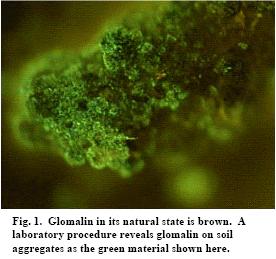
Atmospheric CO2 concentration is expected to increase by 50% near the middle of this century. Indications are strong that rising CO2 effects higher soil organic carbon content in some cases. Glomalin, which accounts for 1/3 of soil carbon, is of particular interest because of its important role in binding soil aggregates and increasing nitrogen use efficiency. The Center for the Study of Carbon Dioxide and Global Change has updated their excellent summary about the CO2 - glomalin relationship. There is a great reference list to dive into.

Image source: USDA-ARS: Glomalin: A Manageable Soil Glue (pdf brochure)


Thursday, January 26, 2006

An unsolved mystery in science

Then again, maybe there is a reason Mars has that old familiar lived in look ...
Unsolved Mystery No. 6 Viking's methane
JULY 20, 1976. Gilbert Levin is on the edge of his seat. Millions of kilometres away on Mars, the Viking landers have scooped up some soil and mixed it with carbon-14-labelled nutrients. The mission's scientists have all agreed that if Levin's instruments on board the landers detect emissions of carbon-14-containing methane from the soil, then there must be life on Mars.
Viking reports a positive result. Something is ingesting the nutrients, metabolising them, and then belching out gas laced with carbon-14.
So why no party?
Because another instrument, designed to identify organic molecules considered essential signs of life, found nothing. Almost all the mission scientists erred on the side of caution and declared Viking's discovery a false positive. But was it?
The arguments continue to rage, but results from NASA's latest rovers show that the surface of Mars was almost certainly wet in the past and therefore hospitable to life. And there is plenty more evidence where that came from, Levin says. "Every mission to Mars has produced evidence supporting my conclusion. None has contradicted it."