Showing posts with label fertility. Show all posts

Tuesday, December 16, 2008

Fertilizer prices suddenly collapse in late 2008

The International Center for Soil Fertility (IFDC) reports that, with the exception of potash, world fertilizer prices have dropped dramatically.


Gregory explains why fertilizer prices fell so rapidly in late 2008. "The high fertilizer prices caused 'demand destruction.' Farmers were unable or unwilling to pay two or three times the prices of early 2007." Collapse of the global credit market, a trade recession, and slowdown in world economic growth worsened the situation. Demand for fertilizers fell and stocks accumulated. Fertilizer manufacturers cut back on production.

"But potash prices have stayed high due to its shortage and difficulties in transporting Russian potash because of an enormous and expanding sinkhole near the Silvinit mines," Gregory says. "Demand for potash increased from 2006 through 2008, and potash inventories are now 37% lower than over the past 5 years."

A couple of thoughts I will be researching.

First, if lower demand has translated to lower utilization, this should show up as reduced inventories of 2008 commodity crops, like rice, soybeans, and wheat, and reduced supply of perishable fruit crops like bananas.

Second, with fertilizer prices now low, this would be a excellent time to replenish African soil fertility, currently in crisis. Especially in consideration of a possible reduction in 2009 food inventories world wide.

(recycled from nscss.org)

Wednesday, June 11, 2008

Soil pH and Plant Nutrients

Doug Edmeades gives out sound advice on pH.

It used to be believed (going back to the early days of soil science) that the ‘ideal’ soil was neutral: neither acid nor alkaline it had a pH of 7.0. This early belief still prevails especially in Charlatanville. However, with the benefit of much subsequent research our view of the ideal soil pH has changed.

First, it is now known that different plants have different tolerance to acidity. Restricting the discussion to pasture species, browntop is very tolerant to acidity which is one reason why it thrives in undeveloped soils. Ryegrasses are more sensitive and like a higher pH. Clovers are more sensitive again and, of the legumes, lucerne is very fussy. Our pastoral agriculture is focussed on growing clover-ryegrass and the optimal pH is 5.8-6.0 – this is the pH at which pasture production and especially clover production is optimised. In contrast, a straight lucerne stand requires a pH of about 6.5.

Liming pastoral soils above pH 6.0 is not recommended for several reasons. First, there is no benefit in terms of production and it can have detrimental effects on both pasture production and animal health. As the soil pH increases the availability of soil molybdenum (Mo) increases and thus the pasture Mo content increases. This can, in some cases, induce copper deficiency in animals. Also, increasing the soil pH above 6.0 reduces the concentration of soil zinc (Zn) and manganese (Mn) concentrations. This can result in induced Zn and Mn deficiency. Liming soils, contrary to popular belief, is not always beneficial!


He also works up a sensible New Zealander's criticism of liming to "fix" the Ca:Mg:K ratio.

Lime is typically calcium carbonate. For us in New Zealand the active ingredient in lime is the carbonate not the calcium (Ca). Our soils fortunately are rich in Ca – indeed often awash with Ca – a result of their origin (from the sea) and youthfulness (not very weathered).

Given that the benefits of liming are related to the change in soil pH then it should be obvious that the only useful guide and hence measurement for the requirement of lime is the soil pH. This is the adopted science-based approach used in New Zealand.

So what about all this base saturation ratio argument? In the 1930s there were two competing theories about plant nutrition. One said that the ratio of the nutrients Ca, Mg, K and Na was important. These were measured as the proportion of the soil cation exchange capacity (CEC) – the ability of a soil to store these nutrients called cations. Thus your hear some say that the Ca saturation of a soil is 50% meaning that 50% of the CEC was occupied by Ca. The other theory was that plants did not care what the ratio of nutrients were – the plant was fine providing the minimum amount of each nutrient was present. This is called the Sufficiency Theory distinguishing it from the Ratio Theory.

After almost 80 years of research the jury is definitely in. The Ratio Theory is not consistent with observations and hence is now set aside. Indeed we now know that using the Ratio Theory as a basis for fertiliser recommendations can be and often is misleading. For example the Base Saturation Ratios of Ca in most New Zealand soils would suggest they are Ca deficient. The fact is they are not and Ca deficiency has never been recorded in New Zealand.

There are other problems with the Ratio Theory. It applies to only 3 nutrients (Ca, Mg and K – appreciating that Na is not required for plant growth (except on some crops such as sugar beet).

What about all the other 13 plant nutrients? Also we now know that soils have variable charge – this realization has occurred within my 30-year career. The consequence is that the CEC depends on the pH at which it is measured. The old method still used by the quack brigade measures the CEC at surprise, surprise the “ideal” soil pH of 7.0. This inflates the CEC thus reducing the base saturation ratios, especially for Ca. By sticking to this now disproved methodology the quacks can be certain that the soil test results will say the Ca base saturation ratio is low therefore apply my product because it contains Ca.


My region's soils are similarly well supplied with calcium. My agricultural consultancy mentors taught me to be skeptical of the Ca:Mg:K approach to evaluating soil nutrient status. In my region it was used to justify expensive formulations of foliar applied applied calcium, or to justify adding expensive soluble calcium to the irrigation water on soils with a good supply of calcium. Normally on high value crops in good years when adding extra nutrients for insurance has legs. Charlatans is not too strong a word. Back in the 1980's these folks would use A&L Laboratories, well established, amny offices, with an excellent professional reputation, and which reported Ca:Mg:K in a ratios friendly format. I'll bet this is still the case. You can't beat something like that for conferring legitimacy, can you?

The originator of the ratios approach, soil scientist William Albrecht was a brilliant observer of nature with a considerable body of work which still gets a lot of play. The basic premise of Albrecht's 1938 Loss of Soil Organic Matter and Its Restoration is solid: it takes a ready supply of soil calcium and nitrogen to build soil organic matter. His concepts continue to be stretched beyond to the breaking point both by well meaning folks exchanging advice on organic farming methods, as well as in efforts to sell product to the unsuspecting. Yet we don't read much in the way of criticism of the ratios approach. It is excellent of Doug Edmeades to voice his concern.

Monday, June 09, 2008

No Miracles

Charcoal cannot replace the need for adding mineral nutrients.

I am an unabashed charcoal enthusiast. Used properly, adding charcoal to soil improves biomass production and soil health. Sometimes dramatically when soil productivity is low. Certainly part of the effect is increased nitrogen use efficiency: less N lost to nitrification and leaching. Charcoal also tends to be associated with higher post harvest soil levels of P and K for reasons that are not entirely clear. Perhaps this effect also is due to increased efficiency.

Most TP enthusiasts, myself included, are convinced that the most mysterious effects from adding charcoal relate to soil biology, more than they relate to direct physical and chemical effects, although those realms play important roles also. And, in keeping with my previous post, it seems clear to me that increased energy efficiency is a critical bit here. Plants and microbes are growing more biomass with less effort for reasons that can't be entirely explained by traditional nutrient-based perspectives. Yes, the charcoal adds potassium, yes it raises soil pH, yes it increases soil water and nutrient holding capacity. But the results speak to more, much more.

The behavior of charcoal amended soil seems to defy the limits of the soil-biology system understood by traditional science. However, it would be entirely foolish to think that simple soil nutritional requirements are not still in play. Nutrient deficiencies limit living systems. Charcoal may promote efficiencies that help stretch the budget in regards to those limits, but in the end, the most limiting nutrient before adding charcoal is probably still going to be the most limiting nutrient after adding charcoal.

What got me thinking about this was consulting soil scientist Doug Edmeades’ posts on soil organic matter. The first, Carbon farming: take-off or rip-off, explored how carbon sequestration efforts can cut both ways. The second, Soil Organic Matter Matters, hits on the most-limiting-nutrient.

Pasture plants need 16 nutrients. Without all 16 the clover will disappear, the pasture will be N deficient, the quality grasses will fail, pasture production would collapse followed by a need to cut back the stocking rate and, given sufficient years, a farm would be back to native pastures and bush. In the process soil carbon levels would decline.

Collapsed pasture production is no idle threat. We know that the collapse of legumes in pasture systems in Europe and in the eastern US helped motivate the expansion of the western US. Against that historical backdrop, Benjamin Franklin famously demonstrated sulfur deficiency when he added gypsum to alfalfa to form the words "This has been plastered". Doug Edmeades mentions this because soil carbon sequestration enthusiasts seem to have temporarily lost track of these limits. The same caution applies to charcoal.

There is great potential for increasing productivity through judicious use of charcoal. However, TP enthusiasts must not lose sight of the fact that charcoal cannot replace the need for adding mineral nutrients.

Wednesday, June 13, 2007

Agrichar trials in NSW

News and commentary on agrichar is flowing steadily this spring, first with the reporting on the 1st annual Agrichar Conference, and now with the reporting on initial agrichar trials by the New South Wales Department of Primary Industries (NSW DPI). Particularly encouraging is that the sophistication of the comments continues on the increase.

Snippets
from ABC' Discovery channel ...

Recent greenhouse trials found soils mixed with the charred waste, called agrichar or biochar, were more attractive to worms and helpful microbes.

Agrichars trialled by NSW DPI include those from poultry litter, cattle feedlot waste as well as municipal green waste and paper mill sludge. Each agrichar has its own characteristics and interacts differently with different soil types.

Some agrichars raise soil pH at about one-third the rate of lime, raise calcium and reduce aluminium toxicity.

Kimber said more research needs to be done on working out which agrichars are best for which soils and on the impact of any contamination in biomass.

... reinforce the need for local pyrolysis pilot projects. The pyrolysis pilot hurdle is necessary where widespread agrichar use is the goal. Clean air concerns combines with the limited supply of local expertise and experience needed to achieve the low-temperature pyrolysis ideal for producing agrichar.

I have
submitted comments emphasizing the need for pilot agrichar projects to our State's climate change folks.

(AP image source)

Friday, February 23, 2007

My Interesting Experience With Biosolids

It's May 5, 2005 on a biosolids research plot somewhere between Kennewick WA and Umatilla OR . If you can use either a link to Google Maps or a Google Earth kmz file, the plots start 250' S, 150' E of the fence line and extend to 650' S, 425' E. The aerial photos Google has up as I post this were evidently taken before our field visit, probably in late winter (January?) 2005. The dark E/W swaths Google shows would be annual ryegrass (Lolium multifloruminvasive winter rye (Secale cereale) growing better than normal in areas which received aggressive application of municipal biosolids. Application was in April, 20042003.

The fellow in the distance is Tom Duebendorfer (Elmira, ID), botanist extraordinaire. Tom is carrying the quadrat to the west end of the application swath south of the one I am in. I am following about 20 minutes behind him. The wire flags (pink) are randomized sample points down the middle of the application swath. That's my soil sampler in the foreground, a Viehmeyer probe. It's a lot easier to get in than it is to get back out. The astute observers among you will have already noticed that the grass in the plot isn't looking so good: it is thick, brown and stubby whereas Tom is walking in a taller but thinner stand of green grass.

The biosolids killed the grass, but how? My thinking is that it is not a simple toxic effect. Impaired growth or necrosis would have expressed itself soon after the April 20042003 application, or prevented stand establishment at the beginning of the 2004 and 2005 season. Instead we had brief lush growth, almost like a growth hormone effect. 2,4-D works that way, but not on grasses.

My conclusion is that the effect is due to abundant nutrient availability and complex weather patterns unique to 2005. The application rate was designed to promote biomass gains. It worked, and as a result, the grass grew lush and depleted the soil moisture. With abnormally low rainfall in March, by April it had run out of moisture and had to close up shop for the year. April rains came too late for this brown grass, but helped relieve drought stress in the normal areas.

Soil nitrate levels were elevated in the brown areas but not to an alarming degree. Tom didn't see any application affect on the plant species composition, but then we have not formally analyzed the data. Composition effects are probably going to occur after 2005, beyond the scope of the study. I expect we would see an increase in annual ryegrassinvasive winter rye at the expense of other species.

Look close and you will see the ryegrass was still able to produce a fair amount of seed. L. multiflorumS. cereale is an invasive species, and was the only component in the system that really seemed to benefit from the aggressive biosolids rates to a degree that increased it's longterm competitive potential. I can think of any number of invasive species that would respond similarly.

As an aside, it is unlikely that Tom and I will be preparing a formal report based on the data. The sludge hauling client went bankrupt shortly after that May 2005 sampling. The study was a condition of satisfying a permit violation. Outside of that original context, it falls off both our urgency/importance project matrices.

Corrections: Application was in 2003, not 2004. Ryegrasss is winter rye, secale cereale, not annual ryegrass lolium multiflorum.

Technorati Tags:

Thursday, January 25, 2007

Teaming with Microbes Arrived Today

My anticipated copy of "Teaming with Microbes" has arrived. While I can't comment on the full text with any authority yet, I can say that it is well organized and has an extensive index (8 pages). It pleased me no end to see "soil science 28 - 42". There is also a valuable guide to labs and suppliers (4 pages). A supplier of mycorhhizal fungi here in Spokane is going to be getting a new customer.

My current soil obsession, bio-char, the foundational ingredient in terra preta nova, is disappointingly not mentioned. I have gotten the impression that Elaine Ingham, who has achieved demi-goddess standing in soil-web circles, was unswervingly skeptical of charcoal in large volumes as a soil amendment at the time the book went to publication, so I am not particularly surprised. In the post I saw, she based her concern on charcoal's high C:N ration putting soils out of balance. I'm chalking this up to fear of the unfamiliar. Too bad. Elaine Ingham is highly influential. When she comes around, her endorsement will save lives.

My restaurateur grandfather had a personal test to see if a chef was up to his standards: if the butter dish arrived without ice, he lowered his expectation that anything else could be properly prepared. I make similar menu-wide judgements on my orders of eggs-over-easy and chile rellenos. My acid test for an elightened organic gardening book is the treatment of glomalin (recalcitrant mycorhhizal fungally produced glycoprotein that accounts for 1/3 of world soil carbon). It is mentioned on page 37 (see familiar glomalin photo on page 39), so things are looking up at this point.


Thursday, December 14, 2006

Invasive Earthworms

Its in the news. Research shows that invasive earthworms are damaging forest soils and are a menace to species diversity. Brought to light in November, 2002, gardening experts have confirmed the concern and the news keeps spreading. Fortunate for inquiring minds, self-archived copies of published journal articles are available. The problem is most often associated with formerly glaciated regions, where native populations of earthworms are not present. One work has a general map of affected locations (can compare to map here).

Another work addresses damage to soil. Comparing soil in front of the invaders to post invasion conditions demonstrates that these worms cause soil compaction, reduce soil fertility, increase erosion. Alterations in the soil profile include thickening of A horizons and obliteration of E horizons. I am still processing this information, but it appears that these invaders are capable of alterations deep enough into the soil profile to result in a change in soil taxonomic classification at the order level.

What looks to be one of the more prominent invasive species, Lumbricus rubellus showed up in my maple leaf compost (now vermicompost). I can confirm that L. rubellus is voracious. I remember a shovel slice of some nearby soil that went in a week or so before L. rubellus showed so my guess is they came with the place. L. rubellus operates on the surface litter and organic material found where that layer rests on the mineral soil. There are strong indications that L. rubellus supplements its leafy diet by feeding on the fungi and bacteria in the rhizosphere of plant roots. Seeing first hand how these critters operate, I find this last aspect quite disturbing. With its carbon sequestration function and the highly mutualistic species that it supports, this planet needs all the rhizospheric biological capacity it can muster.

Thursday, February 09, 2006

My field season begins...

...with soil sampling at a waste water irrigated hay field. The study site has high gravel content which is farly well sorted due to the action of glacial age Missoula floods. In the picture, the AMS tile probe helps locate high gravel content areas to avoid sampling. The AMS mud bucket auger has wide-set teeth that accommodates the smaller gravels. The 0.25 inch screen helps reduce the sample for shipping. The screen also aids in mixing the sample prior to reduction.

Sunday, February 05, 2006

Farm tile drainage progressing rapidly (II)

As mentioned here earlier, farm tile drainage is being linked to accelerated wetland loss in Minnesota. A meeting held Saturday, February 5, to discuss wetland loss drew a crowd of 300. One person testified that “99 - 100%” of the wetlands in his county were now gone. Details are reported in the St. Paul MN Pioneer Press article with the headline: “Get tough to protect wetlands, group says”. Reading the tone of the reporting, it confirms my earlier impresssion that the majority of the wetland loss is considered to be due to draining uplands adjacent to wetlands. My read (see pdf addressing MN wetland regs) is that this is normally a legal undertaking. Installing drain tile within a wetland would not be legal. This foreseeable cause of wetland loss, due to activities outside of wetlands, seems to have caught wetland advocates without a workable strategy.


Dry lab fraud alleged

Have you taken soil samples and tested soils to determine the level of plant available nutrients in the soil?

Question No. 1, page 12, Self-Assessment Workbook (pdf)

Most soil lab procedures involve wet chemistry. Dry lab results, in the vernacular, are made-up results, place-holders if you will. Sometimes they serve a legitimate purpose. Dry labbing with the intent to deceive for monetary gain is fraud. This is apparently what USDA-NRCS is accusing 15 unnamed eastern Washington farmers of when they self-qualified for monetary awards under the Conservation Security Program. CSP participants in the top tier receive up to $45,000 per year for a 10 year period for the most environmentally conscious farms. Reading both the linked Seattle P-I article and the original Spokesman-Review article, (subscription required) it looks like a few farmers fabricated a history of soil sampling and lab analysis in order to qualify. The good news is that 131 farmers audited came up clean.

For other CSP news, see also:
Capital Press article (subscription required): “CSP losing momentum”
Delta Farm Press
article: “USDA announces cut in CSP watersheds in 2006”

Wednesday, February 01, 2006

Precise common sense II

Elton Robinson expands nicely on the previous post by email:

The variable-rate application of inputs is actually well developed and prospering in Mid-South cotton fields. It works for two reasons. One, we have highly variable soils along the Mississippi River Delta, which in turn creates variable yields. Second, the cotton crop demands intense in-season management for plant growth, insects, weed management, disease and harvest preparation.

Infrared aerial photography and electrical conductivity mapping carts can pick up the variation in soil type when the ground is bare and pick up plant biomass when the crop is growing. Geo-referenced maps generated from the imagery allow the farmer to vary applications of plant growth regulator, defoliants and other inputs during the season based on variability in biomass. For example, the poor-yielding parts of the field will receive less plant growth regulator to allow plants to catch up with the better-yielding parts of the field, which in turn will receiver more plant growth regulator, to prevent vegetative growth. The result is higher yield and lower cost.

The cost to the farmer for the imagery, and variable-rate prescription is $7 per acre. Sprayers can be adapted for variable rate applications for $6,000. The cost of producing cotton is about $500 an acre. A conservative savings in input costs of 10 percent plus a 5 percent increase in yield would put $65 an acre in the farmer’s pocket. If he farms 1,000 acres of cotton, that $65,000, more than enough to pay off the cost of the technology in year one.

The technology is not affordable if there is little variability in the soil, or if a crop (corn, soybeans) does not respond as well to in-season management. I did read your previous blog on VR nitrogen, and agree that it's been very difficult for researchers to show a benefit.

Tuesday, January 31, 2006

Precise common sense

Precision ag implies computer mapped lab data and GPS controlled field equipment. Higher yields, less flying blind and easier farming. The reality is that the expense of data collection, analysis and interpretation can quickly wipeout any added value. Reading this article about variable rate management of cotton, it struck me that common sense and curiosity are the missing ingredients. Elton Robinson with Delta Press reports on cotton producer Kenneth Hood, Mississippi, who attributes his success with variable rate agriculture to, among other things, reliance on aerial photo interpretation, an approach not typical of precision agriculture. Hood says that the “... advantage to imagery is that very little data collection is required, according to Hood, “which is unlike most precision agriculture practices.” Put this experience together with the recent cryptic news on the lukewarm record of precision agriculture in Germany, which I touched on earlier, and what do you get? My sense is that Kenneth Hood is going to have lots of company.

Saturday, January 28, 2006

Tallahassee waste water sprayfield nitrate concern for Wakulla springs

I have been following news on a 2600 acre sprayfield on the edge of Tallahassee, Florida. It is suspected of causing environmental problems 10 miles away in Wakulla Springs State Park and the Wakulla River. A recent 1000 Friends of Florida report (pdf) ties excessive hydrilla plant growth to nitrate from the sprayfield. The news this week is that the city, USGS and Florida DEP will be conducting dye tests to better understand how the groundwater beneath the sprayfield moves down gradient. I am reading the report. Striking is the relatively low (1.0 mg/l)nitrate-N needed to control the situation.

Image source: Tallahassee Democrat


Glomalin, science, CO2 and climate change

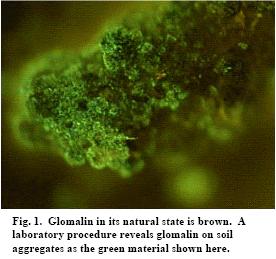
Atmospheric CO2 concentration is expected to increase by 50% near the middle of this century. Indications are strong that rising CO2 effects higher soil organic carbon content in some cases. Glomalin, which accounts for 1/3 of soil carbon, is of particular interest because of its important role in binding soil aggregates and increasing nitrogen use efficiency. The Center for the Study of Carbon Dioxide and Global Change has updated their excellent summary about the CO2 - glomalin relationship. There is a great reference list to dive into.

Image source: USDA-ARS: Glomalin: A Manageable Soil Glue (pdf brochure)


Thursday, January 26, 2006

Product review - new vadose zone research tool moves to farm

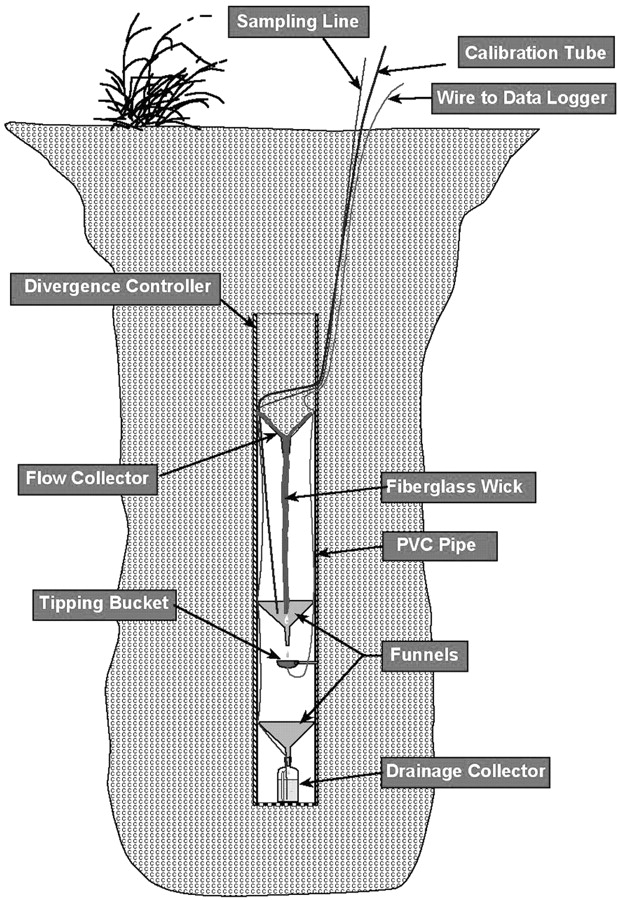
Irrigated farm fields lose water to deep percolation. This groundwater recharge, and what it contains, is difficult to research. This is because sampling tools designed to intercept saturated flow tend to miss unsaturated flow. And visa versa. New technology extracts deep soil moisture using a wick rather than the active suction or gravity.

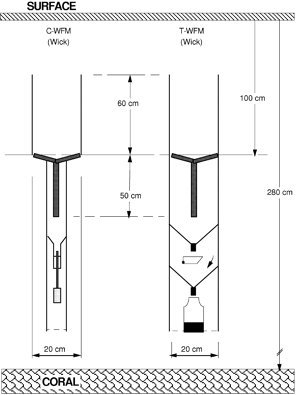
The first wick samplers were passive capillary samplers (PCS). This approach has now evolved into the current water flux meter (WFM) designed recently by Batelle soil scientist Glendon Gee. Two offspring WFM designs are commercially available: the Gee passive capillary sampler drain gauge (Decagon Devices, Pullman WA) and the vadose zone water flux meter (Sledge Sales Consulting, Dayton OR). In a recent journal article, the Decagon device is referred to as a capacitance water flux meter (C-WFM) and the Sledge device is referred to as a tipping-bucket water flux meter (T-WFM). The T-WFM is close to Glendon Gee's designs published in journal articles. The C-WFM was developed by Decagon soil scientist Gaylon Campbell in collaboration with Glendon Gee.

The original PCS devices needed a pit, best dug with a backhoe. Fiberglass wick length and strand size were calibrated to site specific conditions to prevent oversampling of unsaturated conditions. Today's WFMs can be placed in an auger hole or hand-dug pit. WFM configurations use a standard size and length wick which works for most situations. A recent journal article has an example of an oversampling problem.

There are strong similarities and distinct differences between the two firms. Like Decagon, Sledge maintains strong ties with Glendon Gee. Like Decagon, many of the 200 devices Sledge has produced have been for agricultural research. Compared to Decagon, Sledge is more a hands on, farm service and farm chemical oriented consulting business. With Wayne Sledge, the T-WFM is his flagship product. With Decagon, the C-WFM is a sensible addition, part of an extensive and well supported line of soil and agricultural measurement instrumentation. It appears that Decagon and Sledge have produced a similar number of devices and they are clearly on parallel tracks of success in refining their individual product.

Both firms have supplied most of their instruments to agricultural researchers, farms and clients concerned with water use efficiency and nitrogen use eficiency such as golf courses. There has also been environmental project placements, most often associated with landfill and mine-tailing closure

Decagon has put considerable effort into refining unit capacity to record water flux, less into water sample handling. The larger base of the Sledge unit enhances water sample handling options. Decagon has a stepped design which accommodates hand auguring the deepest portion, shortening installation time. Decagon has an extensive list of complementary devices and highly capable technical support staff. The Sledge unit is substantially lower in price. Choice is good.

Of particular interest in Washington State is wastewater spray field management. As mentioned in a government report: "The Department of Ecology has identified 20 spray field situations where wastewater was [improperly] applied [and conditions] ... led to contamination of groundwater...". This report was discussed here previously.

I spoke with Don Nichols, with Washington Department of Ecology's Water Quality Program, Eastern Regional Office, Spokane, WA. Don has encouraged the installation of WFMs for gathering vadose zone water quality information. Don referred me to Cascade Earth Sciences and Soil Test Farm Consultants for more information.

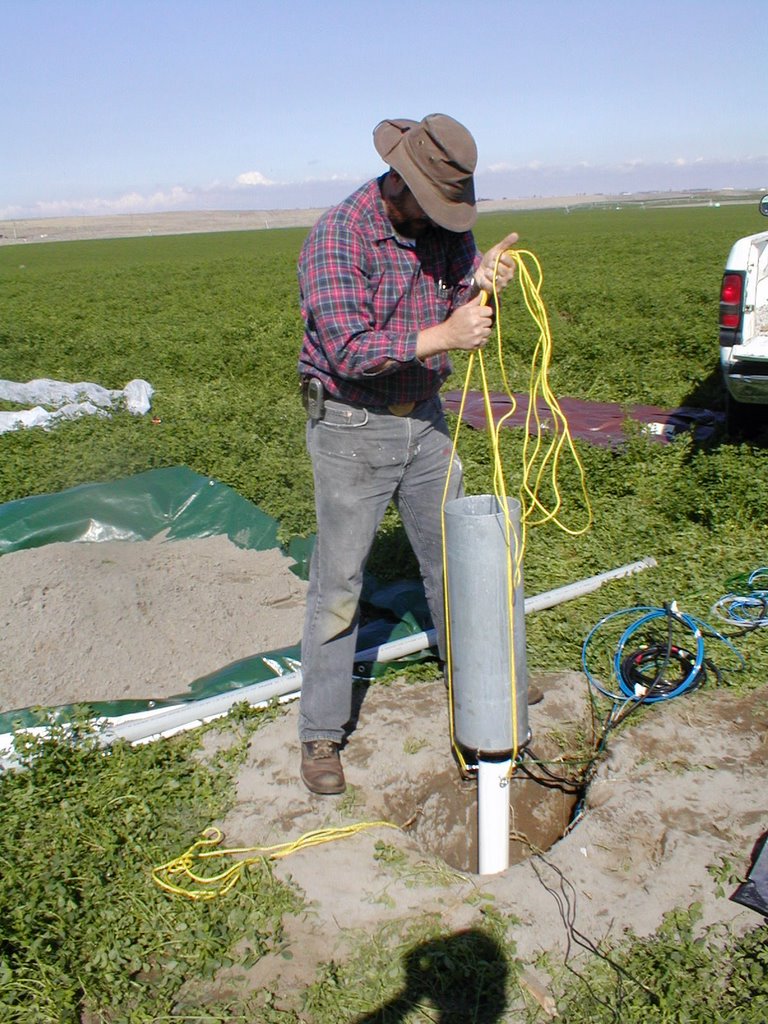
Dan Burgard, soil scientist with Cascade Earth Sciences (CES) in Spokane, WA has installed 7 Decagon C-WFMs in the Pasco, WA area, and 11 Sledge T-WFMs in southern California. CES modified the equipment to enhance sample collection capabilities. (See his photos below)

Dan Nelson, soil scientist with Soiltest Farm Consultants, Inc. in Moses Lake, WA has four Decagon C-WFMs installed in the Moses Lake, WA area. Both had nothing but good things to say about the potential uses of this type of data. Mass balance calculations will demonstrate if target water use efficiency and target nitrogen use efficiency is being achieved. Detailed daily data logs show exactly when percolation occurs. Percolation events observed to date are closely correlated with irrigation and precipitation events and even soil thawing events. As expected with the difference in weight between soil and the field capacity water portion, percolate nitrate and dissolved solids (salts) are several times higher than soil levels above the sample point. The devices are performing as intended.

One question I have is how many devices are needed to achieve statistical confidence in a mass balance calculation? Users independently tend toward sets of 3 units, with singles for spot comparison data. That is a sensible starting point but determining coefficient of variability on selected data would put the results into perspective.


None of the installations have been entirely glitch-free, mostly due to various data logger challenges or site specific soil related factors, such as coarse sands or depth limits. Users of the units are looking forward to continued refinements in data logger compatibility and would like to see costs come down and but give high marks for ease of installation and setup. This and available tech support make sampler units from Sledge and Decagon an attractive alternative to the do-it-yourself installations that predate this equipment.


References:
Brown, K.W., J.C. Thomas, and M.W. Holder. 1986. Development of a capillary wick unsaturated zone water sampler. Coop. Agreement CR812316-01-0. USEPA Environ. Monit. Syst. Lab., Las Vegas, NV.
Cary, J.W. 1968. An instrument for in situ measurements of soil moisture flow and suction. Soil Sci. Soc. Am. Proc. 32:3–5.
Gee, Glendon W., Zhang, Z. Fred, Ward, Andy L. 2003. A Modified Vadose Zone Fluxmeter with Solution Collection Capability Vadose Zone J 2003 2: 627-632 (highwire link) http://highwire.stanford.edu/
Knutson, J.H., and J.S. Selker. 1994. Unsaturated hydraulic conductivities of fiberglass wicks and designing capillary wick pore-water samplers. Soil Sci. Soc. Am. J. 58:721–729.
Selker
, J.S., C.K. Keller, J.T. McCord. 1999. Vadose Zone Processes, Lewis Publishers, ISBN 0-87371-953-0, GB1197.7.S46 1999 [1] [2]
van der Velde, M., Green, S. R., Gee, G. W., Vanclooster, M., Clothier, B. E. Evaluation of Drainage from Passive Suction and Nonsuction Flux Meters in a Volcanic Clay Soil under Tropical Conditions Vadose Zone J 2005 4: 1201-1209 (DOI: 10.2136/vzj2005.0011) (highwire link)


Tuesday, January 24, 2006

Science and nitrogen use efficiency

Nitrogen use efficiency (NUE) is a term maintaining its currency. Worldwide, NUE is 33%. Once a concern primarily due to groundwater quality and health concerns, rising natural gas prices have moved economic concerns to the forefront. Economics must certainly have resonated in the government NUE workshop "Roadmaps to more N efficiency" held in Germany recently and mentioned in a previous article. Climate change concerns have increased interest as well as the availability of grant funding for research. NUE is affected by many factors: fertilizer form and placement, irrigation management, climate, soil characteristics and CO2 levels.
Nitrogen loss due to denitrification is caused by microbial respiration when soil oxygen levels are depleted. It is negligible in some parts of the planet and the dominant form of loses in others. This from the University of Kentucky, somewhat buried in an
article about economic concerns:
Worldwide nitrogen use efficiency is only about 33 percent, so 33 percent actually makes it into the crop. A lot of nitrogen is applied that never gets used by the crop. In the United States, the rate is 50 to 60 percent, but still half the nitrogen never makes it to the crop.
In Kentucky the biggest loss of nitrogen comes from denitrification, when nitrate is converted to nitrogen gas and dissipates into the air. By controlling denitrification, a farmer can potentially reduce the amount of nitrogen needed to produce a crop.
The other forms of reduced efficiency are leaching of nitrate and volatization of ammonia. Part of the loss to percolation can be attributed to uniformity of application and even off-target losses. Necessary to complete a zero-sum balance point of view is accounting for microbially fixed nitrogen, and changes in soil biomass,both microbial and plant roots.
Those of us who work in support of permitted land application of waste water and waste water solids are very interested in advances in understanding of NUE. Our client projects are generally held to a land treatment capacity based on a design philosophy that an NUE of 100% is a reasonable target, the legacy of a simpler time in history. With the higher level of information and better technology available today, this simplistic design standard may well be approaching the end of its useful life.

Friday, January 20, 2006

German science workshop news critical of precision agriculture performance

A German soil science research center reports that Precision Agriculture has not delivered on promised benefits, stating:
...worse are the actually reported effects of ..."Precision Agriculture" (PA) ...on N efficiency. Still after 15 years of implementation no results proving consistent increases in yields or decreased fertilizer application are available. Quite the contrary: some of the techniques developed in PA may even decrease fertilizer N efficiency...
The Federal Agricultural Research Center (FAL) - Institute of Plant Nutrition and Soil Science's workshop, Options for reducing the nitrogen surplus in plant production, has individual presentation pdf files available, including the one on PA.


Thursday, January 19, 2006

New organic garden book: Teaming With Microbes

For over 30 years, Jeff Lowenfels has written a free-lance gardening column in Anchorage. Among other things, Lowenfels and a couple of like-minded friends have patented a cool one-eye device for looking at plants and insects in the field, the macroscope, available now through Brunton. Lowenfels now has a forthcoming book on soil microbes, a subject he has written and lectured on abundantly for the last 5 years. He has been promising a book on this for most of those years and a lot of gardeners are looking forward to it. The subject of microbes and plant nutrition offers a lot to get excited about. I've mentioned some bits a time or two. And, as back40 reminds us, it was only in 1996 that glomalin was discovered. Glomalin is the durable soil carbon produced by mycorrhizal fungi and responsible for many positive attributes of soil function, plant nutrition and soil health.
According to a news article this week, Lowenfels book "Teaming With Microbes: A Gardener's Guide to Using the Soil Food Web." is being published by Timber Press and is due out sometime in late summer. Tag me "easily entertained", but I really like the double sens of the word "teaming" in the book title. In 2004, the working title was "Soil Science for Gardeners", and thankfully Lowenfels has wisely prevailed upon Timber Press to use "Teaming With Microbes" as he originally proposed.

Monday, January 16, 2006

Tetany animal health issue and soil, hay links

Tetany is a complex disease in that no specific condition triggers it in all cases. Gauge tetany risk using soil and tissue analysis when growing or feeding hay comprised solely of cool-season grasses. A grass-legume mix does not have this risk.

Tetany is a disease affecting ruminants and is associated with feeding or grazing bluegrass, bromegrass, fescue, orchardgrass, ryegrass, timothy and wheatgrass. It is caused by low blood levels of calcium and/or magnesium. Classic risk conditions occur when the forage grass is growing quickly in the spring and nitrogen levels are high. Less well known is that tetany can be a problem when hay is grown on soils with excessive soil potassium. Manure and potassium hydroxide cleansers are two potential sources. Lactating animals are more susceptible to tetany, thus dairies are particularly alert to the concern and tend to avoid growing or feeding grass hay exclusively. Forage guides may not mention it as a concern. A forage tissue ratio of K/(Ca+Mg) of more than 2.2 indicates a high risk of tetany and the need to supplement feed with magnesium (Mg) (see also). If an animal goes down and tetany is suspected, a veterinarian should be contacted for immediate treatment. Often an animal will recover if it can be given an injection of magnesium sulfate (Epsom salts) early on.

Preventative Mg feed supplement and the ready supply of alfalfa tends to keep the incidence of tetany to a minimum. My thought is that tetany is additionally controlled by the close knit nature of farm communities. Caring neighbors and long memories tend to interact sufficiently that tetany symptoms don't take more than an animal or two, usually the weakest anyway, before it is figured out. Perhaps this explains why analytical laboratories in my region are generally unaware of tetany or the role of soil and tissue nutrient levels. My opinion is that cooperative extension publications in the Pacific Northwest can do better in this area. Tips for preventing animal loss due to tetany should be included in the fertility guides published to help folk interpret forage test results.

See also:
Spring Mineral Considerations by Jeff Heldt (link added 03MAR06)
Controlling Grass Tetany in Livestock, by Cooperative Extension, New Mexico State University, available in pdf format

Tech Tags:

Thursday, January 05, 2006

In 1794

On January 4th in 1794, was born Edward Ruffin the father of soil chemistry in the U.S., who showed how to restore fertility to depleted soil. Though without formal science education, Ruffin determined that the soil of southeast plantations that had been overused with single-crop production had become more acidic and unable to benefit from fertilizers. The remedy he published (1818) was the spreading of marl to neutralize the acidity. He went further by specifying effective methods of fertilizing, plowing and rotating crops to increase production of grains. He expanded his recommendations in book and journal article form, as well as lecturing up to the 1850's. He then became an outspoken secessionist, and took his own life upon the South losing in the Civil War, at least when he learned of it on June 18, 1865.

Today in Science History

Adapted from a post at XDA blog by Roger Fraley.

This would be a good addition to soil science articles in wikipedia.

Technorati Tags: